Households sharing an evening meal
If you’re chilling yoghurt alongside the other ingredients, look for plenty of easily accessible fridge space. The Verbraucherzentrale recommends storing yoghurt on the middle shelf.


Choose a fridge with enough easily accessible fridge space for your usual shop; yoghurt can be stored on the middle shelf. If you don’t keep frozen food, you don’t need a freezer compartment for this purpose. If you regularly need freezer space, compare fridge and freezer capacities separately and check the annual energy consumption of similar appliances.
If you’re chilling yoghurt alongside the other ingredients, look for plenty of easily accessible fridge space. The Verbraucherzentrale recommends storing yoghurt on the middle shelf.
If you don’t store frozen food in your appliance, you can choose the fridge capacity and footprint to suit your usual shop. Fridges without a freezer compartment are one option.
If you regularly store frozen food, check the fridge and freezer capacities separately when considering a fridge-freezer. The Verbraucherzentrale recommends choosing a capacity that suits your household and its shopping habits.
The Verbraucherzentrale recommends storing yoghurt on the middle shelf. The German Federal Institute for Risk Assessment points out that there is no single fridge temperature that’s right for every food, so also follow the storage instructions on the specific packaging.
First decide whether you’ll actually use a freezer compartment. Then compare the fridge capacity you need, annual energy consumption and whether the appliance will fit in the space available.
| What matters | What to check when buying | Who is it important to? |
|---|---|---|
| Keeping yoghurt chilled | Temperature controls, an accessible middle shelf and the storage instructions on the packaging. | If I want to store yoghurt properly until dinner, I look at the shelf layout and temperature controls; around 40% of consumers put suitable cooling first. |
| Fridge space for your shop | Fridge capacity in litres, shelves and room for your usual containers; check freezer capacity separately. | If I need to fit several fresh ingredients in for a shared meal, the fridge space that’s actually available matters; around 30% of consumers first look for space for their usual shop. |
| Annual energy consumption | Compare annual energy consumption in kWh and the current EU energy label for appliances of a suitable size. | If I use the fridge all year round, I want to compare the energy consumption of different appliances on a like-for-like basis; around 20% of consumers put ongoing electricity use first. |
| Design and space required | Check the external dimensions and niche measurements, freestanding or integrated design, door opening and installation instructions for the specific model. | If my kitchen or fitted niche dictates the available space, the appliance needs to fit there; around 10% of consumers prioritise a suitable design and footprint. |
You don’t need a freezer compartment to keep yoghurt chilled. The Verbraucherzentrale also points out that yoghurt can become grainy after freezing and thawing.
Before buying, decide whether you regularly store frozen food as well as fresh ingredients.
With a fridge-freezer, some of the usable capacity is taken up by the freezer compartment, leaving less room for yoghurt and other fresh food.
Compare the fridge and freezer capacities in litres separately, and check whether the shelves suit the containers you usually use.
A large total capacity doesn’t tell you how much space there is for fresh food. Also, energy ratings with plus signs are no longer part of the current EU A to G scale.
Compare appliances of a suitable size by their annual energy consumption in kWh and current EU energy label.
Compact fridges without a freezer compartment are an option if you only need fridge space.
The range includes freestanding fridges without a freezer compartment, as well as fridge-freezers.
The models mentioned range from integrated fridges to freestanding fridge-freezers.
The KGN39AIAU is a freestanding fridge-freezer for households that also need freezer space.
The KFN 4795 AD is a fridge-freezer with additional features.
The appliances below include fridges without a freezer compartment and fridge-freezers with separately listed fridge capacities.
 No image available
For households that need a separate freezer compartment as well as fridge space.
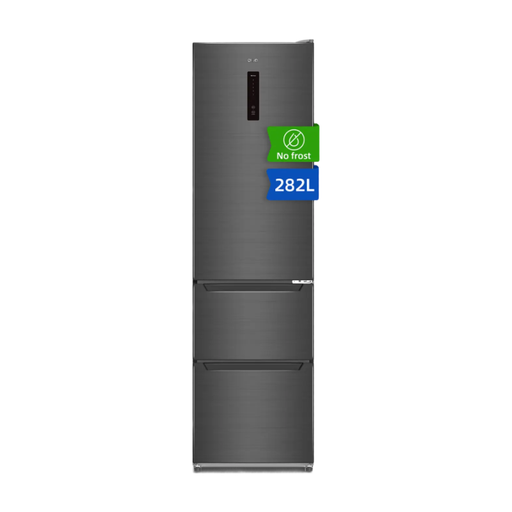 No image available
For anyone looking for a multi-door fridge-freezer with a separately listed fresh food compartment.
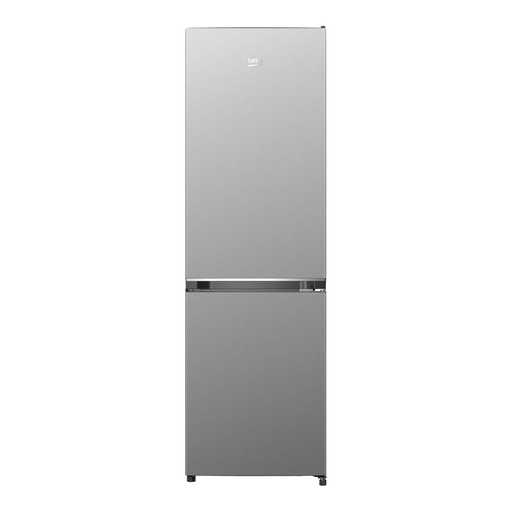 No image available
For households looking for fridge and freezer space in one freestanding appliance.
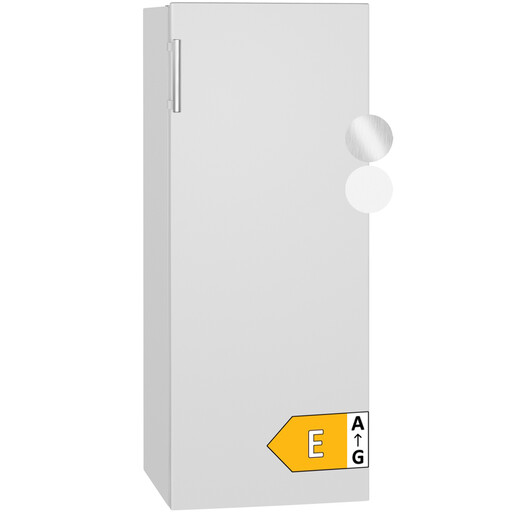 No image available
For households that need fridge space without an integrated freezer compartment.
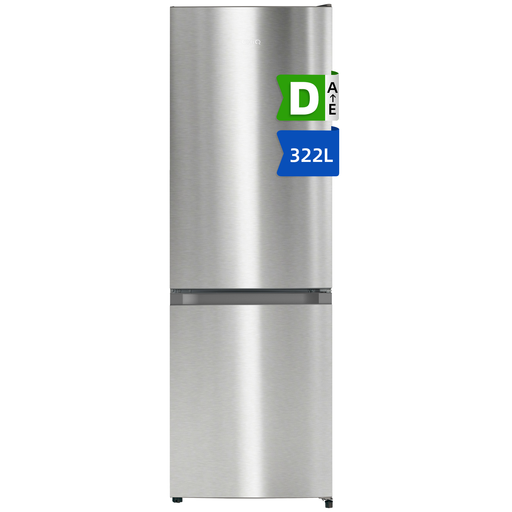 No image available
For households looking for separate fridge and freezer compartments and adjustable shelves.
On the middle shelf of the fridge, as recommended for yoghurt by the Verbraucherzentrale. Also follow the storage instructions on the specific packaging; the German Federal Institute for Risk Assessment does not specify one fridge temperature for all foods.
No, suitable fridge space is enough to keep yoghurt chilled. A freezer compartment is useful if you also store frozen food; the Verbraucherzentrale points out that yoghurt can become grainy when frozen and thawed.
For appliances of a similar size, compare the stated annual energy consumption in kWh and check the current EU energy label. The Verbraucherzentrale provides a calculator that takes both purchase and running costs into account.
For goods bought in the EU, you have a legal guarantee from the seller of at least two years from the date you receive them; this is separate from any voluntary manufacturer’s warranty. Don’t put an old appliance in household rubbish: the German Environment Agency lists recycling centres and retailers as return options.
Fridges and freezers are among the product groups covered by EU energy labelling. The current scale runs from A to G; check the specific model’s annual energy consumption as well as its rating.