
Lieferung heute & morgen

Qualitätsgarantie

Willkommens-Angebote freischalten: KOSTENLOSE Lieferung | Bis zu 80 % RABATT | Kostenlose 30-Tage-JoyPlus-Testphase
App herunterladen
Buying a new fridge-freezer is a decision that will impact your daily life for years to come. But the market is flooded with marketing promises and technical specs that confuse more than they clarify. Many buyers only realise months later that their new appliance is louder than expected, the actual storage space is disappointing, or the electricity bill has unexpectedly skyrocketed.
This guide will help you identify the crucial features and avoid common purchasing traps. We focus on the objective parameters that truly matter, so you can make an informed choice that fits your lifestyle.
Before we dive into the technical details, let's highlight two of the most costly mistakes consumers repeatedly make:
To make a sustainable and satisfying purchase decision, you should carefully examine the following technical features.
Since the introduction of the new EU energy label (A to G scale), making a choice has become more transparent. A freestanding fridge with a Class B energy efficiency rating is in the absolute top tier for energy savings. Although the purchase price may be higher, the investment pays for itself over the years through a significantly lower electricity bill. Pay attention to the annual consumption in kilowatt-hours (kWh/a) to compare appliances directly.
The No Frost function is now standard in many appliances and is a crucial convenience feature. A circulation system removes moisture from the freezer compartment, preventing ice from forming on the walls or on your food. This not only saves you the tedious task of manual defrosting but also ensures consistent cooling performance and more efficient energy consumption, as iced-over cooling elements impair the appliance's performance.
For campers, lorry drivers, or outdoor enthusiasts, choosing the right mobile cooling solution is critical. A basic electric car cool box often relies on thermoelectric technology, which can only lower the temperature by a certain amount below the ambient temperature. On hot days, its cooling performance is limited.
In contrast, a 12V compressor cool box functions like a conventional refrigerator, reliably reaching deep-freeze temperatures of down to -20°C, regardless of the outside temperature. It is the right choice for a portable fridge for camping to store food safely. Modern models even offer control via a car fridge with an app, making on-the-go management even easier. For smaller needs in an office or a student room, a quiet mini-fridge is often the better solution.
Here are some models tailored to specific needs that take the aforementioned criteria into account.
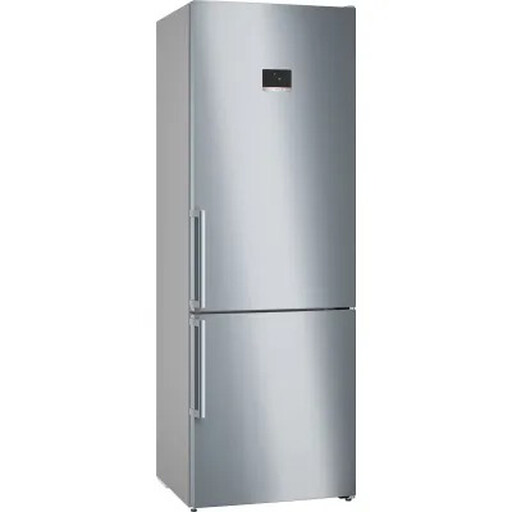
Why It's a Great Fit: With 440 litres of usable capacity and special VitaFresh drawers for fruit, vegetables, fish, and meat, this appliance is ideal for families who value fresh food and thoughtful storage.
The Class B energy efficiency (142 kWh/a) directly addresses the hidden running costs trap and ensures long-term savings. The flexible interior concept maximises usable space.
The VitaFresh system is proven to keep food fresh for longer. At 35 dB, it's also exceptionally quiet, which is a major benefit in open-plan kitchens.

Why It's a Great Fit: Perfect for campers, boat owners, and lorry drivers who need a reliable cooling and freezing solution on the go. It can be powered by 12V/24V DC and 100-240V AC.
As a compressor cool box, it delivers true cooling performance down to -20°C and isn't dependent on the ambient temperature—unlike cheaper thermoelectric models.
Control via the app (Tuya Smart) allows for remote monitoring of temperature and modes. The ECO mode reduces energy consumption for longer journeys.

Why It's a Great Fit: This compact freezer is an excellent addition for kitchens, offices, or small flats where the main fridge-freezer's freezer space is insufficient.
Instead of buying an oversized fridge-freezer, this unit provides a targeted 60 litres of additional freezer space. This avoids the unused volume trap and optimises your space.
The 4-star freezing performance allows for long-term food storage at temperatures as low as -24°C. The reversible door hinge and compact dimensions (47.5 cm width) ensure maximum placement flexibility.
We've compiled a complete, up-to-date list of products that fully meet these strict selection criteria and UK safety regulations.
The average lifespan of a modern cooling appliance is around 10 to 15 years. Models with inverter compressors, which adjust their power as needed, may have a longer lifespan as the motor experiences less wear from constant starting and stopping. Regular cleaning and ensuring adequate ventilation at the back of the unit also contribute to its longevity.
Yes, with a true No-Frost appliance, manually defrosting the freezer section is completely eliminated. The system uses a fan to circulate cold, dry air within the freezer. The resulting moisture collects on an evaporator outside the freezer compartment, where it is periodically heated and evaporates as water. This prevents ice from forming in the first place.
Yes, in most cases, the extra cost pays for itself over the appliance's entire lifespan. A refrigerator runs 24 hours a day. The difference in electricity consumption between a Class B appliance and a Class E or F one can be ?50 or more per year. Extrapolated over a 12-year lifespan, this results in a saving of over ?600, which often more than compensates for the higher purchase price.