
Lieferung heute & morgen

Qualitätsgarantie

Willkommens-Angebote freischalten: KOSTENLOSE Lieferung | Bis zu 80 % RABATT | Kostenlose 30-Tage-JoyPlus-Testphase
App herunterladen
The purchase of a new fridge-freezer is a major decision for any household. The right appliance not only saves on energy costs but also keeps food fresh for longer. However, the market is crowded and full of marketing promises that often confuse more than they help. As your Joybuy Product Recommendation Officer, I'll help you separate fact from fiction and find a model that truly fits your needs.
Many buyers fall into traps that lead to disappointment and unnecessary expenses. Here are the three most common pitfalls you should know:
To avoid a bad purchase, focus on the following three objective criteria. These determine the efficiency, practicality, and comfort of your new appliance.
Since 2021, the new EU energy label with classes A to G has been in effect. A high efficiency class is a crucial factor for long-term running costs. An appliance with energy efficiency class C might be more expensive to purchase than a class E model, but the savings on electricity costs can more than offset this difference over the appliance's lifespan.
Pay attention not only to the class but especially to the annual energy consumption in kilowatt-hours (kWh/year). This value is indicated on the energy label and allows for a direct cost comparison between different models. An energy-efficient inverter compressor is a major contributor to low consumption.
Choosing the right size and form factor is fundamental. The rule of thumb for usable capacity is:
The most common form factors are:
All these models are typically designed as freestanding, allowing for flexible placement in the kitchen. Measure your niche accurately and plan for sufficient space on the sides and back for ventilation.
In modern, open-plan kitchens, a quiet appliance is essential. The volume is specified in decibels (dB) and is also rated on the energy label in noise emission classes from A (very quiet) to D (loud).
Here are some models that represent a considered choice for different user profiles based on objective criteria.
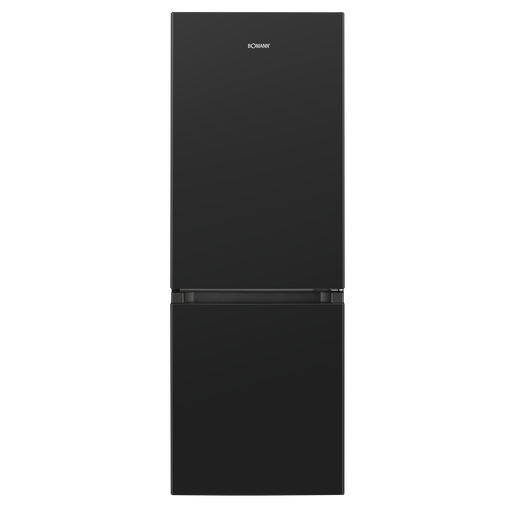
Why This Fits Their Persona: Ideal for singles, couples, or as a secondary appliance. With 175 litres of usable capacity and a slim design of under 50 cm in width, this model also fits into smaller kitchens. The reversible door hinge offers maximum flexibility in placement.
This appliance focuses on the core functions of cooling and freezing. It forgoes expensive, superfluous smart features and clearly communicates that the freezer section must be defrosted manually. The stated usable capacity is well-utilised thanks to the clear layout.
Solid value for money; quiet operation at 39 dB; compact dimensions and high flexibility due to the reversible door hinge.
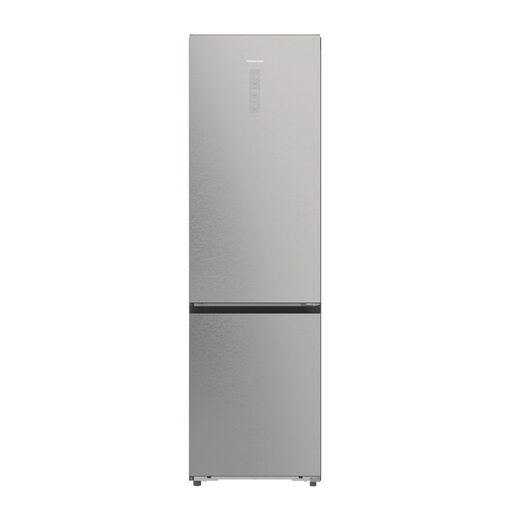
Why This Fits Their Persona: With 413 litres of usable capacity, a very good energy efficiency class C, and an extremely quiet operation of just 34 dB, this model is ideal for families who value efficiency, space, and modern technology. The stainless steel look fits into many modern kitchens.
The integrated smart functions (WLAN) focus on useful aspects like remote control and energy monitoring. The Total-No-Frost technology works in both compartments (cooling and freezing) and genuinely eliminates the need for manual defrosting.
Very high energy efficiency (Class C); extremely quiet operation (34 dB); complete No-Frost technology and a large, well-divided usable capacity.
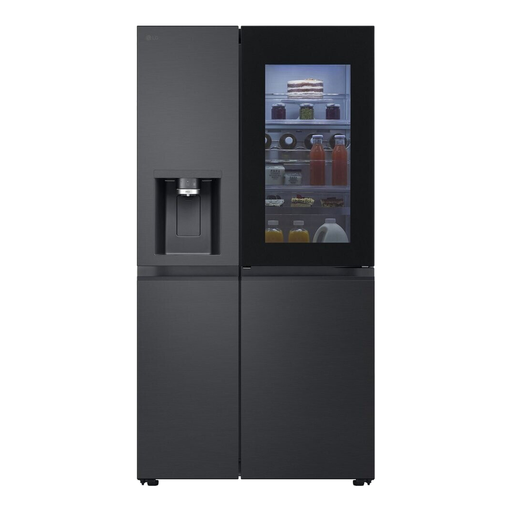
Why This Fits Their Persona: For large households and lovers of design and innovation. This Side-by-Side refrigerator in elegant black is a statement piece. With 628 litres of capacity, an InstaView door, a Craft Ice Maker, and UVnano water disinfection, it offers luxury and functionality.
The premium features offer a clear benefit: InstaView reduces cold air loss, the Craft Ice Maker is a unique feature for hosts, and the UVnano technology ensures hygienically clean water. Here, technology is not used as a gimmick, but to improve everyday life.
Very quiet operation (35 dB); huge usable capacity (628 L); innovative and useful features like InstaView Door-in-Door and Craft Ice; Total NoFrost.
We have compiled a complete, up-to-date list of products that fully meet these strict selection criteria and German safety standards.
Power consumption depends heavily on the energy efficiency class, size, and usage. A modern, energy-efficient appliance rated energy efficiency class C with about 350 litres of usable capacity consumes around 160–180 kWh per year. A comparable Class E model, on the other hand, can use 240 kWh or more. You can always find the exact values on the EU energy label of the respective product.
No Frost technology prevents the build-up of ice and frost in the freezer compartment (and often in the fridge compartment as well) through constant circulation of cold, dry air. Moisture is drawn out of the interior and evaporates outside the appliance. This has two advantages: you never have to manually defrost the appliance again, and energy consumption remains consistently low because no insulating layer of ice forms. Look for the term "Total No Frost" if you want both the fridge and freezer sections to remain ice-free.
The average lifespan of a fridge-freezer is about 10 to 15 years. The actual durability depends on the quality of the components, especially the compressor, and regular maintenance. Models with an inverter compressor often have a longer lifespan because it adjusts its performance as needed, resulting in less wear and tear than a conventional compressor that only switches on and off.