
Lieferung heute & morgen

Qualitätsgarantie

Willkommens-Angebote freischalten: KOSTENLOSE Lieferung | Bis zu 80 % RABATT | Kostenlose 30-Tage-JoyPlus-Testphase
App herunterladen
A new fridge-freezer is an investment for the next decade. But the market is flooded with marketing promises and technical specs that often confuse more than they clarify. Many appliances turn out to be impractical or lead to unexpectedly high running costs. As your Joybuy Product Recommendation Officer, I'll help you identify the crucial features and avoid common pitfalls, ensuring you find a model that truly fits your household.
Before we dive into the key technical specifications, let's look at the most common mistakes that lead to buyer's remorse.
To make an informed decision, focus on these three objective criteria. They determine the cost, convenience, and longevity of your appliance.
Since 2021, the new EU energy label with classes from A (very efficient) to G (less efficient) has been in effect. An energy-efficient fridge in class A or B can save you over a hundred euros in electricity costs annually compared to an old class F appliance. Don't just look at the class; also check the specified annual electricity consumption in kilowatt-hours (kWh). This figure allows for a direct cost comparison between different models. Modern appliances with an inverter compressor adjust their power based on demand, making them more economical to run.
A fridge with a No Frost freezer compartment is a must-have for many people today. This technology uses a circulation system to prevent ice from forming in the freezer section. This not only saves you the tedious task of manual defrosting but also ensures consistent cooling performance and steadily low energy consumption, as icy cooling fins severely reduce efficiency. Look for the term Total No Frost, which guarantees that both the fridge and freezer sections benefit from the technology. An alternative for more budget-conscious buyers is Low Frost technology, which significantly reduces ice build-up but doesn't completely eliminate the need for occasional defrosting.
The required usable capacity depends on your household size. As a rule of thumb:
Measure the available space in your kitchen precisely, and plan for about 5–10 cm of clearance on the sides and back for air circulation. The most common design is the freestanding fridge-freezer, as it offers flexible placement. Models in black or with a stainless steel finish also add modern design accents.
Here are some models that represent a considered choice for different needs, based on objective criteria.
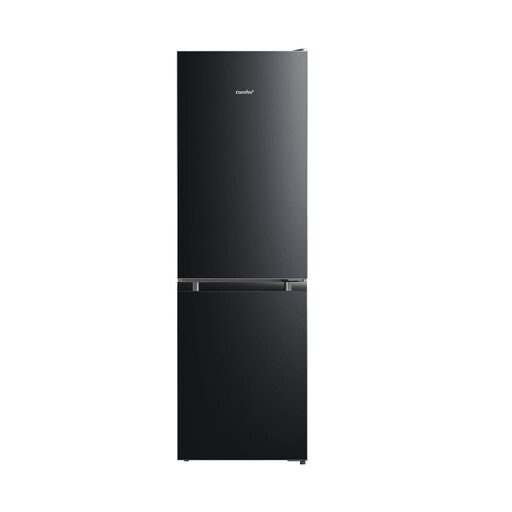
Why this model fits: Ideal for small households, students, or as a second appliance. It focuses on the core functions of cooling and freezing without driving up the price with complex extras. At 150 cm tall, it also fits into smaller kitchens.
This appliance deliberately omits expensive smart features. Its Low Frost technology is a transparent compromise that significantly reduces ice build-up compared to devices without it, minimising maintenance.
The reversible door hinge and adjustable feet offer maximum installation flexibility. The clear usable capacity ratio of 115L for refrigeration to 59L for freezing is practical for its target household.
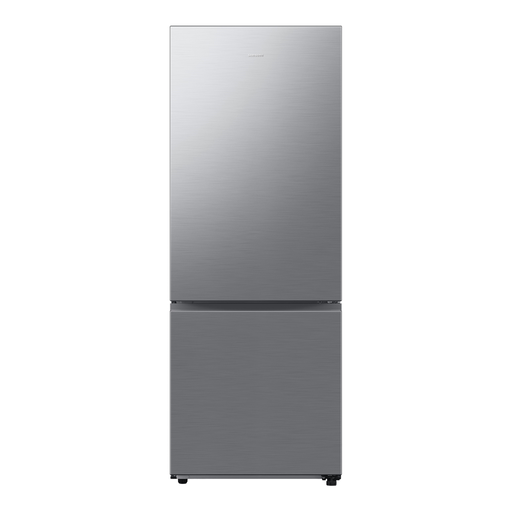
Why this model fits: This Samsung fridge offers an enormous 538 litres of space. It combines advanced freshness technologies with intelligent energy management that adapts to family life.
The AI Energy Mode is a practical smart feature that demonstrably lowers power consumption. The SpaceMax technology addresses the capacity pitfall by creating more interior space within standard external dimensions. At 34 dB, it is also a very quiet appliance.
Twin Cooling+ uses two separate cooling circuits, which prevents odour transfer and maintains optimal humidity for fruits and vegetables. Metal Cooling ensures a stable internal temperature.
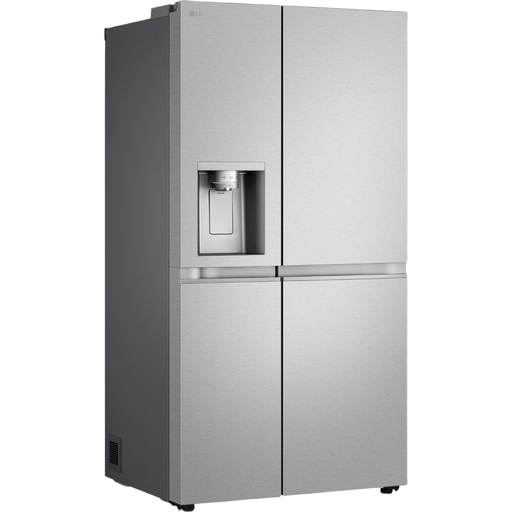
Why this model fits: For large families or anyone seeking maximum storage space and premium convenience. This side-by-side refrigerator offers 623 litres of capacity, a water and ice dispenser, and advanced cooling technologies.
At just 32 dB(A), this model is exceptionally quiet for its size, neatly avoiding the noise pitfall. The UVnano technology in the water dispenser is a specific, hygienic feature with a demonstrable benefit, not a vague marketing claim.
Total No Frost makes defrosting obsolete. DoorCooling+ ensures faster and more even cooling, including in the door area. Its Class B energy efficiency rating is remarkable for an appliance of this size and feature set.
We have compiled a complete, real-time updated list of products that fully meet these strict selection criteria and German safety regulations.
The average lifespan of a modern fridge-freezer is about 10 to 15 years. Models with an inverter compressor can have a longer lifespan because the motor adjusts its speed to the cooling demand, running more efficiently and with less wear and tear than conventional compressors that simply switch on and off.
No Frost technology primarily means convenience and efficiency. A fan circulates moist air out of the freezer compartment, preventing ice from forming on the interior walls or on your frozen goods. In everyday life, this saves you from having to completely empty and manually defrost the freezer. Furthermore, energy consumption remains consistently low because there is no layer of ice to impair cooling performance.
The exact consumption depends on the size, model, and usage. A highly efficient appliance like the LG Zero Clearance fridge, with an energy efficiency class of A, has an annual consumption of just 112 kWh according to the manufacturer. Assuming an electricity price of 35 cents/kWh, this results in annual running costs of around €39. An older, comparably sized Class F appliance can easily consume three times that amount or more, meaning a new purchase often pays for itself in just a few years through electricity savings alone.