
Lieferung heute & morgen

Qualitätsgarantie

Willkommens-Angebote freischalten: KOSTENLOSE Lieferung | Bis zu 80 % RABATT | Kostenlose 30-Tage-JoyPlus-Testphase
App herunterladen
Choosing a new fridge-freezer combination can quickly become overwhelming. Manufacturers advertise numerous features and technical specs, but not all of them live up to their promises. As your Joybuy Product Recommendation Officer, I'll help you separate the important information from the trivial and make an informed decision that suits your household and budget.
Before we dive into the crucial features, let's look at the typical marketing traps that often lead to disappointment.
To avoid a bad purchase, focus on three objective criteria that determine the true value of an appliance.
Since March 2021, the new EU energy label with classes from A (very efficient) to G (less efficient) has been in effect. An energy-efficient fridge-freezer in classes A, B, or C might be more expensive to buy, but it pays for itself over the years through a significantly lower electricity bill. The annual consumption in kilowatt-hours (kWh/a), indicated on the label, gives you a clear basis for comparison.
The required usable capacity depends on your household size. A good rule of thumb is:
Also, consider which form factor best suits your kitchen and habits:
Pay attention to the decibel (dB) value on the energy label. For an open-plan kitchen or if you are sensitive to noise, a quiet appliance is essential.
Here are some models that represent a considered choice based on objective criteria for different requirements.
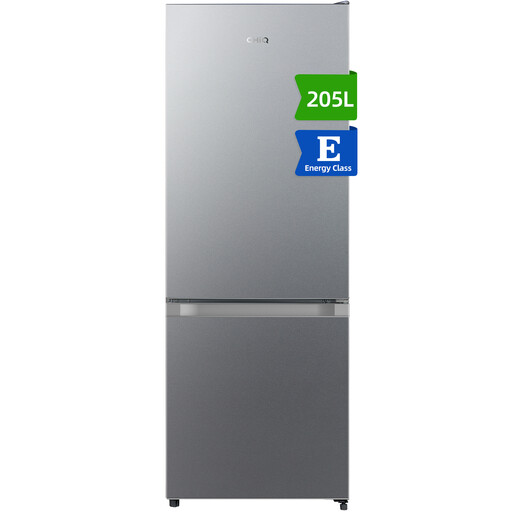
Why This Fits Their Persona: Ideal for singles, couples, or small kitchens. With 205 litres of usable capacity and a compact width of 54 cm, this appliance offers solid basic features without unnecessary frills. The reversible door hinge provides flexibility in placement.
This model bypasses the "No Frost" trap with transparent Low-Frost technology. It significantly reduces ice build-up without the cost and complexity of a full No Frost system, which keeps the price down.
Quiet operation at just 39 dB, which is remarkable in this price range. Its compact dimensions make it a great solution for kitchens with limited space.
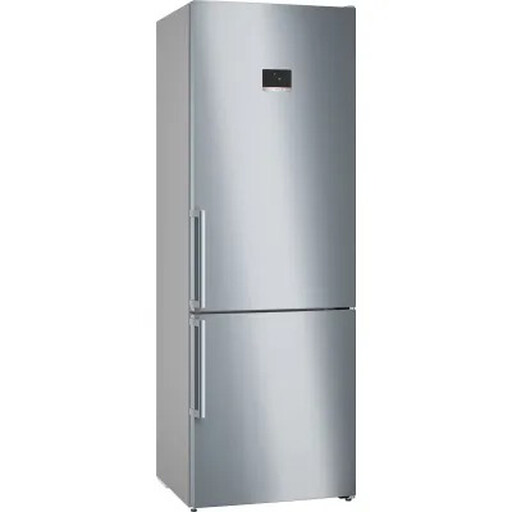
Why This Fits Their Persona: With 440 litres of XXL usable capacity, high energy efficiency, and special freshness systems, this appliance is tailored to the needs of families who value fresh food and low running costs.
This model solves two problems at once: it offers a high-performance Total NoFrost system that really works and is extremely quiet at 35 dB. This makes it perfect for open-plan kitchens without being disruptive.
The outstanding Energy Efficiency Class B significantly reduces electricity costs. The VitaFresh XXL system with a 0°C zone and humidity control is proven to keep fruit, vegetables, fish, and meat fresh for longer.
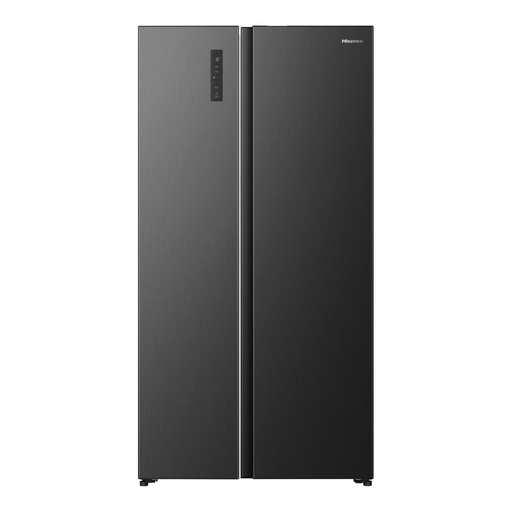
Why This Fits Their Persona: For anyone who needs a lot of space and wants to make a visual statement in their kitchen. The Side-by-Side design in elegant black and the huge 544-litre usable capacity make it the centrepiece of any modern kitchen.
This appliance avoids the volume trap with a clearly declared and massive net usable capacity. Despite its size, it operates very quietly at 35 dB, debunking the myth that large appliances are necessarily loud.
Enormous storage capacity of 544 litres in an American side-by-side format. The Total No Frost technology reliably prevents ice formation in both sections.
We have compiled a complete, up-to-date list of products that fully meet these strict selection criteria and German safety regulations.
1. What does the climate class mean for a fridge-freezer? The climate class indicates the temperature range in which the appliance operates optimally. Common classes in Germany are SN (Subnormal: +10°C to +32°C) and N (Normal: +16°C to +32°C). Many appliances cover multiple classes (e.g., SN-T), making them suitable for ambient temperatures from +10°C to +43°C. This is important if the appliance is to be placed in a cool basement or a warm kitchen.
2. How much electricity does a modern Class C fridge-freezer use per year? The exact consumption depends on the size and features but is listed on the energy label as annual consumption (kWh/a). A typical Class C appliance with around 330 litres of usable capacity, like the Gorenje NRK620CA2XL4, consumes about 158 kWh per year according to the manufacturer. Assuming an electricity price of 30 cents/kWh, this would correspond to annual electricity costs of approximately €47.40.
3. What is the average lifespan of a fridge-freezer? The average lifespan is about 10 to 15 years. It largely depends on the quality of the compressor, the overall build quality, and proper use. Regular cleaning and ensuring sufficient ventilation at the back of the appliance can positively influence its lifespan.