
Lieferung heute & morgen

Qualitätsgarantie

Willkommens-Angebote freischalten: KOSTENLOSE Lieferung | Bis zu 80 % RABATT | Kostenlose 30-Tage-JoyPlus-Testphase
App herunterladen
Purchasing a new fridge-freezer is a major decision for any household. But the market is flooded with marketing promises and technical specs that confuse more than they clarify. False assumptions often lead to an appliance that consumes too much power, is too loud, or fails to meet your needs after a short time. This guide will help you navigate the common pitfalls and make an informed decision.
Before we dive into the important features, let's look at the most common mistakes that lead to dissatisfaction and unnecessary costs.
To find the right appliance, focus on three objective parameters that match your actual needs.
The required capacity depends on your household size and shopping habits. A common rule of thumb for the refrigerator section is about 50 to 80 litres per person. For the freezer section, you should plan for 50 to 130 litres, depending on how much food you stock up on.
An energy-efficient appliance not only protects the environment but also your wallet. The most important value for comparison is the annual energy consumption, indicated in kilowatt-hours per year (kWh/a) on the energy label. Despite a higher purchase price, an appliance with a better energy efficiency rating (e.g., B instead of E) can lead to significant electricity savings over the years.
In open-plan kitchens, a quiet appliance is essential. The noise level is measured in decibels (dB).
Here are some models tailored to specific user profiles that help avoid the pitfalls mentioned.

Why This Fits Their Persona: Ideal for singles, students, or as a secondary appliance. With a total volume of 80 litres, this compact tabletop fridge offers enough space for a week's worth of groceries and includes a practical 4-star freezer compartment for the essentials.
The appliance focuses on the core functions of cooling and freezing without expensive extra technologies. Manual defrosting is manageable for this size and keeps the price and energy consumption low.
Compact Dimensions: Fits easily into small kitchens or offices. Reversible Door Hinge: Offers flexibility in placement.
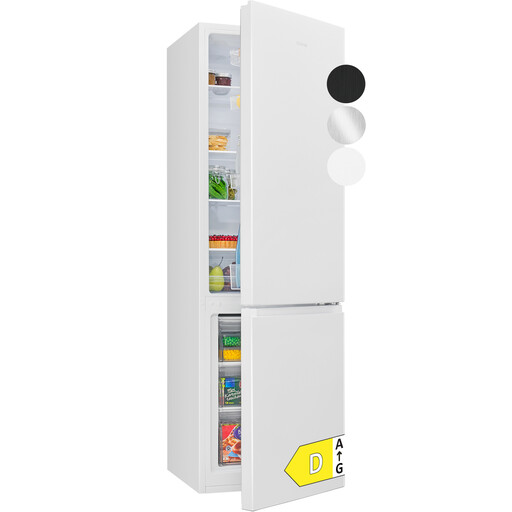
Why This Fits Their Persona: With 198 litres in the fridge and 71 litres in the freezer, this model offers a classic layout and sufficient volume for a family's weekly shopping. Its 180 cm height makes optimal use of vertical space.
This model offers a balanced ratio of size, function, and price. It avoids the mistake of buying an appliance that's too small and, at 39 dB, is quiet enough for open-plan kitchens without you having to pay extra for premium features.
Generous Capacity: Ideal for family stockpiling. Quiet Operation: At 39 dB, the appliance won't disturb daily life.
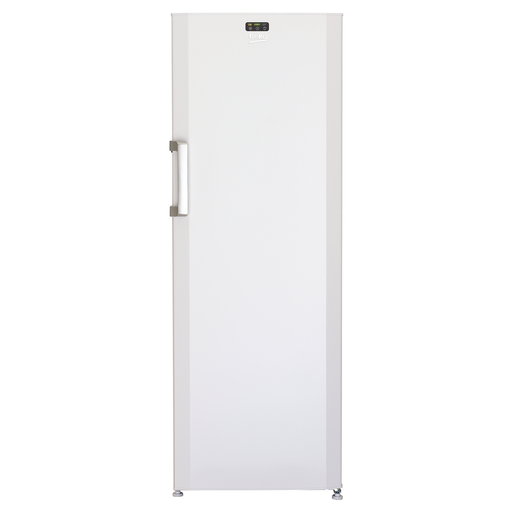
Why This Fits Their Persona: This freestanding freezer is designed purely for stockpiling. With 244 litres of capacity and a clear layout of drawers and compartments, it's perfect for the basement or garage.
This model is explicitly designed for operation in unheated rooms with temperatures down to -15 °C. This avoids the pitfall of an unsuitable climate class, which can cause malfunctions in standard appliances placed in a basement.
Suitable for Cold Environments: Reliable operation down to -15 °C. MinFrost Technology: Significantly reduces ice formation and minimises defrosting effort.
We have compiled a complete, up-to-date list of products that fully meet these strict selection criteria and German safety regulations.
The climate class indicates the ambient temperature range in which the appliance will function optimally. The most common classes are:
Consumption heavily depends on the size, energy efficiency class, and usage. A medium-sized, energy-efficient fridge-freezer in class C or D typically consumes between 150 and 200 kWh per year. Class B models, like the Beko B7RCNE367HG, can even reduce consumption to under 140 kWh/a. The exact value is always stated on the EU energy label and is the most reliable figure for comparison.
No Frost technology uses constant air circulation to prevent ice from forming in the freezer section, eliminating the need for manual defrosting. This saves time and ensures consistently high energy efficiency, as iced-up appliances consume more power. For those who want to avoid the hassle of defrosting and value maximum convenience, investing in a model like the Beko RFNM200T40WN NoFrost Freezer is a sensible choice. For smaller appliances or budget-conscious buyers, Low-Frost technology or manual defrosting can be an acceptable compromise.