
Lieferung heute & morgen

Qualitätsgarantie
App herunterladen
Kategorien
Choosing a new fridge-freezer combination is a decision that should be based on technical specifications and your household's specific needs. Factors such as energy consumption, net capacity, noise emissions, and cooling technology are crucial for the appliance's long-term efficiency and practical usability. This guide analyses the essential criteria and presents a selection of models with varying specifications.
The decision for a suitable model depends on an objective evaluation of various technical features. The following points provide a basis for an informed comparison.
Since 1 March 2021, the new EU energy label has been in effect, with a scale from A (highest efficiency) to G (lowest efficiency). An energy-efficient fridge-freezer combination in classes A, B, or C leads to a significant reduction in electricity costs over the appliance's entire lifespan. The annual energy consumption, specified in kilowatt-hours (kWh/a), is a direct indicator of operating costs.
The required net capacity depends on the household size. A general guideline is approximately 100 litres of refrigerator capacity for one person and an additional 50 litres for each subsequent person. In terms of design, a distinction is made between classic, stacked units and the Side-by-Side refrigerator. The latter often offers a larger total capacity and separate doors for the fridge and freezer sections, which facilitates access. Most models are freestanding, offering flexibility in kitchen placement.
No Frost technology prevents the build-up of ice and frost in the freezer compartment by reducing and expelling humidity. This makes manual defrosting obsolete and keeps energy consumption consistently low. A Multi-Air-Flow system ensures a stable temperature throughout the interior by evenly distributing cold air on all levels. As a result, food stays fresh for longer, regardless of its position in the refrigerator.
An inverter compressor continuously adjusts its power to the actual cooling demand. Unlike conventional compressors that only switch on and off, it runs continuously at a lower power level. This results in lower energy consumption, fewer temperature fluctuations, and a significantly reduced noise level.
A refrigerator's volume is measured in decibels (dB(A)). A quiet operation is particularly advantageous in open-plan kitchens. Appliances with a noise emission below 40 dB(A) are perceived as quiet. Models with values around 35 dB(A) or lower are virtually inaudible.
Modern appliances often offer useful additional features. An integrated ice dispenser with a water connection or a water tank provides ice cubes, crushed ice, or chilled water at the touch of a button. Functions like "SuperCool" or "SuperFreeze" allow for the rapid cooling of freshly stored food to preserve its nutrients and texture.
The following selection is based on an analysis of the technical specifications and feature sets of various models.
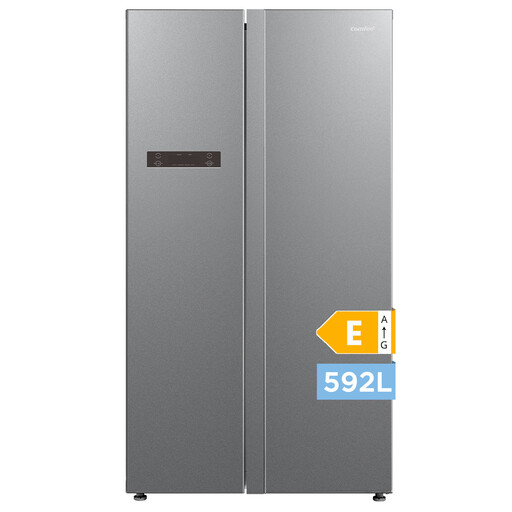
Why we recommend this product This model combines a very large capacity of 592 litres with essential technologies like Total No Frost and an inverter compressor. With a noise emission of just 35 dB, it is an exceptionally quiet appliance for its size, making it ideal for open-plan living spaces. The Multi-Air-Flow system ensures constant and even cooling.
Pros
Who it's for This appliance is suitable for large households and families who have high storage needs and value quiet, energy-efficient cooling without sacrificing a large volume.
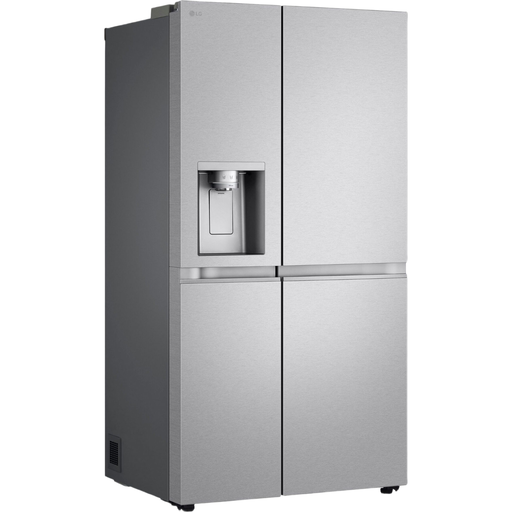
Why we recommend this product The LG GSLE91MBAB stands out with its high energy efficiency class (B) and an extremely low noise emission of 32 dB(A). Technological features like DoorCooling+ for faster cooling in the door area and UVnano technology to reduce bacteria at the water dispenser set this model apart. Compatibility with the ThinQ app also allows for smart control and monitoring.
Pros
Who it's for This model is aimed at tech-savvy users and households that demand the highest standards of energy efficiency, quiet operation, and innovative additional features like smart control and hygienic water purification.
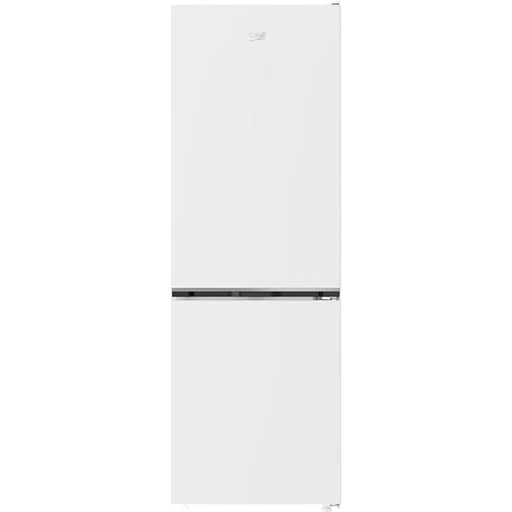
Why we recommend this product The Beko fridge-freezer combination focuses on the long-lasting freshness of food. The HarvestFresh technology simulates the natural cycle of daylight with a 3-colour light cycle, which, according to the manufacturer, helps to preserve vitamins in fruits and vegetables. AeroFlow ensures homogenous air distribution, while energy efficiency class C and a noise level of 35 dB complete the technical profile.
Pros
Who it's for This appliance is a great choice for health-conscious households that place a special focus on the storage and freshness of fruits and vegetables and are looking for an efficient appliance in a standard design.
While this guide focuses on combined fridge-freezers for domestic use, some professional or specialised applications require different cooling solutions. For use in the catering industry or for storing specific products like beverages, dedicated appliances are often used. You can find an overview of specialised appliances such as milk coolers in our corresponding category.
1. What does "No Frost" mean in a fridge-freezer combination? No Frost is an air circulation system that actively reduces humidity in the freezer compartment and directs it outside. This prevents the formation of ice crystals and frost on food and the interior walls. The main advantage is that manual defrosting of the freezer is no longer necessary, which saves time and keeps the appliance's energy efficiency consistently high.
2. How loud can a refrigerator be in a living area? For use in open-plan kitchens or living areas, a noise emission of below 40 dB(A) is recommended. Appliances in this range are perceived as quiet. Models with values around 35 dB(A) or lower are barely audible in daily operation and do not disturb the living atmosphere.
3. What is the advantage of an inverter compressor? An inverter compressor adjusts its speed according to demand and, unlike conventional compressors, runs continuously at an adapted power level. This leads to three key advantages: It is more energy-efficient as it rarely runs at full capacity. It ensures more stable temperatures inside, which improves the shelf life of food. And it is significantly quieter in operation, as the loud start-up and shut-down cycles are eliminated.