
Lieferung heute & morgen

Qualitätsgarantie

Willkommens-Angebote freischalten: KOSTENLOSE Lieferung | Bis zu 80 % RABATT | Kostenlose 30-Tage-JoyPlus-Testphase
App herunterladen
Purchasing a new fridge-freezer is a decision that will shape your daily kitchen routine for years. Yet, the market is saturated with marketing promises and technical specs that often confuse more than they clarify. Many buyers only realise months later that their supposed bargain is racking up high electricity costs, is disruptively loud in their open-plan kitchen, or needs regular defrosting despite "frost-free" advertising. This guide will help you navigate these pitfalls and find an appliance that truly fits your needs.
Before we dive into the key features, let's look at the three most common mistakes that lead to buyer's remorse:
To make an informed decision, focus on these three objective criteria. They are the key to a durable and functional appliance.
The current EU energy label ranges from A (most efficient) to G (least efficient). For a large fridge-freezer, Energy Class C represents an excellent balance between purchase price and long-term running costs. Pay attention to the specified annual consumption in kilowatt-hours (kWh/a) to directly compare running costs. An appliance like the Hisense RB5P410SACC, with a consumption of approx. 182 kWh/year, is an economical model for its size.
Noise level is a critical factor, especially in modern, open-plan kitchens. Noise emission is specified in decibels (dB(A)). A value below 40 dB(A) is considered quiet. A fridge-freezer as quiet as 34dB is barely audible, comparable to a whisper or the noise level in a library. Such models are ideal when the kitchen and living space flow into one another.
The required net capacity depends on your household size. For families and multi-person households, a large family fridge with over 350 litres of total volume is recommended. A fridge with the freezer at the bottom is ergonomically advantageous, as the more frequently used refrigerator section is at eye level. A freestanding fridge made of stainless steel also offers flexibility in placement and a modern aesthetic. Models with app control, often referred to as a smart fridge with an app, provide added convenience through remote temperature management or activation of special features.
Instead of presenting an overwhelming list, we have selected models for three typical user profiles.
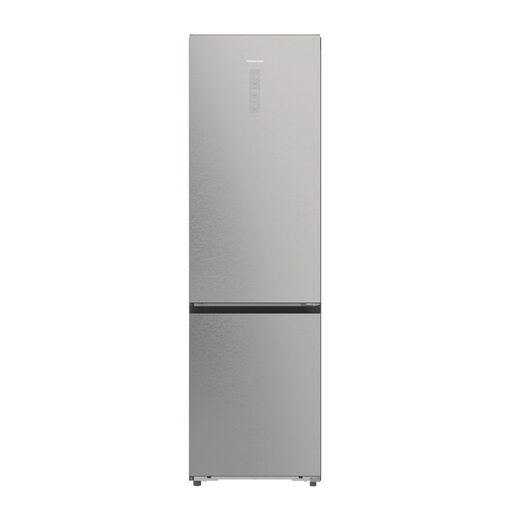
Why This Fits Their Persona: This model is tailored to the needs of a modern, tech-savvy household. With 413 litres of net capacity, it offers ample space for a family's weekly shop. The Wi-Fi connectivity allows for app control, simplifying daily life.
It addresses all three pitfalls: The Energy Class C rating is transparent and economical. At 34 dB(A), the appliance is extremely quiet and perfect for open-plan kitchens. The Total No Frost technology makes defrosting both the fridge and freezer sections obsolete.
The combination of very large volume, high energy efficiency, whisper-quiet operation, and smart features. The inverter compressor ensures durability and consistent cooling.
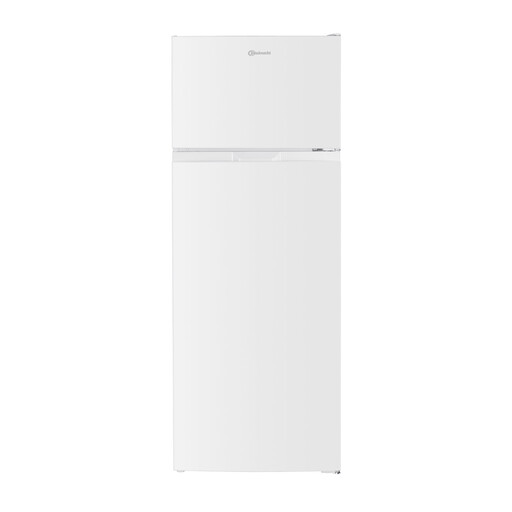
Why This Fits Their Persona: Ideal for smaller kitchens, apartments, or as a secondary appliance. At 143 cm high and 55 cm wide, it fits into niches without sacrificing a separate freezer compartment. The 206-litre capacity is sufficient for one to two people.
The appliance has a transparent Energy Class D rating. It highlights the "No Frost" pitfall: the fridge section defrosts automatically, but the freezer requires manual defrosting. At 40 dB(A), it's louder than premium models, illustrating the trade-off for its price and size.
A compact design with a good layout and a full-fledged 4-star freezer compartment. The reversible door hinge provides high flexibility during installation.
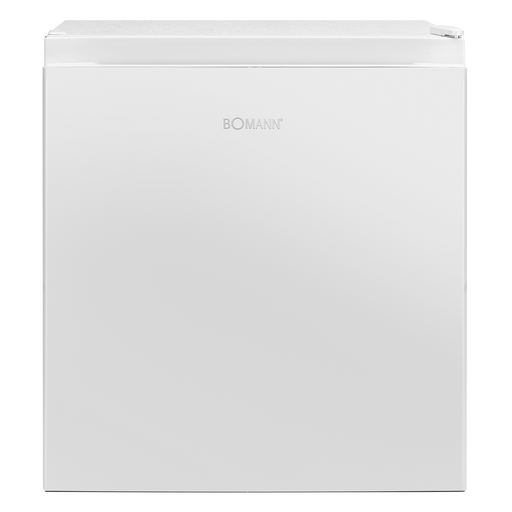
Why This Fits Their Persona: A practical solution for student dorms, offices, or as a beverage cooler. With a 45-litre capacity and very compact dimensions, it fits almost anywhere and meets basic cooling needs with a minimal footprint.
This model clearly shows the trade-offs: it requires manual defrosting and, at 39 dB, is not whisper-quiet for its size. It's an honest example of which features you can't expect at a very low price point.
Extremely space-saving and budget-friendly. The reversible door hinge and adjustable feet allow for flexible adaptation to its surroundings.
We've compiled a complete, up-to-date list of products that fully meet these strict selection criteria and rigorous safety standards.
Total No Frost means that both the fridge and freezer compartments are equipped with an air circulation system that prevents the build-up of ice and frost. Moist air is continuously extracted. This saves you from manually defrosting either part of the appliance, ensures a constant temperature, and lowers energy consumption, as there is no layer of ice to impair cooling performance. It is the most convenient solution for a fridge that doesn't need defrosting.
Consumption depends on the size and usage. For reference: the Hisense RB5P410SACC (413 litres) with Energy Class C has a specified annual consumption of approx. 182 kWh. Assuming an electricity price of 30p/kWh, this results in annual running costs of around ?55. By comparison, an older, similarly sized appliance in class F or G could easily consume double or triple that amount.
Yes, a value of 34 dB(A) is exceptionally quiet for a large home appliance. For comparison, a whisper is about 30 dB, and a quiet library is around 40 dB. An appliance with this noise level is practically unnoticeable in a normal kitchen environment, making it an excellent choice for open-plan living concepts where any noise can be a disturbance.