
Lieferung heute & morgen

Qualitätsgarantie

Willkommens-Angebote freischalten: KOSTENLOSE Lieferung | Bis zu 80 % RABATT | Kostenlose 30-Tage-JoyPlus-Testphase
App herunterladen
Purchasing a new fridge-freezer is a major decision for any household. But the market is flooded with technical jargon and marketing promises that often confuse more than they help. Many buyers only realise months later that their chosen appliance doesn't suit their needs, the running costs are unexpectedly high, or advertised features offer little practical benefit in daily life.
This guide will help you identify the crucial factors and avoid common purchasing traps. We focus on the objective criteria that truly matter, enabling you to make a well-informed decision.
Before we dive into the technical details, let's look at two common mistakes that lead to dissatisfaction and unnecessary costs.
Pitfall 1: The "Large" Capacity Fallacy Manufacturer specifications for total volume in litres can be misleading. A high gross value doesn't guarantee practical, usable storage space. Thick insulation walls, poorly placed drawers, or bulky ice makers can significantly reduce the available room. You end up paying for a large exterior, but the interior is poorly organised and smaller than expected.
Pitfall 2: Focusing Solely on the Energy Efficiency Class The energy efficiency class (e.g., C or D) is an important indicator, but it's not the only one. A very large appliance with a C rating can, in absolute terms, consume more power than a smaller appliance with a D rating. The decisive factor for real-world operating costs is the annual electricity consumption in kilowatt-hours (kWh/year) shown on the EU energy label.
To find the right fridge-freezer, you should concentrate on three core parameters that directly influence everyday usability and long-term costs.
The most important question is how much space you actually need. A common rule of thumb is:
Pay attention to the ratio between the fridge and freezer sections. If you often cook with fresh ingredients, you'll need more fridge space. Conversely, if you freeze a lot of food, you should look for a larger freezer compartment. Models with flexible drawers and adjustable shelves allow for better organisation. A small-footprint appliance can be ideal for a single-person household or as a secondary unit, while families will benefit from models with over 250 litres of total capacity.
The EU energy label provides precise information about efficiency. Pay close attention to the kWh/year value to estimate annual electricity costs. Technologies like No Frost or Low Frost have a significant impact here.
A fridge-freezer with No Frost is often slightly more expensive to purchase, but it saves time and energy costs in the long run.
The choice between a freestanding or a built-in refrigerator depends on your kitchen layout.
An often-underestimated factor is the operating noise, specified in decibels (dB). A quiet appliance is essential, especially in open-plan kitchens or studio apartments. Values below 40 dB are considered quiet and are barely noticeable in everyday life.
Here are some models that are suitable for specific user profiles based on their objective features.

Why this model is a good fit: Ideal for students, shared flats, or as a secondary appliance in the office. With 80 litres of total capacity, it offers enough space for the essentials without taking up unnecessary room or consuming excess energy. Its compact, countertop-friendly format is extremely space-saving.
This model avoids the pitfall of oversized capacity. It focuses on essential, functional features and is designed for a specific need, rather than incurring costs with unused volume.
Compact dimensions: Fits easily on a worktop or in small niches. Quiet operation: At 39 dB, it won't be a disturbance, even in living rooms or bedrooms.
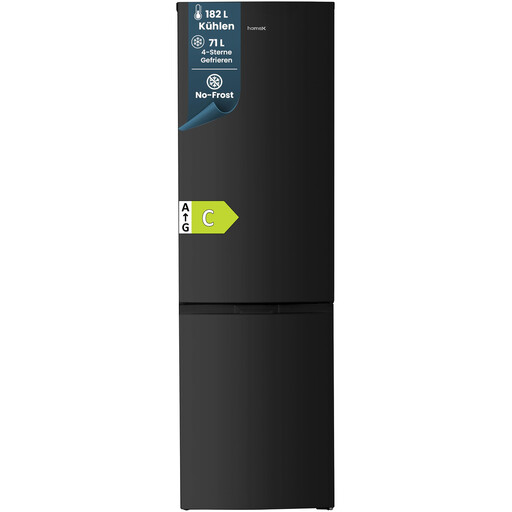
Why this model is a good fit: With 253 litres of usable capacity and a well-designed layout, this appliance is well-suited for families. The Total No-Frost technology and good Energy Class C rating keep operating costs and maintenance low.
This model addresses the pitfall of hidden running costs. The combination of Energy Class C and Total No Frost ensures consistently low energy consumption, as no manual defrosting is required.
Total No-Frost technology: No more manual defrosting. Low annual consumption: At 141 kWh/year, its operation is very economical for this size class.
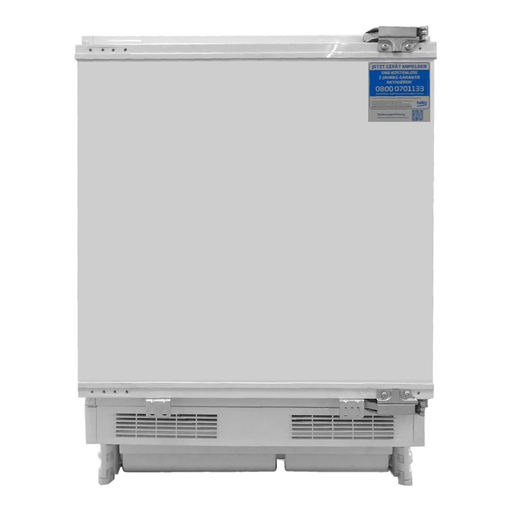
Why this model is a good fit: Specifically designed for installation in an 88 cm niche. This appliance offers a clean, integrated solution for modern kitchen units. At 37 dB, it is also exceptionally quiet and won't disturb the living atmosphere.
It avoids the cardinal sin of buying a freestanding appliance for a fitted kitchen. As a dedicated built-in refrigerator, it fits perfectly into the designated niche and ensures the necessary ventilation for safe operation.
Perfect fit for fitted kitchens: Designed for a standard 88 cm niche height. Very quiet operation: At just 37 dB, it's ideal for open-plan living concepts.
We have compiled a complete, up-to-date list of products that fully meet these strict selection criteria.
1. What does No-Frost technology really mean?No-Frost technology uses a circulation system to distribute cold, dry air in the freezer compartment. This reduces humidity and prevents ice from forming on the interior walls and on frozen goods. The main advantage is that you never have to manually defrost the freezer again. This not only saves effort but also ensures consistently high energy efficiency, as icy surfaces reduce cooling performance and increase power consumption.
2. How do I find the right size for my household? As a guideline, you can start with a base volume of about 100 litres for one person. For each additional person living in the household, you should plan for an extra 50 litres. A family of four would therefore be well-served with a refrigerator capacity of around 250 litres. Also, consider your shopping habits: if you often buy large quantities to stock up, a larger freezer compartment is a sensible choice.
3. How much electricity does an Energy Class C fridge-freezer use? The absolute electricity consumption depends heavily on the size and features of the appliance. Therefore, a blanket statement is not possible. To compare real-world consumption, you should always check the "kWh/annum" (kWh/year) value on the EU energy label. For example, a large Class C model with 253 litres of usable capacity and No-Frost technology, like the homeX model mentioned above, consumes about 141 kWh per year, which is very efficient. A smaller appliance without No-Frost may consume more, despite being in the same class, if it becomes iced up.