
Lieferung heute & morgen

Qualitätsgarantie

Willkommens-Angebote freischalten: KOSTENLOSE Lieferung | Bis zu 80 % RABATT | Kostenlose 30-Tage-JoyPlus-Testphase
App herunterladen
Purchasing a new fridge-freezer is a decision that will impact your daily life for many years. The market offers a bewildering variety of models, and marketing promises don't make the choice any easier. Often, overlooked details or misunderstood technical specifications lead to a purchase that later proves impractical or expensive. This guide will help you identify the crucial criteria and avoid common pitfalls.
The 3 most common pitfalls when buying a fridge-freezer:
To make an informed decision, you should concentrate on objective, measurable criteria. These three factors are decisive for most households.
The first question should be: How much space do I need, and how much space do I have?
Since 2021, the new EU energy label with a scale from A (very efficient) to G (less efficient) has been in effect. As mentioned, the absolute annual consumption in kWh is the more honest comparison value. An appliance with lower kWh consumption not only protects the environment but also your wallet over the entire lifespan of the device.
Modern appliances offer features that make everyday life noticeably easier.
Here are some recommendations tailored to different needs and household sizes.
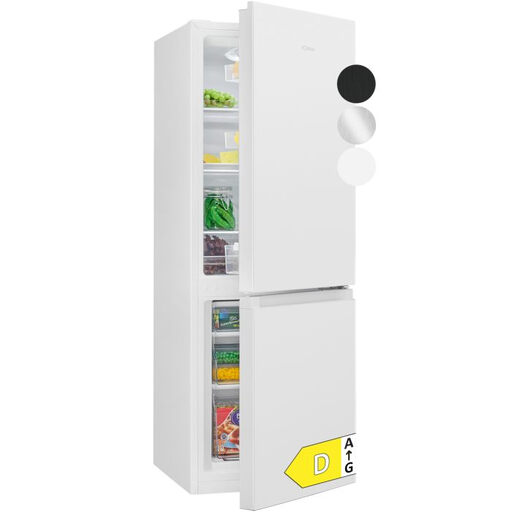
Why this model is a good fit: With a total volume of 175 litres and compact dimensions, this appliance is ideal for singles, couples, or as a second unit. It offers all the basic functions, including a 4-star freezer compartment, at a very accessible price point.
The appliance clearly states an annual consumption of 156 kWh, allowing for an honest cost estimate. At 39 dB, it is also pleasantly quiet for this price range, avoiding the noise trap.
Efficient use of space with a small footprint and a full-fledged freezer compartment for long-term food storage.
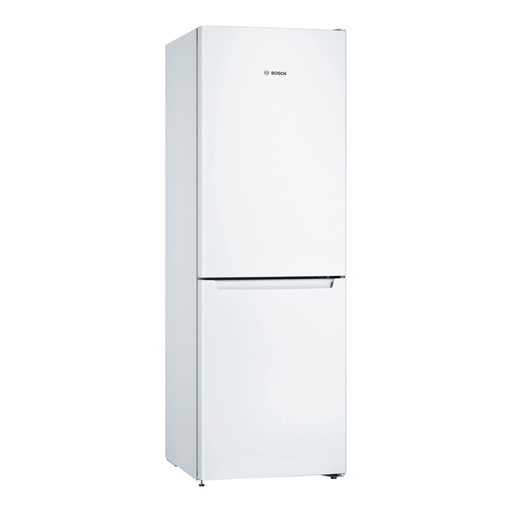
Why this model is a good fit: This Bosch fridge offers a great compromise between size, brand quality, and modern features with its 279-litre capacity (192 L cooling, 87 L freezing). It is a solid choice for a family's weekly grocery haul.
The NoFrost technology reliably prevents ice build-up and eliminates the need for manual defrosting—a common point of frustration with cheaper devices is consistently avoided here.
The MultiBox with a corrugated bottom is proven to keep fruits and vegetables fresh for longer. The uniform LED lighting provides a clear view throughout the entire refrigerator compartment.
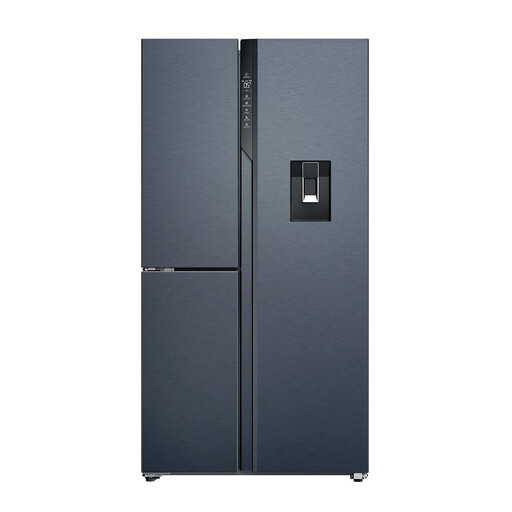
Why this model is a good fit: This side-by-side refrigerator offers enormous storage space with 573 litres, perfect for bulk shopping and storing a wide variety of foods. Ideal for large families or ambitious home cooks.
At just 37 dB, this large appliance is exceptionally quiet, debunking the myth that large refrigerators must be loud. "Total No Frost" technology is a standard feature here.
The flexible "Switch Zone" can be used as either a cooling or freezing area as needed. An integrated water dispenser without a fixed water connection offers additional convenience.
We have compiled a complete, up-to-date list of products that fully meet these strict selection criteria and German safety regulations.
The consumption of an appliance with Energy Efficiency Class E depends heavily on its size and built-in technologies. A typical freestanding fridge with around 300 litres of usable capacity in this class consumes approximately 230 to 250 kWh per year. A smaller model with about 200 litres might be around 180 kWh/a. Always compare the annual consumption (kWh/a) shown on the energy label to get an accurate idea of the operating costs.
The average lifespan of a fridge-freezer is about 10 to 15 years. The actual service life depends on the quality of the appliance, proper maintenance (e.g., regular cleaning of the seals and condenser), and frequency of use. High-quality models from brands like Bosch fridge or Siemens are often designed for a longer lifespan.
The climate class indicates the optimal ambient temperature range in which the appliance operates efficiently and reliably. This is particularly important if the appliance is not placed in the kitchen but, for example, in a cool cellar or a warm garage. The most common classes are: