
Lieferung heute & morgen

Qualitätsgarantie

Willkommens-Angebote freischalten: KOSTENLOSE Lieferung | Bis zu 80 % RABATT | Kostenlose 30-Tage-JoyPlus-Testphase
App herunterladen
Purchasing a new fridge-freezer is a major decision for any household. But the market is saturated with marketing promises and technical specs that often confuse more than they clarify. Frequently, overlooked details lead to disappointment: an appliance that's louder than expected, causes surprisingly high electricity bills, or has features that don't deliver on their promises.
As your Joybuy Product Recommendation Officer, I'm here to help you navigate these pitfalls. We'll focus on the facts that truly matter, so you can find an appliance that perfectly matches your needs. Here are the most common mistakes and how to avoid them:
To make an informed decision, you should examine three core parameters. These define whether a fridge with a freezer compartment will suit your lifestyle in the long run.
The usable capacity, specified in litres, is the most important measure of an appliance's size. A common rule of thumb for guidance:
Large families or people who buy in bulk will benefit from models with over 300 litres, such as a side-by-side fridge. Also, consider the layout: do you need more space in the fridge or the freezer section?
Since 2021, the new EU energy label with classes from A (very efficient) to G (less efficient) has been in effect. Operating an energy-efficient fridge not only protects the environment but also your wallet.
The operating noise is specified in decibels (dB). For open-plan kitchens or poorly soundproofed apartments, a quiet fridge is essential.
Pay attention to the type of compressor. Inverter compressors adjust their power steplessly, allowing them to run more smoothly and often more quietly than conventional models.
Based on these objective criteria, we have identified models that provide a suitable solution for specific requirement profiles.
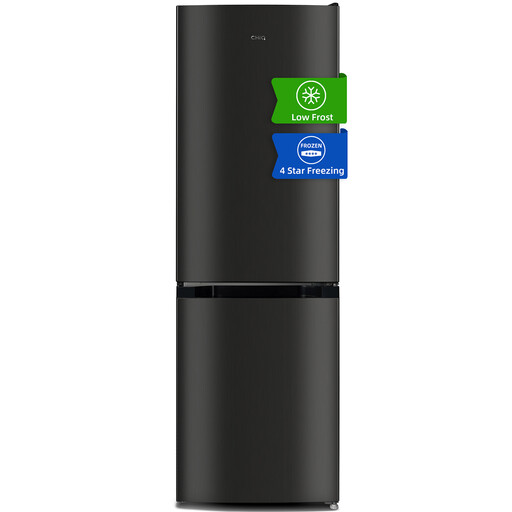
Why This Fits Their Persona: Ideal for small kitchens, shared flats, or as a first appliance. With a total volume of 157 litres, this model offers enough space for the needs of 1-2 people without taking up unnecessary space or energy.
The appliance is honestly advertised as "Low Frost," setting clear expectations. Its operating noise of 39 dB is a solid value for this class.
Compact dimensions with an efficient layout (109L fridge, 48L freezer). According to the manufacturer, it comes with a 12-year compressor warranty.
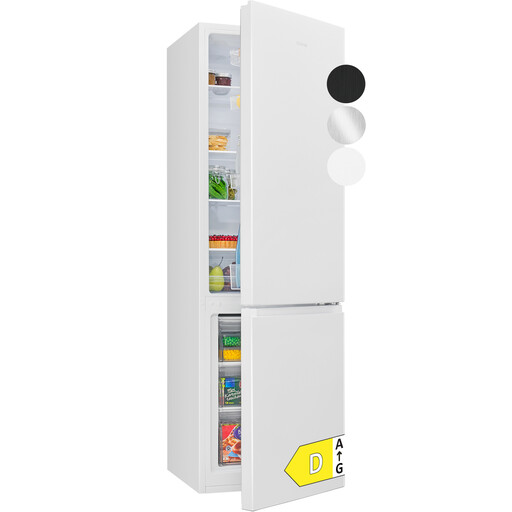
Why This Fits Their Persona: A classic **freestanding fridge** that, with a total volume of 269 litres and a height of 180 cm, meets the typical needs of a family of 3 to 4. An all-rounder for daily use.
The technical specifications are clearly defined: 39 dB noise level and manual defrosting in the freezer section. It makes no exaggerated convenience promises that the appliance can't keep.
Generous fridge section (198 litres) with flexible glass shelves. The reversible door hinge allows for straightforward adaptation to any kitchen layout.
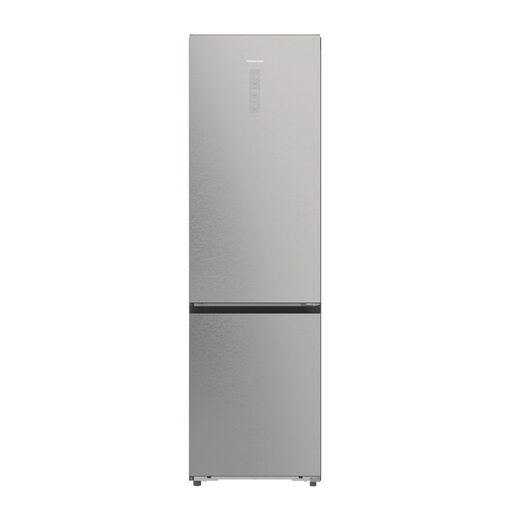
Why This Fits Their Persona: For large households that value convenience, ample storage space (413 litres), and modern technology. Ideal for anyone who does their weekly shopping in one go and wants to benefit from low maintenance.
This model delivers what it promises: Total No Frost prevents ice build-up in both zones. At just 34 dB, it is exceptionally quiet and masterfully avoids the noise trap.
High energy efficiency (Class C) for an appliance of this size. The inverter compressor ensures quiet and economical operation. The Wi-Fi connectivity offers additional control.
Whether you're looking for a compact **built-in fridge**, a model in an elegant **fridge in black**, or another specific design – we have compiled a comprehensive selection of appliances that meet objective quality criteria.
The average lifespan of a fridge-freezer is about 8 to 12 years. The actual durability heavily depends on the quality of the compressor, usage, and regular maintenance, such as cleaning the seals and ventilation slots.
The climate class indicates the optimal ambient temperature range in which the appliance operates efficiently. For locations in the UK and most of Europe, the classes N (+16°C to +32°C) and SN (+10°C to +32°C) are the most relevant. Operating an appliance in a cellar that is too cold (below 10°C) or a hot attic can impair cooling performance and increase energy consumption.
A freestanding fridge requires sufficient space for the heat it generates to dissipate. As a guideline, allow about 5–10 cm of clearance on the sides and at the back from the wall. Inadequate ventilation forces the compressor to work harder, which increases electricity consumption and can shorten the appliance's lifespan.