
Lieferung heute & morgen

Qualitätsgarantie

Willkommens-Angebote freischalten: KOSTENLOSE Lieferung | Bis zu 80 % RABATT | Kostenlose 30-Tage-JoyPlus-Testphase
App herunterladen
A fridge freezer combines a refrigerator and freezer compartment in one appliance, saving floor space as a result. For singles, couples and families, it is often more practical than two separate appliances. However, models vary considerably in usable capacity, noise level, energy consumption and interior layout.
Anyone who focuses solely on the total price or an eye-catching list of features may later be faced with an unsuitable door hinge, insufficient storage space or unnecessarily high running costs. The following criteria will help you assess advertising claims objectively.
Figures such as “250 litres” may refer to the total volume or the usable capacity, depending on the manufacturer. The split between the refrigerator and freezer compartments is what really matters. For example, a fridge freezer with a capacity of 250 litres might offer around 180 litres of refrigerator space and 70 litres of freezer space. For a household with lots of frozen food, this distribution may be less suitable than a model with a larger freezer compartment.
The description quiet fridge freezer is difficult to assess without a measurement. Look for the figure in dB(A) and, where possible, compare appliances with a similar design. Models rated at 37 to 39 dB(A) may be suitable for open-plan kitchens or smaller homes. However, the perceived noise level also depends on the floor, distance from the wall and the compressor’s operating sounds.
A No Frost fridge freezer removes moisture from the freezer compartment by design, thereby reducing ice build-up. This can make manual defrosting unnecessary. Nevertheless, interior surfaces, door seals, shelves and salad drawers still need to be cleaned regularly. No Frost is also not automatically proof of low energy consumption.
Before buying, measure:
A freestanding fridge freezer can be positioned flexibly, but depending on the appliance, it may project slightly beyond the kitchen units. A reversible door hinge is useful if the door can only be opened to the left in your kitchen. Check whether you are permitted to change the hinge yourself and which steps are specified in the instructions.
For smaller households, around 200 to 260 litres may be sufficient. Families often benefit from more than 300 litres. A side-by-side fridge freezer offers considerably more space, but its greater width and depth require a suitably sized installation area.
The EU energy label uses the scale A to G. A fridge freezer with energy rating C or energy rating D should not be assessed solely by its letter rating. Also compare the stated annual consumption in kWh. You can estimate the running costs using the following calculation:
Annual consumption in kWh × your electricity price per kWh = estimated annual electricity costs
A larger appliance may use more electricity than a compact model, even if both have the same energy rating. For this reason, usable capacity, layout and annual consumption should be considered together. An energy-efficient fridge freezer is particularly worthwhile when its size matches your actual needs.
Practical features can make the appliance easier to use:
A freezer with no need for manual defrosting is particularly convenient when it uses No Frost technology. However, this does not replace the need to observe the recommended ventilation clearances and the operating instructions.
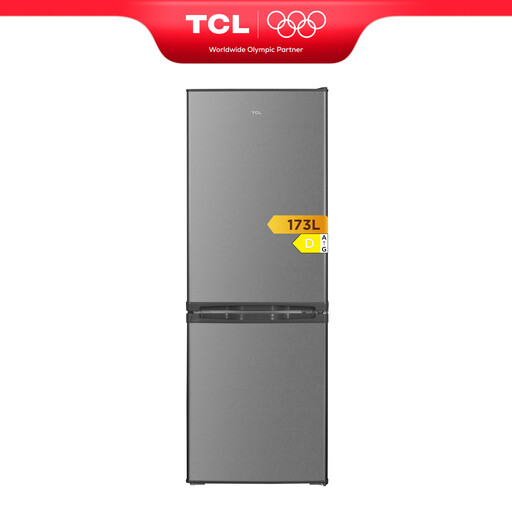
Why this product suits the profile: With 121 litres of refrigerator space and 52 litres of freezer space, this compact appliance is suitable for singles, couples or smaller kitchens. LED lighting and adjustable shelves help keep the interior well organised.
The separate refrigerator and freezer capacity figures make it clear that this is not a large family appliance.
Energy efficiency rating D, LED lighting, adjustable shelves and Fresh Zone compartment.
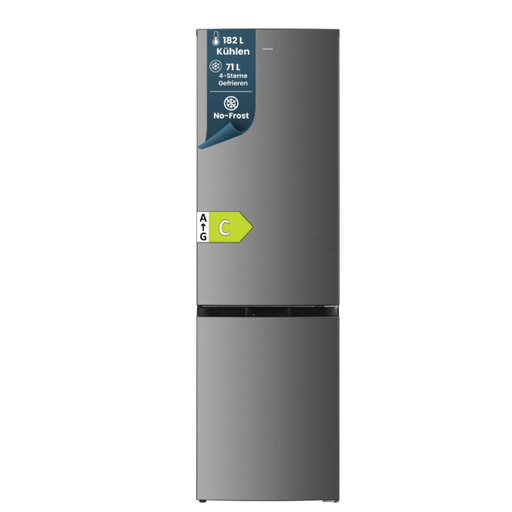
Why this product suits the profile: This model combines 253 litres of total capacity with No Frost, energy rating C and a noise level of 39 dB(A). It is therefore suited to households looking for convenience, clear consumption figures and a flexible interior layout.
No Frost is accompanied by specific usable-capacity figures, annual consumption of 141 kWh and a decibel rating.
Energy rating C, No Frost, Super Freeze function, LED lighting and reversible door hinge.
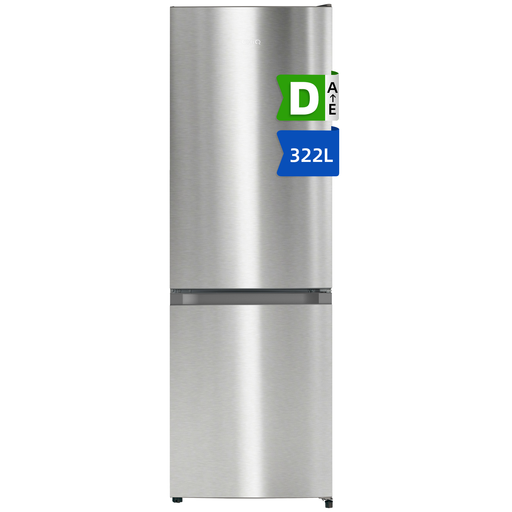
Why this product suits the profile: With 226 litres of refrigerator space and 96 litres of freezer space, it provides more room for larger shops. The 70/30 split can be useful for families who regularly store frozen food.
The product details specify the external dimensions and a depth of 63.5 cm. This allows you to check before buying whether the appliance will project beyond the kitchen units.
322 litres, Total No Frost, 37 dB(A), fast-freezing function and energy rating D.
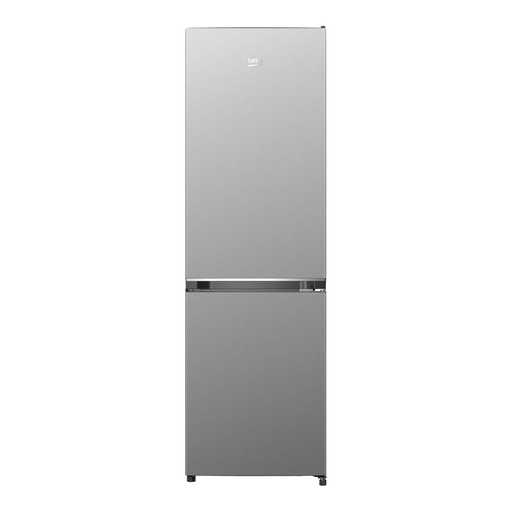
Why this product suits the profile: With 250 litres of usable capacity, No Frost and a stated operating range down to -15 °C, this appliance may be of interest for utility rooms, cellars or suitable garages. The installation conditions must be checked in advance.
The stated temperature range makes it clear that suitability for cool secondary rooms should not be assumed across the board, but assessed using the manufacturer’s data.
180 litres of refrigerator space, 70 litres of freezer space, No Frost, 39 dB(A), LED lighting and reversible door hinge.
We have put together a complete, regularly updated list of products that fully meet these strict selection criteria and the safety regulations applicable in the EU.
This depends on your shopping habits, household size and freezer requirements. Compact appliances may be sufficient for singles and couples. Families should pay particular attention not only to the total capacity, but also to having a sufficiently large freezer compartment and easy-to-use drawers.
The lifespan depends, among other things, on how the appliance is used, ventilation, cleaning and compressor technology. No fixed lifespan can be guaranteed. Clean the door seals and ventilation areas regularly, avoid overfilling the appliance and follow the manufacturer’s instructions.
Use the figure on the energy label and multiply it by your individual electricity price. Actual consumption may vary depending on room temperature, load, temperature setting, how often the door is opened and the installation location. For appliances kept in a garage or cellar, you should also observe the permitted ambient temperature range.