
Lieferung heute & morgen

Qualitätsgarantie

Willkommens-Angebote freischalten: KOSTENLOSE Lieferung | Bis zu 80 % RABATT | Kostenlose 30-Tage-JoyPlus-Testphase
App herunterladen
A new fridge-freezer should fit neatly into your kitchen, keep food well organised and avoid unnecessary running costs in everyday use. However, there are clear differences in space requirements, storage capacity and features between a compact fridge with a freezer compartment, a freestanding fridge-freezer for a single-person household and a side-by-side fridge-freezer for several people.
If you focus only on the purchase price or eye-catching features, you can easily overlook important details. This guide explains which specifications you should check before buying and which appliance profiles suit different households.
The stated width alone is not enough for planning. Depth, height, door-opening angle and ventilation clearances are also crucial. A 60 cm-wide appliance may protrude well beyond the kitchen units because of its depth. With a French-door or side-by-side design, you must also check whether the doors and drawers can be opened fully.
You should also measure the stairwell, lift and front door before ordering. This is particularly important for a large fridge-freezer.
The energy efficiency class ranges from A to G. For running costs, the stated annual consumption in kilowatt hours is also relevant. Two appliances in the same class may use different amounts of electricity depending on their size and features.
An energy-efficient fridge-freezer with a larger capacity may use more kilowatt hours overall than a smaller appliance in the same class. Always compare the class, usable capacity and kWh per year together.
A No Frost fridge-freezer prevents ice from forming in the freezer compartment and reduces the need for manual defrosting. However, the feature requires additional technology and may affect energy consumption. Depending on the design, a fridge-freezer with a water dispenser may also require cleaning, filter replacement or regular filling of the water tank.
Consider whether you would actually use the feature in everyday life. An integrated water dispenser without a fixed water connection can be more practical in rented accommodation, but it does require regular cleaning.
For singles and couples, a model with around 200 to 260 litres may be sufficient. Families often need more fridge and freezer space. The layout is just as important as the total capacity:
A 70/30 split provides more fridge space, while a larger freezer compartment makes sense for households that like to stock up. With a fridge-freezer that has the freezer compartment at the top, you should also check whether its position is convenient to access in everyday use.
For open-plan kitchens, studio flats, offices or hotel rooms, a quiet fridge-freezer is particularly important. Noise levels are stated in dB(A). Values of around 37 to 40 dB(A) are comparatively low among the appliances considered here; however, the perceived noise also depends on the floor, distance from the wall and operating status.
Occasional humming, clicking or the compressor starting up briefly is normal for refrigeration appliances. Also check the airborne acoustical noise emissions class on the energy label.
A freestanding fridge-freezer can be positioned more flexibly than a built-in appliance. Pay attention to:
A side-by-side or French-door fridge-freezer usually needs more floor space and a wider area for the doors. In return, these designs often provide a readily accessible interior and additional compartments.
No Frost, rapid cooling, rapid freezing, separate cooling circuits, LED lighting and flexible compartments can make an appliance more convenient to use. Features such as app control, ice makers or a fridge-freezer with a water dispenser are only worthwhile if you use them regularly.
Pay close attention to the precise wording of product details that make technical performance claims. According to the TCL model’s product description, the stated reduction in bacteria is based on a BV report and identifies the bacteria tested. This does not establish any general hygienic or health benefit.
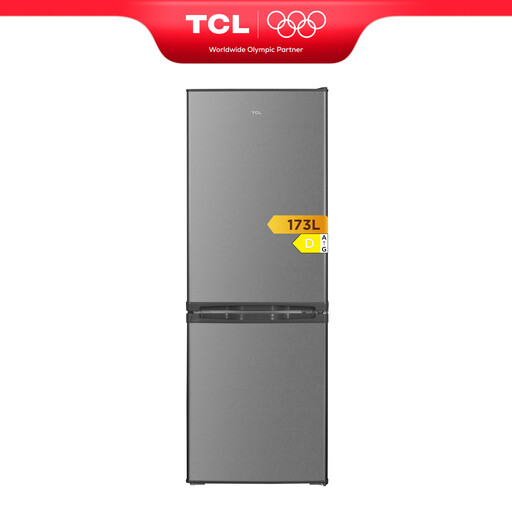
Why this product suits this profile: The model offers 121 litres of fridge space and 52 litres of freezer space, making it suitable for singles, couples or smaller kitchens. Height-adjustable shelves and LED lighting help keep the interior easy to organise.
The separately stated capacities make it easier to compare this model with similarly compact appliances. The adjustable shelves prevent a fixed interior layout.
Energy efficiency class D, LED interior lighting, height-adjustable shelves and a vegetable drawer.
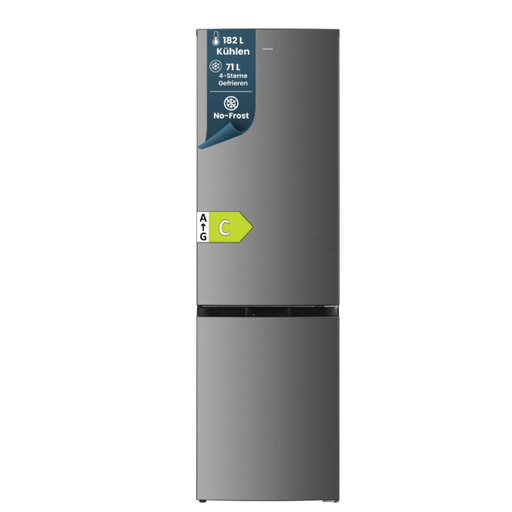
Why this product suits this profile: This freestanding appliance combines 182 litres of fridge space with 71 litres of freezer space. No Frost, 39 dB(A), adjustable glass shelves and reversible door hinging appeal to buyers who prioritise convenience and flexible positioning.
The technical specifications state the noise level, usable capacity and dimensions. This allows you to check before buying whether the appliance suits your room and household size.
Energy efficiency class C, No Frost system, 253-litre total capacity and Super Freeze function.
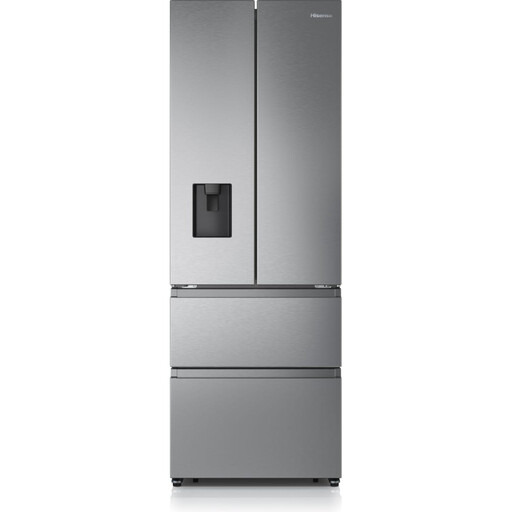
Why this product suits this profile: The French-door design provides 336 litres of fridge space and 149 litres of freezer space. With 38 dB, NoFrostPlus, FreshZone, CrispZone and a water tank, this model is suitable for families and regular large shops.
The water tank does not require a fixed water connection. At the same time, you should check the required installation width, door clearance and stated energy efficiency class E before ordering.
485-litre total capacity, NoFrostPlus, 38 dB and an integrated water dispenser with a manually refillable tank.
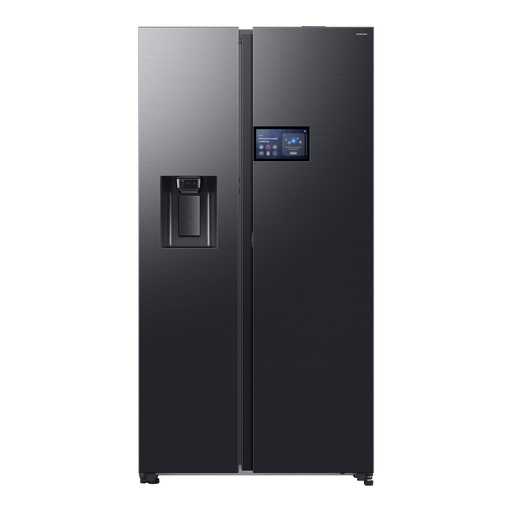
Why this product suits this profile: With 401 litres of fridge space and 220 litres of freezer space, this appliance is designed for households with substantial storage needs. Water and ice dispensers, No Frost+, separate temperature controls and app connectivity add to its specification.
The high capacity is broken down into specific compartment volumes. Before buying, make sure that the width of 912 mm, height of 1,784 mm and the required door clearance will fit your kitchen.
621-litre total capacity, energy efficiency class D, No Frost+ and water and ice dispensers with a water tank.
We have put together a complete, regularly updated list of products that fully meet these strict selection criteria and the safety regulations applicable in the EU.
For one person or a couple, around 200 to 260 litres may be sufficient. Families should plan for a larger total capacity depending on their shopping habits and how much food they store. The division between fridge and freezer space is crucial, not just the litre figure on the product label.
No Frost is useful if you regularly use the freezer compartment and want to avoid manual defrosting. The feature reduces ice formation, but it can affect the purchase price and energy consumption. You should therefore also check the energy label and annual consumption.
Annual electricity costs are based on the stated annual consumption in kWh and your electricity tariff. Example: with annual consumption of 200 kWh and a tariff of 0,35 Euro per kWh, the calculated cost is around 70 Euro per year. The actual amount depends on the tariff and the operating environment.