
Lieferung heute & morgen

Qualitätsgarantie

Willkommens-Angebote freischalten: KOSTENLOSE Lieferung | Bis zu 80 % RABATT | Kostenlose 30-Tage-JoyPlus-Testphase
App herunterladen
A fridge-freezer needs to do more than simply cool and freeze food. It should fit comfortably in your kitchen, offer enough storage space and suit your household’s shopping and storage habits. Singles, couples and families can choose from a range of designs, from compact fridges with freezer compartments and classic freestanding fridge-freezers to side-by-side and French-door models.
Before buying, it is worth taking a close look at the technical specifications. Some commonly advertised features may seem appealing at first glance, but they do not solve every practical problem.
A large fridge-freezer offers more storage space, but it also needs sufficient room. It is not just the width and height that matter: you should also consider the depth, door-opening angle and clearance from walls or neighbouring units. A side-by-side fridge-freezer, for example, can be more than 90 cm wide. With a French-door fridge-freezer, you also need to check that both doors can open fully.
Noise levels are given in dB(A). A quiet fridge-freezer operating at 37 to 40 dB(A) may be more suitable for an open-plan kitchen or bedroom than a noticeably louder model. However, perceived noise also depends on the floor, the position of the appliance against the wall and the compressor’s operating cycles. For this reason, always check the dB rating directly in the product specifications.
A No Frost fridge-freezer circulates cold air and prevents ice from forming in the freezer compartment. This reduces the need for manual defrosting. Low Frost reduces ice build-up, but does not eliminate the need for occasional defrosting altogether. If you want to keep maintenance to a minimum, look for “No Frost” or “Total No Frost” in the relevant compartments.
When choosing a fridge-freezer, pay attention to the separately listed capacities:
A compact fridge with around 80 to 100 litres of capacity is suitable for offices, bedrooms, student rooms or individuals with limited refrigeration needs. Models offering around 250 litres are often sufficient for singles and couples. Families will often benefit from 320 litres or more. However, the right size depends more on how often you shop than on the number of people in your household alone.
The EU energy label rates refrigeration appliances on a scale from A to G. It also shows annual electricity consumption in kWh per year. This figure is particularly useful when estimating running costs:
Annual electricity costs = kWh per year × electricity price per kWh
An appliance with energy efficiency class C and consumption of 141 kWh per year may be more economical over the long term than a larger class E model with significantly higher consumption. Always consider these figures in relation to the available storage space rather than looking at them in isolation.
Practical features of a freestanding fridge-freezer may include:
Before placing your order, you should also check the required ventilation clearances, delivery route, door width and whether the appliance is suitable for unheated rooms. Not every fridge-freezer is designed for use in a garage or cellar with low temperatures.
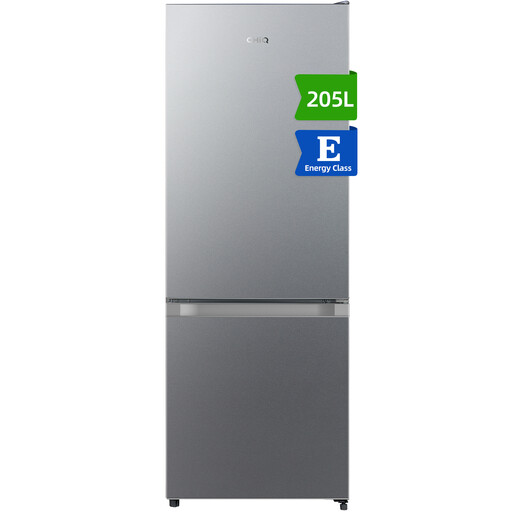
Why this product suits this profile: This combination offers 153 litres of fridge space and 52 litres of freezer space in a width of 54 cm. It is therefore suitable for smaller kitchens and households with modest storage requirements.
The stated dimensions, reversible door and Low Frost technology make the space requirements and maintenance effort clear.
205 litres of total capacity, an operating noise level of 39 dB and five adjustable cooling modes.
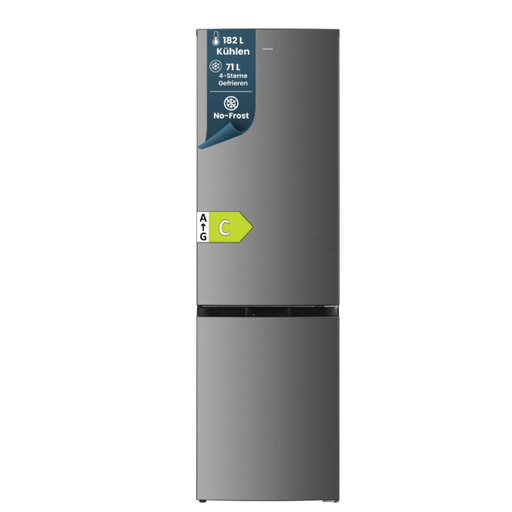
Why this product suits this profile: This model combines 182 litres of fridge space with 71 litres of freezer space, No Frost technology and energy efficiency class C in a freestanding cabinet.
The stated annual consumption of 141 kWh and noise level of 39 dB allow you to assess running costs and noise objectively.
No Frost system, reversible door, LED lighting and 4-star freezer compartment.
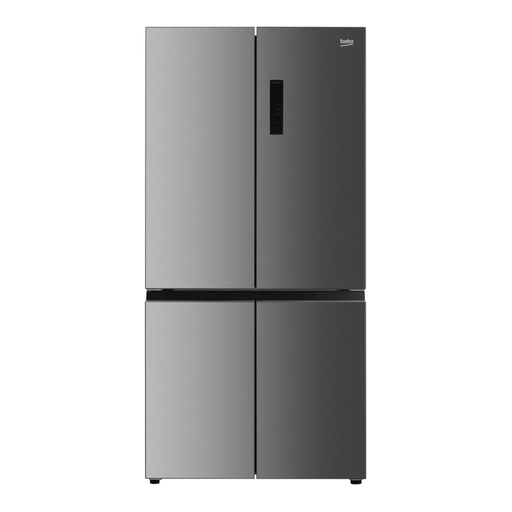
Why this product suits this profile: With 291 litres of fridge space and 175 litres of freezer space, this large-capacity model is designed for families and households with substantial food stocks.
Before buying, compare the dimensions of 73 × 79 × 180 cm and the noise level of 39 dBA with the available installation space.
NoFrost Dual Cooling, multifunction display, reversible door and 466 litres of net capacity.
We have compiled a complete, regularly updated list of products that fully meet these strict selection criteria and the safety regulations applicable in the EU.
This depends on the model and the manufacturer’s specifications. As a general rule, sufficient space must be left at the back and sides to allow heat to escape. The door also needs enough room to swing open. The installation instructions for the appliance in question are definitive.
Compare the energy efficiency class with the stated annual consumption in kWh. A larger appliance may use more electricity despite having a better energy efficiency class if it offers significantly more capacity and additional features. The most sensible choice therefore depends on the amount of storage space you need.
Its lifespan depends, among other things, on how it is used, ventilation, cleaning the door seals and the ambient temperature. Regularly removing dust from accessible areas, positioning the appliance on a level surface and keeping ventilation openings clear can help support proper operation. The manufacturer’s warranty and service information are also important.