
Lieferung heute & morgen

Qualitätsgarantie

Willkommens-Angebote freischalten: KOSTENLOSE Lieferung | Bis zu 80 % RABATT | Kostenlose 30-Tage-JoyPlus-Testphase
App herunterladen
A fridge freezer needs to suit your kitchen, household and shopping habits. A small freezer compartment is enough for ice cubes and a few frozen products, while a large fridge freezer combination provides separate areas for stored supplies and fresh food. However, unsuitable purchases are often caused not by missing functions, but by dimensions that do not fit, confusing energy-consumption information or features that offer little practical benefit in everyday use.
This guide from the Joybuy Product Recommendation Officer explains which specifications matter before you buy and which appliance categories are suitable for different households.
A tall fridge is not automatically spacious. What matters is the net capacity, divided between the fridge and freezer compartments. Wall thicknesses, drawers and technical components reduce the usable internal space. For one person, a small fridge with around 80 to 120 litres may be sufficient. Couples often need more flexible storage space, while families benefit from a fridge freezer combination with a considerably larger net capacity.
With a built-in appliance, you must also check the niche height, niche width and niche depth precisely. A built-in fridge with freezer compartment can only be integrated neatly if the furniture door, door mechanism and ventilation all match.
A No Frost fridge freezer circulates cold air in a way that significantly reduces ice formation in the freezer compartment. With suitable systems, manual defrosting is not required. With a Low Frost fridge freezer, ice formation is reduced, but it does not disappear completely. The freezer compartment therefore still needs to be defrosted occasionally.
It is important for buyers to read the specific manufacturer’s information. Terms such as “frost-free”, “LessFrost” and “MinFrost” can refer to different technical solutions.
The EU energy-efficiency scale ranges from A to G. Under this scale, a fridge freezer with energy rating C is classified as more efficient than a comparable appliance rated E. To calculate costs, you should also consider the stated annual consumption in kilowatt hours. Actual expenditure depends on the electricity tariff, room temperature, how full the appliance is and how it is used.
Where possible, compare appliances with a similar capacity. A large fridge freezer rated E may use more kilowatt hours in absolute terms than a smaller model in the same class.
Beforehand, make a note of how much fridge and freezer space you actually need. A 4-star freezer compartment is generally suitable for storing frozen food within the stated capacity. The freezing capacity in kilograms per 24 hours shows how much fresh food the appliance can freeze under defined conditions.
Also pay attention to:
A freestanding fridge freezer needs sufficient clearance from walls and heat sources. The ventilation openings must not be covered. For built-in appliances, follow the specifications for kitchen ventilation and attachment to the furniture door.
A fridge freezer with a reversible door hinge makes it easier to adapt the appliance to different kitchen layouts. Check whether the manufacturer allows the door to be reversed and whether this can be done according to the instructions. A 90-degree opening angle can also be crucial in narrow kitchen runs.
A quiet fridge freezer is usually described by its sound level in decibels (dB). Values of around 35 to 40 dB may be important for open-plan kitchens, offices or locations close to bedrooms. However, the perceived noise level also depends on the floor, distance from walls and the acoustics of the room.
A fridge freezer with LED lighting makes it easier to see the contents. However, lighting cannot replace a sensible arrangement of food. Heavy containers should be placed on suitable shelves; refer to the product description or instructions for the relevant maximum load.
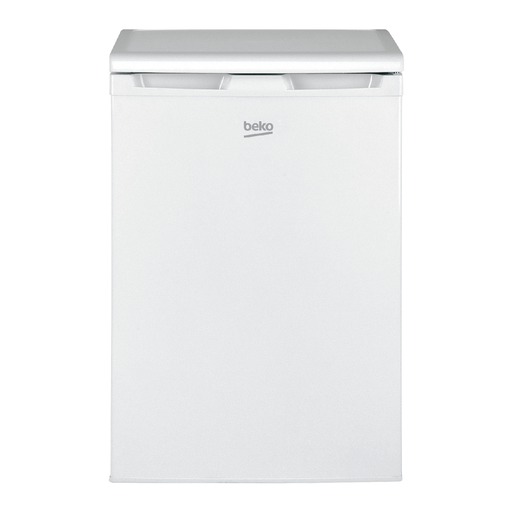
Why this product suits this profile: With a total capacity of 114 litres, including 101 litres of fridge space and a 13-litre 4-star freezer compartment, this appliance is suitable for singles, offices or small kitchens.
The compact dimensions of 84 × 54 × 59 cm make planning easier. MinFrost reduces ice formation, but does not eliminate the need for defrosting completely.
Energy rating E, 36 dB, reversible door hinge and LED interior lighting.
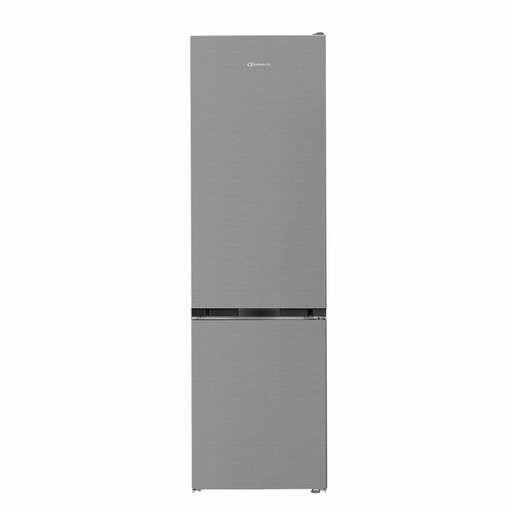
Why this product suits this profile: This appliance offers a total capacity of 415 litres, with separate cooling circuits for 297 litres of fridge space and 118 litres of freezer space.
Total No Frost reduces the need for manual defrosting. Check the 90-degree door opening at the intended installation location before ordering.
Energy rating C, 35 dB, inverter compressor, FreshShield drawer and reversible door hinge.
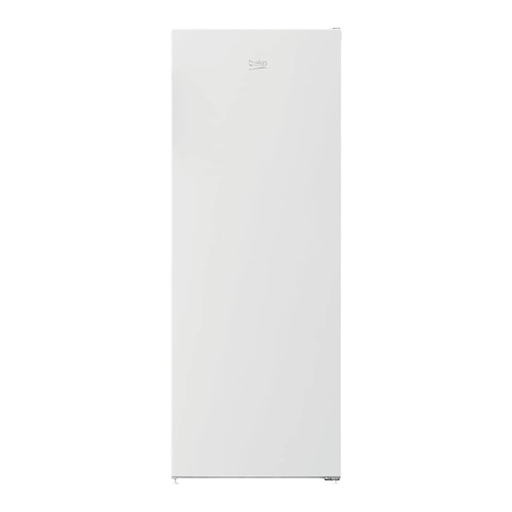
Why this product suits this profile: As a separate freezer with a capacity of 177 litres, this model is suitable for storing supplies, larger households or complementing a fridge with a small freezer compartment.
The No Frost system is clearly specified as providing automatic defrosting. Before installation, consider ventilation, the standing surface and the door hinge.
177 litres of net capacity, three drawers, two compartments, Fast Freeze function, temperature alarm and 40 dB.
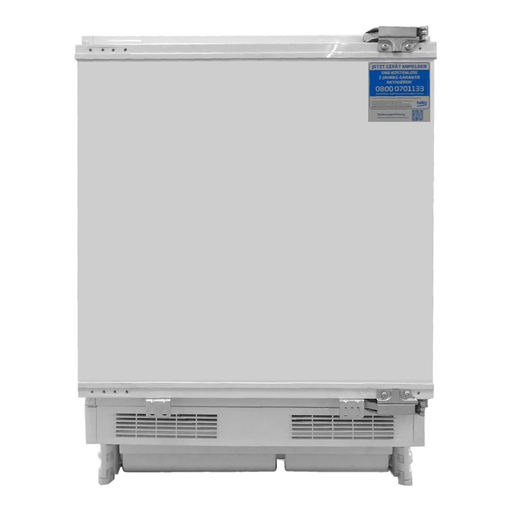
Why this product suits this profile: This built-in appliance is designed for a niche height of 88 cm and combines 92 litres of fridge space with a 15-litre freezer compartment.
Check the niche height, reversible door hinge and required plinth ventilation before installation. MinFrost still requires occasional defrosting.
107 litres of net capacity, energy rating E, approximately 37 dB and LED interior lighting.
We have put together a complete, regularly updated list of products that fully meet these strict selection criteria and the safety regulations applicable in the EU.
For singles, an appliance with around 80 to 150 litres may be sufficient. Couples and small households often look for between 150 and 250 litres. Depending on shopping habits and how much food they store, families often need a larger fridge freezer combination. The right size depends more on individual habits than on a fixed rule based on the number of people in the household.
Its lifespan depends, among other things, on the compressor, usage, installation location, ventilation and maintenance. Keeping the appliance level, ensuring clear ventilation paths, maintaining clean door seals and avoiding overloading all support reliable operation. If you notice unusual noises, a lack of cooling or a damaged cable, stop using the appliance and contact customer services.
You can estimate running costs using the stated annual consumption and your personal electricity price: kilowatt hours per year multiplied by the price per kilowatt hour. For a meaningful comparison, the net capacity, energy rating and features of the appliances should be similar.