
Lieferung heute & morgen

Qualitätsgarantie

Willkommens-Angebote freischalten: KOSTENLOSE Lieferung | Bis zu 80 % RABATT | Kostenlose 30-Tage-JoyPlus-Testphase
App herunterladen
A fridge freezer is one of those appliances that stays in many homes for years. Even so, buyers often overlook details that can later lead to high energy bills, space issues or unnecessary maintenance. Three common pitfalls are:
The right choice therefore depends less on one specific feature and more on the available space, household size and intended use.
For one person or a small flat, a compact fridge freezer with a capacity of around 200 litres may be sufficient. Families often need more fridge space and benefit from separate drawers and a well-organised layout.
Before buying, you should measure more than just the appliance’s width, height and depth. Also check:
A large fridge, such as a French-door fridge or American-style fridge freezer, usually requires more floor space. In return, these designs offer wide compartments and, in some cases, flexible temperature zones. In small kitchens, however, a slim freestanding fridge with a reversible door may be more practical.
The EU energy-efficiency classes range from A to G. The energy label also shows the specific annual consumption in kWh. This figure is more suitable for a direct comparison than general terms such as “economical” or “environmentally friendly”.
Here is a simple example: at an electricity price of 0.35 euros per kWh, an appliance with annual consumption of 200 kWh would theoretically cost around 70 euros per year to run. The actual amount depends on your tariff and usage habits.
According to the manufacturer, an inverter compressor adjusts its output to match cooling demand. This can contribute to more consistent operation and lower noise levels. Even so, actual efficiency should be assessed based on the energy class, annual consumption and noise level.
A No Frost fridge freezer technically removes moisture from the freezer compartment, thereby reducing ice build-up. This can make manual defrosting unnecessary. Low Frost appliances generally develop less ice than older models, although occasional defrosting may still be required.
Noise levels are given in dB(A). Values between around 29 and 40 dB(A) may be relevant for open-plan kitchens or flats. However, how loud an appliance seems also depends on the floor, wall clearance and operating conditions.
A fridge freezer with a water dispenser is convenient but requires regular cleaning. Models with a water tank do not need a fixed water connection, but the tank must be filled by hand. With a mains water connection, installation and leak protection should be checked particularly carefully.
Different criteria apply to camping, cars, boats and motorhomes. A 12V compressor cool box works independently of ice and, depending on the model, can also be used as a freezer box. Important factors include the power supply, battery protection, ventilation clearance and the permitted angle of inclination while travelling.
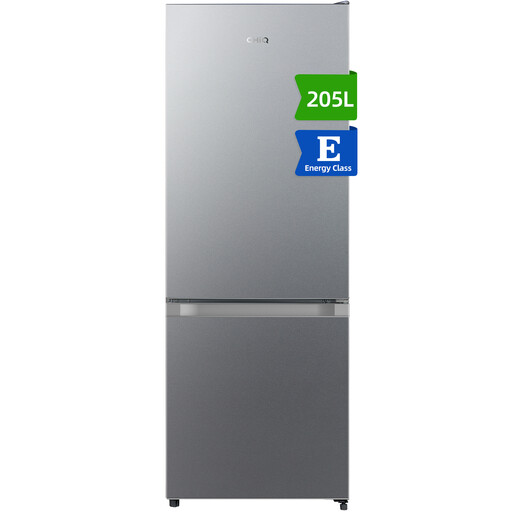
Why this product suits the profile: This compact fridge freezer offers 153 litres of fridge space and 52 litres of freezer space, with a width of 54 cm. It is therefore well suited to smaller households and flats with limited space.
The dimensions and layout are clearly specified. Low Frost reduces ice build-up without claiming to offer full No Frost technology.
205 litres of total capacity, reversible door, five cooling modes and a stated noise level of 39 dB.
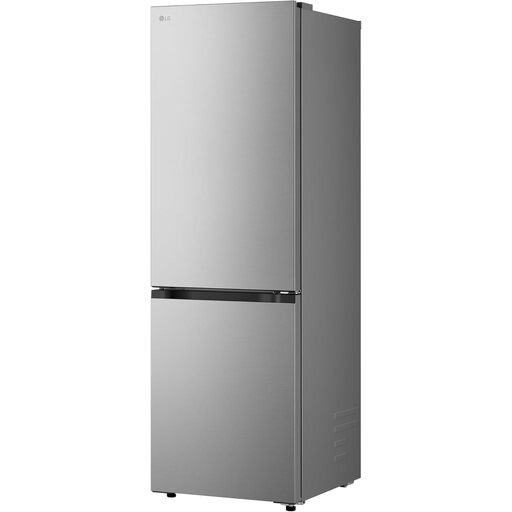
Why this product suits the profile: This appliance combines 333 litres of usable capacity with Total No Frost, a Smart Inverter Compressor and app support. It is aimed at households that want to consider both features and energy consumption data.
The selection is based on specific figures: energy class C, annual consumption of 169 kWh, 34 dB(A) and a stated No Frost function.
220 litres of fridge space, 113 litres of freezer space, reversible door, rapid cooling and rapid freezing.
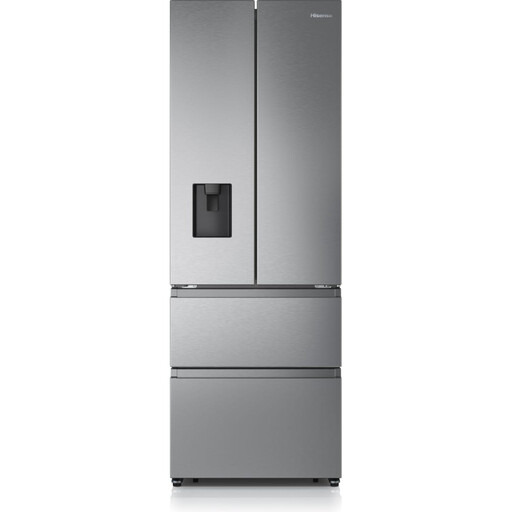
Why this product suits the profile: This French-door fridge freezer offers 485 litres of total capacity, with separate areas for chilled and frozen food. Its design is intended for larger kitchens and regular family shops.
The specifications include usable capacity, dimensions, noise level and annual consumption. NoFrost Plus reduces the need for manual defrosting.
336 litres of fridge capacity, 149 litres of freezer capacity, 38 dB, inverter compressor, CrispZone and an integrated water dispenser.

Why this product suits the profile: This portable 12V compressor cool box is designed for cars, lorries, boats, motorhomes and camping. It can be used as either a fridge or a freezer box.
Three battery protection levels help protect the vehicle battery. Nevertheless, the required ventilation clearance of around 10 cm must not be reduced.
9-litre capacity, temperature range down to -20 °C, 12/24-V connection and operation at an inclination of up to 45 degrees according to the product specifications.
We have put together a complete, regularly updated list of products that fully meet these strict selection criteria and the safety regulations applicable in the EU.
A freestanding fridge freezer should be placed on a level, stable surface. Ventilation openings must not be covered. After transport, it is advisable to leave the appliance to stand for the period specified in the manufacturer’s instructions before connecting it to the mains.
For portable appliances, the power source is crucial. A cool box with a 12/24V DC connection should only be operated from suitable sockets. For use at home, a suitable 100- to 240V adapter is required, provided it is included with the product. Frequently opening the lid or door increases energy consumption.
This depends on shopping habits, the number of people in the household and how much food you store. Smaller households can often manage with around 200 litres. Families and people who regularly freeze food should consider fridge and freezer capacity separately rather than comparing only the total figure.
No Frost can be useful if you use the freezer compartment regularly and want to avoid manual defrosting. Even so, energy consumption should be checked using the EU label. A No Frost function also does not replace regular cleaning and inspection of the door seals.
Lifespan depends, among other things, on usage, location, ventilation and maintenance. Clean seals, sufficient clearance from the wall and avoiding overloading can help support reliable operation. For specific warranty or compressor periods, only the information provided by the relevant manufacturer applies.