
Lieferung heute & morgen

Qualitätsgarantie

Willkommens-Angebote freischalten: KOSTENLOSE Lieferung | Bis zu 80 % RABATT | Kostenlose 30-Tage-JoyPlus-Testphase
App herunterladen
Purchasing a new fridge-freezer is a major decision for any household. But the market is filled with marketing promises and technical specs that often confuse more than they clarify. This frequently leads to buyer's remorse: appliances that are too loud, cause unexpectedly high electricity bills, or have 'smart' features that go unused in daily life. As your Joybuy Product Recommendation Officer, I'll help you avoid these pitfalls and make an informed decision based on facts and your actual needs.
Before we dive into the important criteria, let's look at the three most common sources of error that lead to dissatisfaction.
To find the right appliance, concentrate on the following three core aspects. They form the basis for long-term satisfaction.
The first question should always be: How much space do I really need? As a rule of thumb:
The design is just as crucial. A freestanding fridge with a standard width of 60 cm is the classic choice. However, for narrow kitchen alcoves, there are also models like a 55cm wide fridge. Large households often benefit from a side-by-side fridge, which offers vast storage space and a clear separation between the cooling and freezing sections. For student dorms or offices, a mini fridge with a freezer compartment can be the ideal solution.
Since 2021, the new energy efficiency scale from A (very efficient) to G (less efficient) has been in effect. Appliances that were previously rated A+++ are now often found in classes C or D. An Energy Efficiency Class C is already a very good rating for a modern appliance. Pay attention to the annual consumption in kilowatt-hours (kWh/a) to realistically estimate running costs.
The defrosting technology affects both energy consumption and maintenance effort:
The operating noise is specified in decibels (dB). Especially in open-plan kitchens or studio apartments, quiet operation is essential.
Here are three models tailored to different lifestyles and needs, which cleverly avoid the pitfalls mentioned.
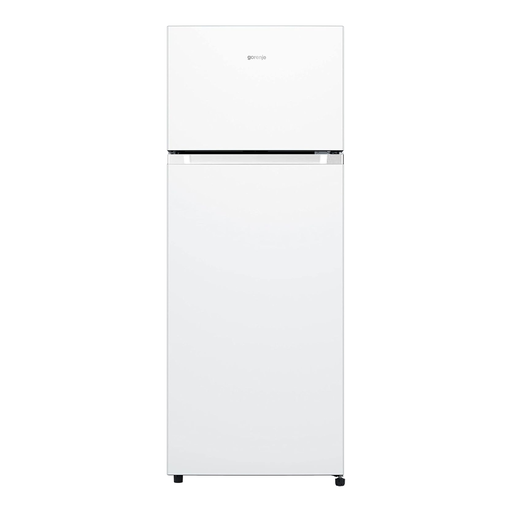
Why it's a great fit: With its compact width of 55 cm and a total usable capacity of 206 litres, this appliance is ideal for singles, couples, or small kitchens. The reversible door hinge offers maximum installation flexibility.
This model focuses on the core functions of cooling and freezing without costly extras. It offers solid performance and avoids the expense of rarely used high-tech features.
Space-saving 55 cm width. LED interior lighting for excellent visibility and a dedicated drawer for fruits and vegetables.

Why it's a great fit: With a vast usable capacity of 621 litres, an elegant brushed black design, and advanced features, this appliance is designed for large, demanding households that value freshness, flexibility, and quiet operation.
The high Energy Efficiency Class B and the extremely quiet operating noise of just 35 dB justify the investment. Features like No Frost and VitaFresh offer genuine added value for food preservation and are not just marketing gimmicks.
Twin NoFrost system, VitaFresh plus for longer freshness, and a flexibly convertible freezer compartment (Flex Cool & Freeze).

Why it's a great fit: This portable fridge and freezer box is designed for campers, truck drivers, and outdoor enthusiasts. It offers powerful cooling down to -20°C and can be flexibly powered via 12V/24V in a vehicle or a standard wall socket.
As a specialised car compressor cooler, it solves a specific problem: reliable cooling on the go. It doesn't try to be a household appliance; instead, it's robust and optimised for mobile use.
High-performance compressor for rapid cooling, operable with both DC (12V/24V) and AC (100-240V), and controllable via a Bluetooth app.
We've compiled a complete, up-to-date list of products that fully meet these strict selection criteria and safety regulations.
1. What does the energy efficiency class mean for a fridge-freezer? The energy efficiency class, indicated on a scale from A (highest efficiency) to G (lowest efficiency), shows how economical an appliance is relative to its volume and technology. Under the new 2021 standards, an appliance in Class C or D is already considered energy-efficient. Always compare the absolute annual consumption (kWh/a) to estimate the actual running costs.
2. How loud can a fridge be and still be considered quiet? A fridge is considered quiet if its operating noise is below 40 decibels (dB). Models with values around 35 dB are extremely quiet and are particularly well-suited for open-plan kitchens or studio apartments. This value is indicated on the appliance's energy label.
3. How often do you need to defrost a fridge-freezer with No Frost technology? Not at all. The No Frost technology prevents the formation of ice and frost in the freezer compartment through a continuous circulation of cold, dry air. Manual defrosting is completely eliminated, which increases convenience and ensures consistently efficient operation.