
Lieferung heute & morgen

Qualitätsgarantie

Willkommens-Angebote freischalten: KOSTENLOSE Lieferung | Bis zu 80 % RABATT | Kostenlose 30-Tage-JoyPlus-Testphase
App herunterladen
A fridge-freezer should keep food neatly organised and reliably chilled, while fitting into your existing kitchen. Yet product descriptions can often lead to the wrong purchase: a large capacity does not automatically mean the space is well used, a low decibel rating does not tell you everything about day-to-day noise, and the energy efficiency rating alone says little about actual running costs.
As Joybuy Product Recommendation Officer, I’ve organised the key details by how useful they are in practice. This makes it easier to work out whether a fridge with a freezer compartment is right for one person, a two-person household or a family.
A model with a total capacity of 300 litres may be less practical day to day than a well-designed model with 250 litres. What matters is the split between the fridge and freezer compartments, the number of drawers, and the height and depth of the shelves.
Before buying, make sure you measure:
A No Frost fridge-freezer prevents ice from building up in the freezer compartment through air circulation and automatic defrosting. This reduces the need for manual defrosting, but you’ll still need to clean the seals, shelves and ventilation openings regularly.
With Low Frost, ice can still build up, but usually more slowly. This type of system may suit smaller households if a lower purchase price or a simpler set of features is more important.
Energy efficiency ratings range from A to G. For comparing costs, the stated annual consumption in kWh is also important. Two appliances with the same rating can have different consumption figures because of their size and features.
For example, the LG GBBS322BSW has an energy efficiency rating of B and annual consumption of 139 kWh. A larger American-style fridge-freezer may offer considerably more usable capacity despite having a different energy rating, but it may also have higher annual consumption. The right figure for you depends on how much storage space you actually need.
The following ranges can be used as a rough guide:
A 250-litre fridge-freezer or a model with around 253 litres can offer a good balance for a typical household. If you regularly freeze larger quantities, check the freezer capacity separately. A large fridge with a freezer compartment is not automatically the right choice if the freezer has only a few drawers.
Noise levels are given in dB(A). Many appliances are rated at around 37 to 40 dB(A), which may be suitable for open-plan kitchens and living areas. However, this is a laboratory measurement, so occasional compressor or fan noise is still possible.
So, when choosing a quiet fridge-freezer, don’t base your decision on the decibel figure alone. Also check the stated airborne acoustical noise emission class, make sure the appliance stands level and leave enough space between it and the wall.
Useful features include:
Some models also have a water dispenser. Check whether it uses a water tank or needs to be connected to the mains water supply, as this can significantly affect installation.
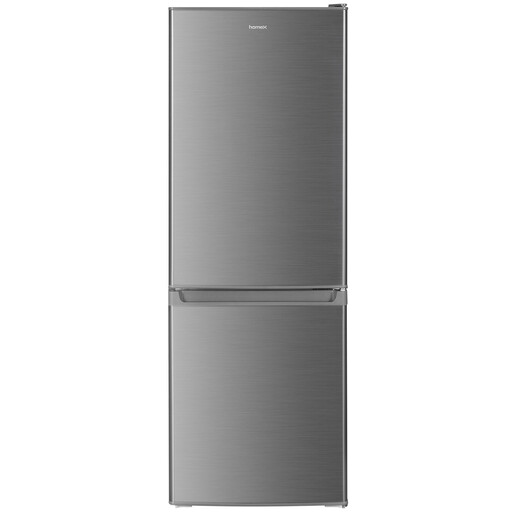
Why this product suits this household: This freestanding model offers 121 litres of fridge space and 52 litres of freezer space, and stands 142.5 cm tall. It’s a good fit for smaller flats, individuals or couples with limited space.
Its compact dimensions make planning easier. The reversible door prevents it from hitting furniture in a tight kitchen.
Energy efficiency rating C, annual consumption of 124 kWh, LED lighting and a noise level of 40 dB(A).
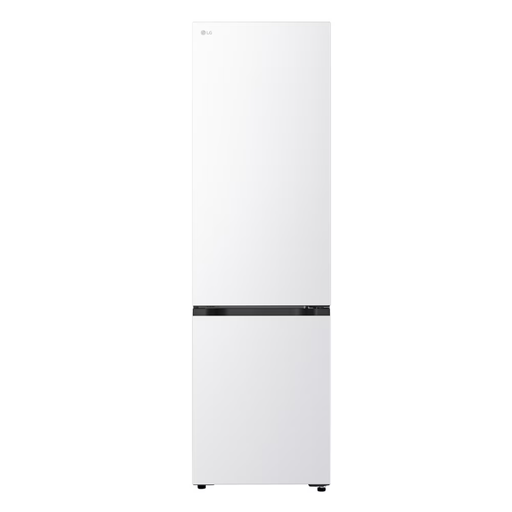
Why this product suits this household: The appliance combines 225 litres of fridge space, 113 litres of freezer space and a 37-litre low-temperature compartment. It’s designed for households that do large weekly shops and need flexible storage.
The capacity breakdown is clearly listed. The foldable compartment and adjustable shelf make room for tall or bulky containers.
Energy efficiency rating B, 139 kWh per year, 33 dB(A), Multi-Airflow, Wi-Fi and FRESHConverter+.
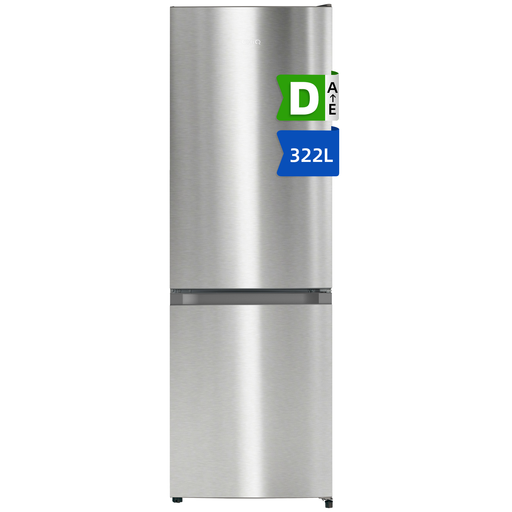
Why this product suits this household: With 226 litres of fridge space and 96 litres of freezer space, this appliance is suitable for families. According to the product details, its N, SN, ST and T climate classes allow it to operate at ambient temperatures from 10 to 43 °C.
The product details specify both the depth and the climate range. This lets you check in advance whether it’s suitable for your kitchen, utility room or garage.
Total No Frost, energy efficiency rating D, annual consumption of 196 kWh, 37 dB(A) and a fast-freeze function.
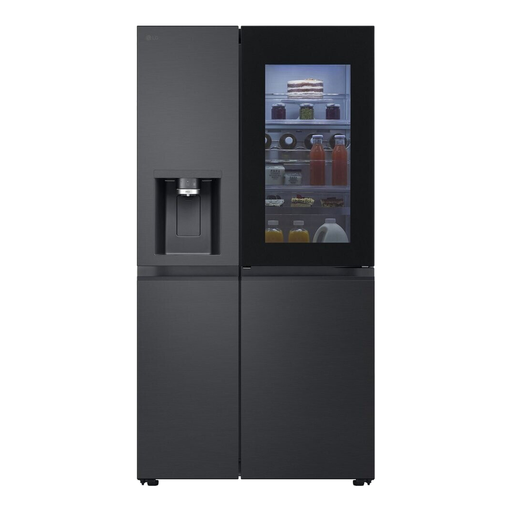
Why this product suits this household: This freestanding American-style fridge-freezer offers 407 litres of fridge space and 221 litres of freezer space. The water dispenser, ice cube maker and crushed ice function are ideal for households that use their appliance frequently.
Check the overall dimensions, door width and required floor space carefully before buying. No Frost reduces the need for defrosting.
628 litres total capacity, No Frost, 35 dB(A), energy efficiency rating D, Wi-Fi and an integrated water dispenser.
We’ve put together a complete, regularly updated list of products that meet these strict selection criteria and fully comply with the safety regulations in force in the EU.
Around 200 to 300 litres may be enough for two people. If you often cook in advance or store frozen food, look for a sufficiently large freezer compartment rather than comparing total capacity alone.
Its lifespan depends on the model, how it’s used, where it’s installed, and how well it’s cleaned and maintained. Good ventilation, a level surface and clean door seals can help it run smoothly. Check the manufacturer’s warranty and any additional compressor cover separately from your statutory consumer rights.
You can estimate the electricity costs using this formula:
Annual consumption in kWh × your electricity price per kWh = annual electricity costs
Actual consumption can vary depending on the room temperature, how full the appliance is, the temperature setting and how often the door is opened. Before buying, check both the energy efficiency rating and the stated annual consumption.