
Lieferung heute & morgen

Qualitätsgarantie

Willkommens-Angebote freischalten: KOSTENLOSE Lieferung | Bis zu 80 % RABATT | Kostenlose 30-Tage-JoyPlus-Testphase
App herunterladen
Purchasing a new fridge-freezer is a major decision for any household. But the market is flooded with marketing promises and technical jargon that often do more to confuse than to clarify. Many appliances advertise features with questionable practical value or hide design flaws behind a sleek, modern exterior. This guide will help you identify the crucial features and sidestep common purchasing traps.
Before you start comparing models, you should be aware of the most common marketing pitfalls that often lead to an unsuitable and expensive choice.
Focus your selection on three fundamental criteria that determine the utility and longevity of your appliance.
The first decision concerns the design. A freestanding refrigerator offers maximum placement flexibility. For larger households or open-plan kitchens, a side-by-side refrigerator is an option that provides ample storage space and often includes an integrated water dispenser.
As a rule of thumb for usable capacity:
For special requirements, such as for camping or in a lorry, a mobile 12V compressor cool box is the right solution. These units are robust, designed to run on a vehicle battery, and provide reliable cooling performance on the go.
The heart of a refrigerator is its compressor. A modern inverter compressor continuously adjusts its power to match the cooling demand. Unlike conventional compressors that only run at full power or switch off completely, an inverter model runs continuously at a low level. The result is significantly lower energy consumption, fewer temperature fluctuations, and very quiet operation—often below 35 decibels (dB). Check the energy label for the annual consumption (kWh/annum) and the noise emission class.
Modern cooling technologies go far beyond basic No Frost. Look for systems that ensure even air distribution (e.g., Multi-Airflow) and offer separate zones for different types of food. Drawers with adjustable humidity keep fruit and vegetables fresh for longer, while a zero-degree zone creates ideal conditions for fish and meat.
Here are some models tailored to specific needs that cleverly avoid the aforementioned pitfalls.
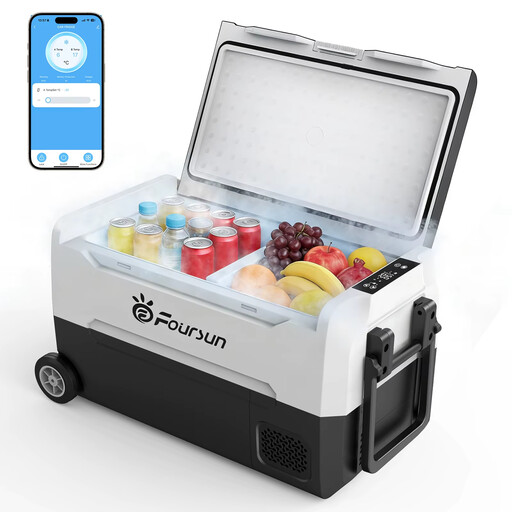
Why This Fits Their Persona: Ideal for campers, lorry drivers, and anyone who needs reliable cooling on the go. Compatibility with 12V/24V DC and 100-240V AC makes it extremely versatile—for use in a vehicle, with a power station, or at a standard socket.
This device is specifically designed for mobile use and forgoes unnecessary household features. The ECO mode is a practical energy-saving function that, according to the manufacturer, reduces consumption to 0.18 kWh/day on long trips.
Powerful 12V compressor cool box for rapid cooling and flexible power options. The app control offers practical convenience without needing to be physically present.
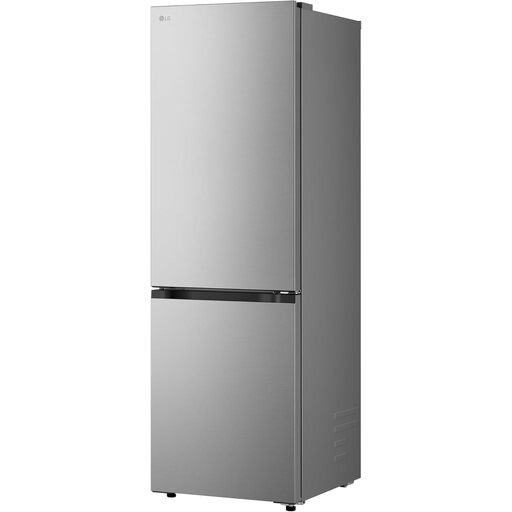
Why This Fits Their Persona: An excellent choice for couples or small families who value efficiency, quiet operation, and modern cooling technology. At 333 litres, the appliance offers ample space without being oversized.
This model bypasses the 'No Frost' myth with advanced technologies like LinearCooling and DoorCooling+, which, according to LG, minimise temperature fluctuations and ensure more even cooling. The Smart Inverter Compressor is a genuine efficiency feature.
Very quiet operation at just 34 dB(A) and a low annual consumption of 169 kWh (Energy Class C). The FRESHConverter+ drawer offers flexible storage options.
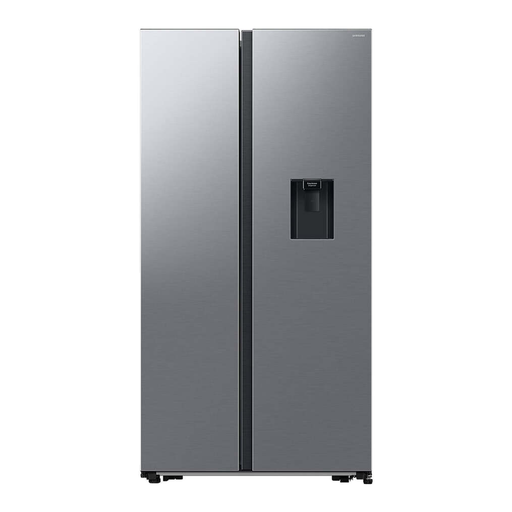
Why This Fits Their Persona: With 578 litres of usable capacity, this side-by-side refrigerator offers enormous space for a large family's weekly shop. The integrated water dispenser and smart features are practical everyday helpers.
This smart fridge focuses on useful features. According to Samsung, the AI Energy Mode analyses usage patterns and optimises the compressor's performance to reduce energy consumption—a real added value, not a gimmick.
The SpaceMax technology allows for more interior space within the same external dimensions. All-Around Cooling ensures even temperature distribution, keeping food fresher for longer.
We've compiled a complete, up-to-date list of products that fully meet these strict selection criteria and local safety regulations.
Consumption depends heavily on size, energy efficiency class, and usage. An economical Class C model with approx. 350 litres of usable capacity uses around 170 kWh per year. In contrast, a large Class E side-by-side unit can consume 300 kWh or more. Always check the "kWh/annum" value on the EU energy label for a reliable basis for comparison.
The noise level is measured in decibels (dB(A)). A quiet appliance is especially important in an open-plan kitchen.
Yes, a 12V compressor cool box is designed for continuous use in a vehicle. Most models have an integrated battery monitor with multiple protection levels. This prevents the cool box from draining the vehicle's battery to the point where the engine can no longer start. For extended operation while stationary, an auxiliary battery or a power station is recommended.