
Lieferung heute & morgen

Qualitätsgarantie

Willkommens-Angebote freischalten: KOSTENLOSE Lieferung | Bis zu 80 % RABATT | Kostenlose 30-Tage-JoyPlus-Testphase
App herunterladen
A fridge freezer is one of the appliances that runs every day and takes up a considerable amount of space in the kitchen. The wrong choice can quickly become a problem: the door may not open fully, the freezer compartment may not be large enough for your household or energy consumption may be higher than expected.
This buying guide from the Joybuy Product Recommendation Officer explains important technical specifications clearly and highlights what households, families, couples and individuals should consider before buying.
The stated total capacity alone says little about how practical an appliance will be in everyday use. A side-by-side fridge freezer can offer plenty of volume, but often requires more floor space and room in front of the doors. A freestanding fridge freezer measuring 60 cm wide will not automatically fit into every recess either.
Before buying, check:
An appliance measuring 63.5 cm deep may protrude beyond a standard kitchen run. This is not a technical fault, but it should be taken into account when planning the installation.
The EU energy efficiency scale for refrigeration appliances ranges from A to G. The class alone is not enough for comparing running costs. The stated annual consumption in kilowatt hours (kWh) is also important.
Examples from our selection:
For a realistic estimate, multiply the annual consumption by your electricity tariff. Actual costs may vary depending on the ambient temperature, how full the appliance is, the temperature setting and how it is used.
A No Frost fridge freezer prevents ice from forming using a circulating-air system and normally eliminates the need to manually defrost the freezer compartment. However, this does not mean that no cleaning is required. Door seals, shelves, salad drawers and, on appliances with a water dispenser, the water system all need regular care.
With Low Frost, less ice forms, but occasional defrosting is still necessary. Buyers should therefore consider whether the maintenance benefits of No Frost justify the possible additional cost.
As a rough guide, a small household may manage with around 200 to 260 litres. Families often need 300 litres or more. However, your shopping habits are the deciding factor: if you regularly cook from fresh or freeze food in bulk, you will need more fridge and freezer space.
Look for separate figures for:
A fridge with freezer compartment is suitable for smaller quantities of frozen food. For families with lots of frozen products, a large fridge freezer with several freezer drawers is more practical.
Noise levels are stated in dB(A). Even a difference of a few decibels can be noticeable during continuous operation. Appliances rated at 35 to 40 dB(A) are suitable for many open-plan kitchens, living areas and offices; however, the perceived noise also depends on the room acoustics and the surface on which the appliance is installed.
For example, the Gorenje NRK620CA2XL4 is specified at 35 dB and the Hisense RF632N4WIE at 38 dB. A quiet fridge freezer is particularly important when the kitchen is directly next to a bedroom or workspace.
The classic fridge freezer with a bottom freezer compartment makes it easier to access frequently used food. A side-by-side fridge freezer provides wide internal compartments and often includes a water or ice dispenser, but requires more space. A French-door fridge freezer combines wide fridge doors with drawers or separate freezer compartments.
Useful features may include:
A fridge freezer with a water dispenser should not be judged on convenience alone. Check the cleaning requirements, the space it takes up and, if it uses a mains water connection, whether installation is possible.
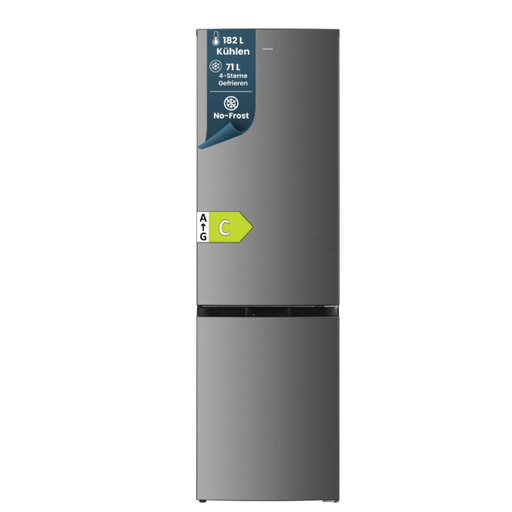
Why this product suits this profile: Its total capacity of 253 litres, including 182 litres of fridge space and 71 litres of freezer space, is suitable for couples or smaller households.
No Frost reduces the need for manual defrosting. However, the dimensions of 54.5 x 61.6 x 181 cm should still be checked in advance.
Energy efficiency class C, 141 kWh/year, 39 dB(A), adjustable glass shelves and a reversible door.
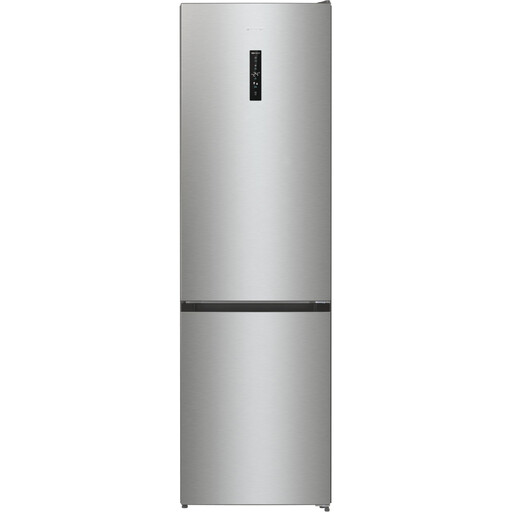
Why this product suits this profile: This appliance combines a 235-litre fridge compartment with a 96-litre freezer compartment, making it suitable for families who do a regular weekly shop.
No Frost in both compartments prevents ice from building up. The total height of 200 cm must be taken into account if you have wall units above the appliance.
Class C, 158 kWh/year, 35 dB, Multi-Airflow, fast cooling and fast freezing functions, plus a door alarm.
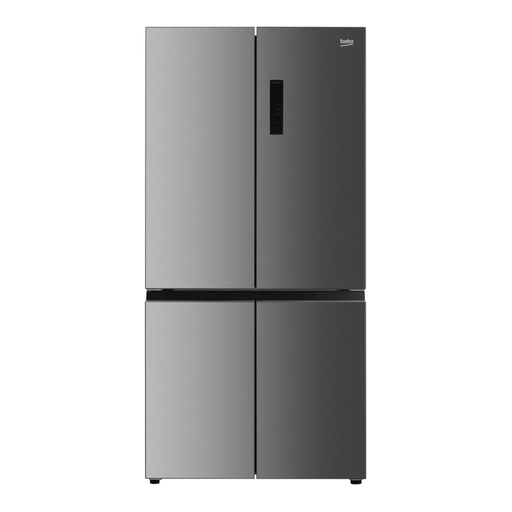
Why this product suits this profile: Its total capacity of 466 litres provides plenty of room for larger households, food stocks and frequent shopping trips.
No Frost Dual Cooling reduces ice build-up and keeps the cooling circuits separate. Before buying, measure the space available—73 x 79 x 180 cm—as well as the door-opening area.
175-litre freezer compartment, 39 dB, multifunction display, Holiday mode and HarvestFresh compartment according to the product specifications.
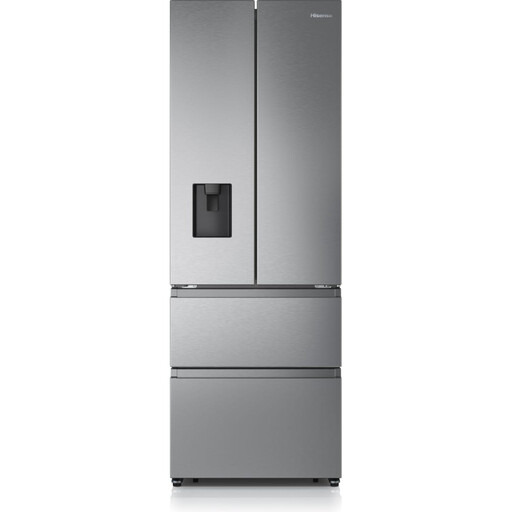
Why this product suits this profile: The French-door design, 485-litre total capacity and integrated water dispenser make it appealing to households that value convenience.
No Frost Plus eliminates the need for manual defrosting. The water dispenser requires regular cleaning and, with a tank model, manual refilling.
336-litre fridge compartment, 149-litre freezer compartment, 38 dB, inverter compressor, CrispZone and Holiday mode according to the product description.
We have put together a complete, regularly updated list of products that fully meet these strict selection criteria and the safety regulations applicable in the EU.
This depends on the manufacturer’s specifications. There usually needs to be space behind and beside the appliance to allow heat to escape. The door should also be able to open fully. The installation instructions for the specific model are the deciding factor.
Its lifespan depends, among other things, on the compressor, usage, ventilation, cleaning and ambient temperature. Regularly caring for the seals and maintaining unobstructed airflow can help support reliable operation. A fixed lifespan cannot be inferred from the energy efficiency class.
Multiply the stated annual consumption in kWh by your electricity price per kWh. At 158 kWh/year and an assumed unit rate of 0,35 Euro per kWh, the calculated cost is approximately 55,30 Euro per year. The actual figure may vary depending on usage and location.