
Lieferung heute & morgen

Qualitätsgarantie

Willkommens-Angebote freischalten: KOSTENLOSE Lieferung | Bis zu 80 % RABATT | Kostenlose 30-Tage-JoyPlus-Testphase
App herunterladen
A fridge-freezer combines a fridge and freezer compartment in one appliance. This saves space and is practical for single-person households, couples, families, offices or holiday homes. The choice ranges from a compact fridge for small kitchens to a large fridge-freezer with several doors.
However, eye-catching product claims do not automatically lead to the right purchase decision. The key factors are the actual dimensions, usable storage space, energy consumption and the cleaning and maintenance required later on.
An appliance with a nominal width of 55 or 60 cm also needs additional clearance for ventilation, opening the door and, where applicable, wall connections. Depth is often underestimated too: a freestanding fridge-freezer can project well beyond the kitchen units.
You should therefore check the following measurements before buying:
For refrigeration appliances, energy classes range from A to G. However, the stated annual consumption in kilowatt-hours (kWh) is the most important factor for running costs. A larger appliance in class D may use more electricity than a smaller model in class E.
For a fair comparison, you should always consider these three details side by side:
You can estimate the likely electricity costs roughly by multiplying the annual consumption in kWh by your electricity price per kWh.
A No-Frost fridge generally distributes cold air through a circulation system, thereby reducing ice formation in the freezer compartment. Low Frost also produces less ice, but manual defrosting is still required. With appliances featuring manual defrosting, you should factor in the additional time needed.
Also pay attention to the specific features included. A Fresh Zone drawer helps keep fruit and vegetables organised separately, but it does not replace correct temperature settings and proper food storage.
The stated litre capacity should match your shopping habits. An appliance with around 250 litres of usable capacity may be suitable for couples or smaller families. The split is important, however: 180 litres of fridge space and 70 litres of freezer space serve a different purpose from 220 litres of fridge space and a 30-litre freezer compartment.
As a rough guide:
The noise level is given in dB(A). Values of around 37 to 40 dB(A) may be particularly relevant for open-plan kitchens, offices or locations near bedrooms. However, the actual perceived noise also depends on the floor, the wall and the compressor’s operating phases.
For cellars, garages or unheated utility rooms, the climate class, or permitted ambient temperature range, is also important. An appliance designed for normal living spaces is not automatically suitable for a cold garage.
A reversible door hinge makes it easier to adapt the appliance to your kitchen layout. Adjustable glass shelves create room for tall bottles or large containers. LED lighting improves visibility inside, while a mechanical thermostat generally provides straightforward operation. Electronic displays can enable additional functions such as fast cooling or a door alarm.
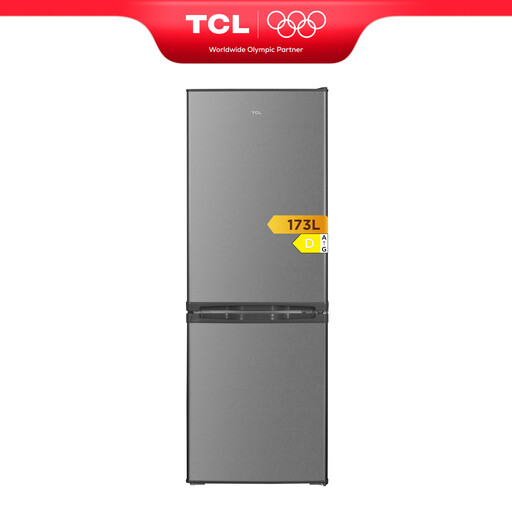
Why this product suits the profile: With 121 litres of fridge capacity and 52 litres of freezer capacity, this model is suitable for smaller households and homes with limited space. The height-adjustable shelves allow you to customise the interior layout.
The clearly defined split between fridge and freezer prevents the total litre capacity from being considered in isolation. The energy efficiency class D should be viewed within the EU A to G scale.
121 litres of fridge space, 52 litres of freezer space, LED lighting and height-adjustable shelves.
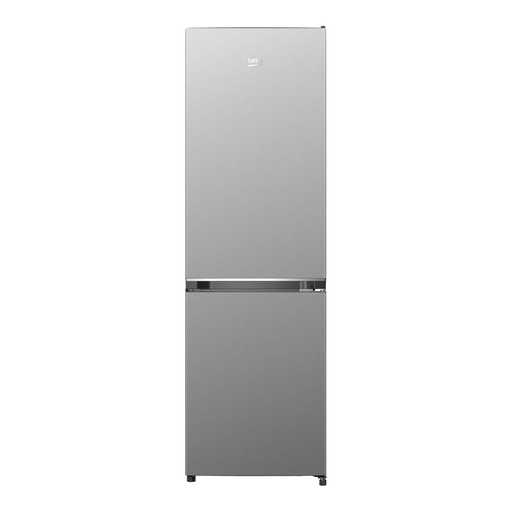
Why this product suits the profile: This 250-litre fridge-freezer combines 180 litres of fridge space with 70 litres of freezer space. No-Frost technology, a reversible door hinge and a stated noise level of 39 dB support convenient everyday use.
Rather than relying solely on design features, the product data sheet specifies an annual consumption of 172 kWh, a noise level of 39 dB and precise dimensions of 180 × 54 × 57,6 cm.
No-Frost system, 250 litres of usable capacity, energy efficiency class D and electronic fast-cooling function.
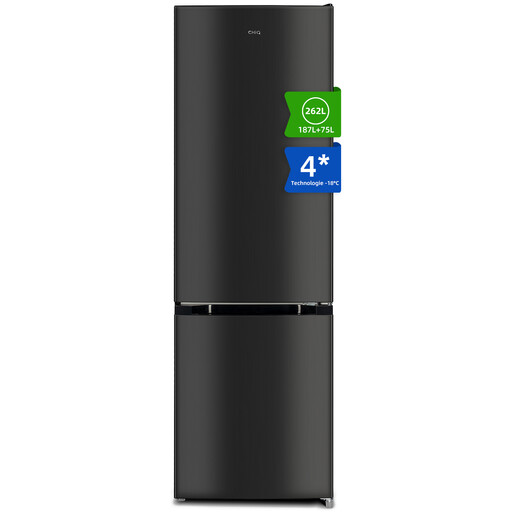
Why this product suits the profile: This 54 cm-wide appliance offers 187 litres of fridge space and 75 litres of freezer space. It fits into narrow kitchens while still providing enough storage for regular shopping.
Low Frost is clearly identified as a system that still requires manual defrosting. The width of 54 cm and depth of 55 cm should also be checked before installation.
262 litres of usable capacity, three freezer drawers, a reversible door hinge and an operating noise level of 39 dB.
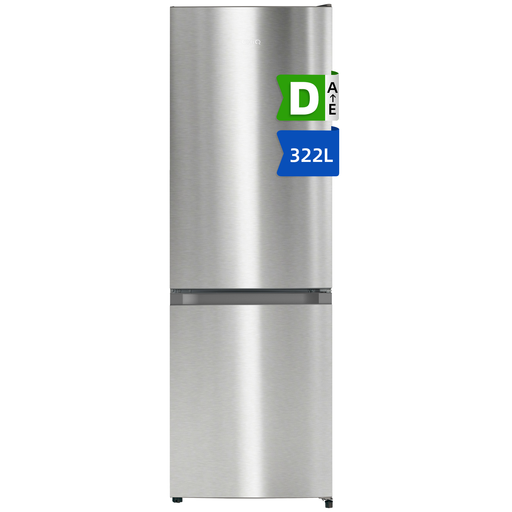
Why this product suits the profile: With 226 litres of fridge space and 96 litres of freezer space, this model is aimed at families and households that need to store larger quantities. The stated climate classes N, SN, ST and T allow use at ambient temperatures from 10 to 43 °C.
The No-Frost claim is cross-checked against the technical data: 322 litres of total volume, annual consumption of 196 kWh, 37 dB and actual dimensions of 59,5 × 63,5 × 185,5 cm.
Total No-Frost, 70/30 split, energy efficiency class D and fast-freezing function.
We have put together a complete, regularly updated list of products that fully meet these strict selection criteria and the safety regulations applicable in the EU.
A fridge-freezer should stand on a stable, level surface. The ventilation openings must not be covered. After transport, the appliance should remain upright as instructed in the operating manual before it is connected. The exact waiting time depends on the model and the position in which it was transported.
For even cooling, food should not be placed directly in front of air outlets, and hot dishes should be allowed to cool before being stored. Door seals can be cleaned with a soft cloth. On a model with manual defrosting, ice must not be removed with sharp objects.
Service life depends, among other things, on use, ventilation, ambient temperature and maintenance. A blanket number of years would therefore not be reliable. In addition to your statutory warranty rights, check the specific warranty conditions for the compressor and appliance.
For one person living alone, a smaller model with around 100 to 180 litres may be sufficient. Couples and smaller families often look for 250 to 300 litres. However, your shopping routine, stockpiling habits and preferred freezer capacity are the deciding factors.
The annual consumption of the specific model and your electricity tariff are the key factors. Multiply the stated kWh per year by the price per kWh. Compare appliances with a similar usable capacity, as a larger volume will naturally have different consumption.
No-Frost reduces the need for manual defrosting and can be practical if you use the freezer frequently. If you only use a small freezer compartment and want to keep the purchase price down, you could also consider a model with manual defrosting or Low Frost. The right choice depends on how you use the appliance, the amount of maintenance you are prepared to do and your budget.