What should you look for when buying?
First, make sure there’s a suitable place for opened cream and your fresh ingredients. Then check that the balance of fridge and freezer space suits your household.
| Priority |
What to check when buying |
Who it matters to |
| Food hygiene in the fridge |
Check the fridge compartment, temperature controls and a suitable place for a covered pack; follow the storage instructions on the cream pack. |
If there’s cream left after dinner, I want to store it chilled and covered as directed on the pack. Around 33% of consumers put food hygiene first. |
| Usable fridge space |
Compare fridge and freezer capacities separately, and check that the shelves suit the packs and bowls you use. |
If there needs to be room for several ingredients and leftovers for a shared meal, the usable fridge space matters most to me. Around 27% of consumers prioritise having enough fridge space. |
| Energy consumption |
For appliances of a suitable size, compare annual consumption in kWh. Actual costs also depend on your electricity tariff and how you use the appliance. |
If running costs matter to me, I want to compare annual consumption with the space I need, rather than looking only at the energy efficiency class. Around 20% of consumers prioritise energy consumption. |
| Dimensions and design |
Measure the space or housing, check the door opening and, for built-in appliances, make sure the door fitting is compatible. |
If my kitchen space is limited or there’s a fixed housing, the appliance and door fitting both need to fit. Around 20% of consumers prioritise installation dimensions and design. |
Joybuy product selection
This selection includes freestanding fridge-freezers and a built-in appliance with a freezer compartment. Compare the fridge and freezer space, dimensions and annual energy consumption with what you actually need.
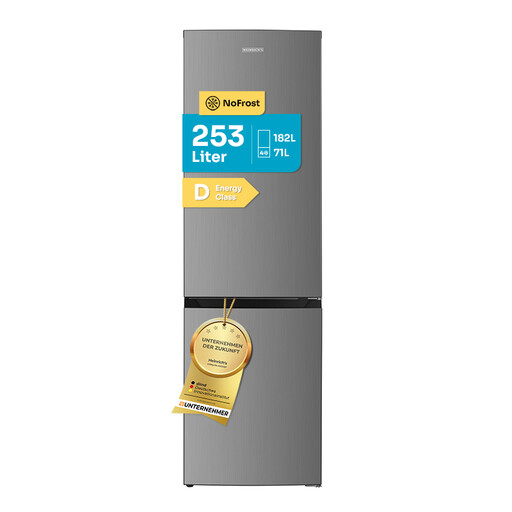 Image unavailable
Heinrich's fridge-freezer, 253 l, stainless steel
The separate compartments provide designated space for chilled ingredients and frozen food.
253 l total capacity, including 182 l of fridge space and 71 l of freezer space; energy class D, No Frost and 39 dB.
View at Joybuy
 Image unavailable
exquisit KGC5232-60-E-040C Inoxlook-az, 173 l
The separate fridge and freezer compartments make it easy to compare the space available for fresh ingredients and frozen food with what you need.
173 l net capacity, including 121 l of fridge space and 52 l of freezer space; energy class C and 124 kWh/year. The stated width is 49.5 cm, and the door is reversible.
View at Joybuy
 Image unavailable
LG GBBS727AEV Fit&Max, 375 l, energy class A
The stated fridge and freezer capacities make it easy to check whether this model suits your needs for fresh ingredients and frozen food.
375 l total capacity, including 262 l of fridge space and 113 l of freezer space; energy class A, 112 kWh/year and Total No Frost. Stated dimensions: 67.5 × 59.7 × 203 cm.
View at Joybuy
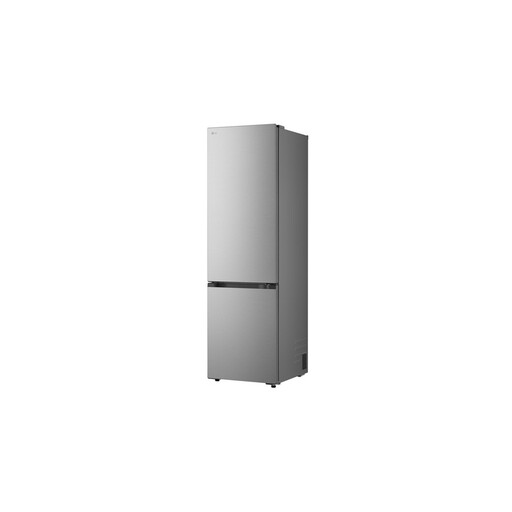 Image unavailable
LG GBBSJ2CCPY, 375 l, energy class C
The stated fridge and freezer capacities help you check whether there’s enough room for fresh ingredients and frozen food.
375 l total capacity, including 262 l of fridge space and 113 l of freezer space; energy class C and 175 kWh/year. Features also include Total No Frost and a FRESHConverter+ zone with selectable temperatures for meat, fish or cheese.
View at Joybuy
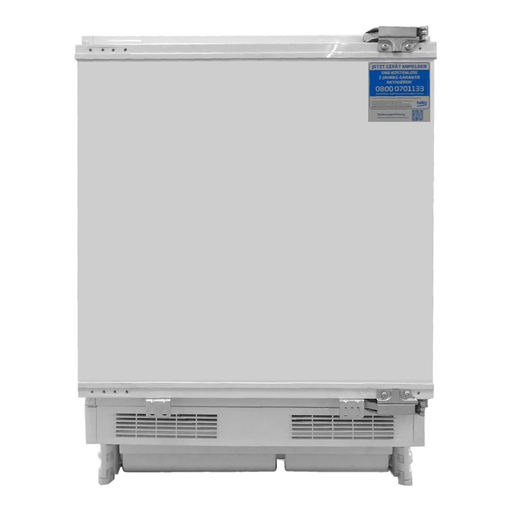 Image unavailable
Beko BU1154N built-in fridge with freezer compartment, 107 l
This built-in appliance may suit you if it fits your housing and a small freezer compartment is enough.
107 l total capacity, including 92 l of fridge space and 15 l of freezer space; energy class E and around 145 kWh/year. A housing height of 88 cm and a reversible door are specified.
View at Joybuy
Frequently asked questions
Where should I keep opened cream until dinner?
Follow the storage instructions on the specific pack and put the opened cream back in the fridge, covered. According to the German Federal Institute for Risk Assessment, refrigeration slows the growth of many germs, but it doesn’t keep an opened product fresh indefinitely. Use clean utensils when serving it.
Can I freeze sour cream or crème fraîche instead?
If the texture matters for your dish, freezing isn’t an equivalent alternative: according to the Rhineland-Palatinate consumer advice centre, sour cream and crème fraîche can separate and become grainy after freezing. This doesn’t necessarily apply to every type of cream.
How do I compare running costs?
Multiply the stated annual consumption in kWh by your electricity price per kWh. This gives you an estimate for comparison, not a guaranteed bill; usage and where you place the appliance can affect its actual consumption.
What should I check before installing or positioning the appliance?
Compare the dimensions of the specific appliance with the space you have for it. For a built-in appliance, you’ll also need to check that the housing dimensions and cabinet door fitting are compatible. For example, Liebherr specifies a sliding door fitting for the ICNSd 5103.
What do energy labels tell me, and what should I do with my old appliance?
EU Regulation 2019/2016 sets out the energy labelling requirements for refrigerating appliances. The label lets you compare details such as energy efficiency class and annual consumption. For an old electrical appliance, the German Federal Ministry for the Environment recommends taking it to an authorised collection point.


