
Lieferung heute & morgen

Qualitätsgarantie

Willkommens-Angebote freischalten: KOSTENLOSE Lieferung | Bis zu 80 % RABATT | Kostenlose 30-Tage-JoyPlus-Testphase
App herunterladen
A fridge freezer should reliably keep food chilled, store groceries in an organised way and fit the available space in your kitchen. Even so, certain selling points regularly lead to disappointing purchases. The key factor is not the longest list of features, but the combination of usable capacity, dimensions, energy consumption, noise level and your actual needs.
An appliance that is 60 cm wide will not automatically fit into every 60 cm niche. You also need to take door overhang, wall clearance, ventilation and the opening angle into account. Multi-door, French-door and side-by-side fridges require additional space when the doors are opened.
The delivery route is also important: check door widths, stairways and lifts before ordering. Depending on the model, an appliance with a water and ice dispenser may also require a water tank or a fixed water connection.
The energy efficiency classes for refrigeration appliances range from A to G. A class C or D fridge may use less electricity than a larger class E appliance, but the specific figure in kWh per year is the decisive factor for comparison. A large fridge does not automatically consume little energy because of its volume, even if the class on the label appears comparable.
You should therefore always check:
No-frost fridges reduce the need for manual defrosting. However, they do not automatically solve the problem of poorly designed compartments. Look for adjustable glass shelves, drawer height, door compartments and the layout of the freezer section.
A fridge with a water dispenser, app control or touchscreen can be practical. If the feature is rarely used, however, it increases the purchase price and may also add to maintenance requirements. When choosing a smart fridge, you should also check Wi-Fi compatibility, app support and the available privacy information.
A compact fridge freezer with a total capacity of around 200 to 300 litres is often sufficient for one person or a couple. Families and people who shop less frequently often need more storage space. The layout is crucial: a large fridge compartment is of little use if you regularly store lots of frozen food.
A fridge with the freezer compartment at the top is often more compact. Models with a bottom freezer make it easier to access chilled food that is used frequently. Multi-door and French-door fridges provide wide shelves, but require more space in front of the appliance.
A no-frost fridge removes the moisture that forms in a controlled way, thereby preventing ice from building up in the freezer compartment. MinFrost models may still require occasional manual defrosting. For this reason, descriptions such as Total No Frost or automatic defrosting should always be checked against the relevant product data sheet.
Rapid cooling and rapid freezing temporarily lower the temperature when larger quantities of fresh food are being stored. These functions are useful, but should not be left switched on permanently. Multi-airflow systems distribute cold air throughout the interior; their precise effect depends on how full the fridge is and where the food is placed.
For open-plan kitchens, small flats or offices, a quiet fridge is particularly important. The noise level is given in dB(A). Figures of around 30 to 35 dB(A) are lower than those of many larger appliances with noise levels above 40 dB(A). An inverter compressor adjusts its output variably and can therefore operate more evenly. However, the specific energy consumption and noise level still depend on the model.
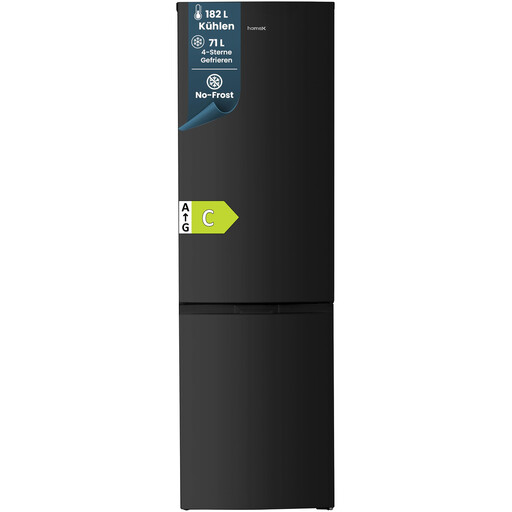
Why this product suits the profile: This freestanding model combines a manageable footprint with 182 litres of fridge space and 71 litres of freezer capacity.
The product details specify the dimensions, energy efficiency class C and a noise level of 39 dB(A), making key comparison figures clear before purchase.
Total No Frost, super-freeze function, reversible door and four adjustable glass shelves.
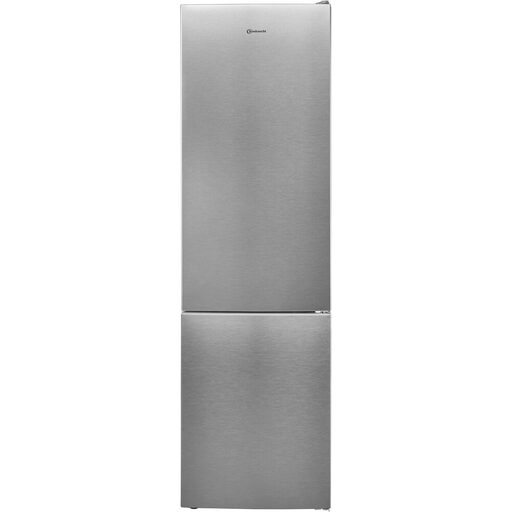
Why this product suits the profile: The combination of 355 litres of usable capacity, a flexible Multi-Zone and electronic controls supports versatile food storage.
With 32 dB and annual consumption of 112 kWh, the noise and energy figures are clearly specified; the dimensions should be checked before ordering.
Energy efficiency class A, No Frost, inverter compressor and a convertible compartment with a temperature range from -24 °C to 10 °C.
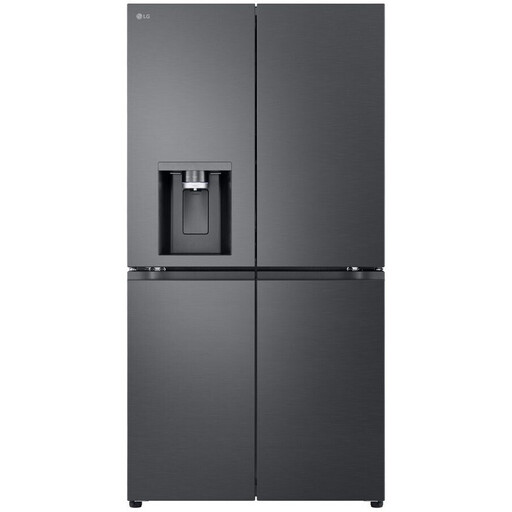
Why this product suits the profile: Its high capacity is designed for large households that regularly need plenty of fridge and freezer space.
The data sheet lists 384 litres of fridge capacity and 261 litres of freezer capacity, 34 dB(A) and energy efficiency class C.
No Frost, water and ice dispenser with water tank, app compatibility and four freezer drawers.
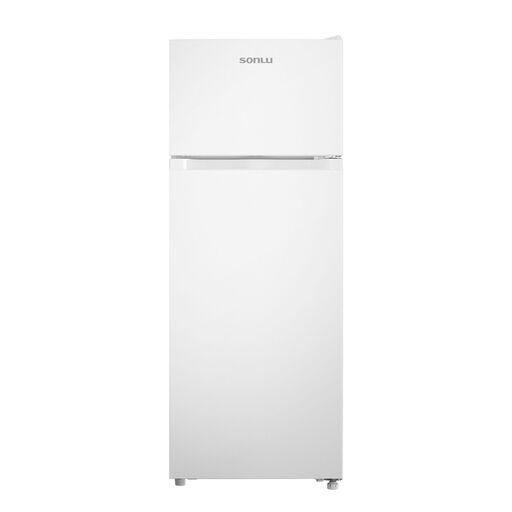
Why this product suits the profile: Its stated width of 55 cm and compact design make it suitable for smaller kitchens, flats or offices.
Adjustable shelves, levelling feet and a cleanable door seal address common problems in confined spaces.
206 litres of total capacity, rapid cooling, rapid freezing, LED interior lighting and a vegetable drawer.
Before connecting the appliance, leave it standing upright in accordance with the manufacturer's instructions. Place it on a stable, level surface and maintain the required ventilation clearances. Ventilation openings must not be covered. In unheated utility rooms, the climate class is important: it indicates the ambient temperatures for which the appliance is designed.
The recommended fridge temperature is usually around 4 °C, while the freezer compartment should be set to -18 °C. Allow hot food to cool before storing it. Evenly distributing food helps air circulate; do not block the cold-air outlets.
We have put together a complete, regularly updated list of products that fully meet these strict selection criteria and the safety regulations applicable in the EU.
This depends on the design and the manufacturer's specifications. As well as the clearance from the wall, you need to consider air circulation, door opening and heat dissipation. Appliances with a special flush or zero-clearance design have their own requirements.
Its service life depends on factors including the compressor, ventilation, operating conditions, maintenance and daily workload. Regularly cleaning the door seal, ensuring an adequate air supply and avoiding unnecessarily long periods with the door open can help support reliable operation. A general service life cannot be inferred from the energy efficiency class.
For a rough calculation, multiply the stated annual consumption in kWh by your electricity price per kWh. Actual consumption may vary depending on room temperature, how full the appliance is, the temperature setting and your usage habits. Always compare the specific kWh figure, rather than looking only at the energy class.