
Lieferung heute & morgen

Qualitätsgarantie

Willkommens-Angebote freischalten: KOSTENLOSE Lieferung | Bis zu 80 % RABATT | Kostenlose 30-Tage-JoyPlus-Testphase
App herunterladen
A fridge freezer needs to do more than simply chill and freeze food in everyday use. The right dimensions, a practical capacity split, moderate noise levels and energy consumption suited to your usage habits are all key considerations. However, focusing solely on a high litre capacity or eye-catching extra features often means overlooking important details.
A large fridge can be a sensible choice for families and larger households. However, with a side-by-side fridge freezer, some of the available width is taken up by the vertical division between the fridge and freezer compartments. The doors are also often wide. Before buying, check not only the height and width, but also the door-opening angle, clearance from walls and the delivery route.
A No Frost fridge freezer circulates cold air and reduces ice build-up in the freezer compartment. This means less manual defrosting, but it does not replace regular cleaning. On compact appliances, No Frost may also be limited to certain areas. The product description should therefore clearly state whether “Total No Frost” applies to both the fridge and freezer compartments.
EU energy ratings range from A to G. For comparing running costs, you also need the annual consumption in kWh. A larger appliance with an energy rating of C may use more electricity overall than a smaller fridge freezer with the same rating. A simple calculation can help:
Annual consumption in kWh × your electricity price per kWh = approximate annual electricity costs
Actual consumption depends, among other things, on room temperature, how full the appliance is, how often the door is opened and the temperature setting.
For one person or a couple, a model with around 200 to 300 litres of usable capacity is often sufficient. Families generally need more fridge space and a sufficiently large freezer compartment. The total capacities of the side-by-side fridge freezers featured here, for example, range from 525 to 592 litres, so these appliances require correspondingly more floor space.
Pay attention to how the capacity is divided. A ratio of around 180 litres of fridge space to 70 litres of freezer space is suitable for households with regular but modest frozen-food requirements. If you freeze larger quantities of food for storage, you are likely to need a larger freezer compartment with drawers or Big Box compartments.
With a freestanding fridge freezer, the side and rear clearances specified by the manufacturer must be observed. Before buying, measure:
A reversible door is practical where space is limited. However, this option is not always available on large American-style fridge freezers. The floor should also be level and able to support the appliance; adjustable feet make it easier to position correctly.
A quiet fridge freezer often produces around 35 to 40 dB(A). This can be an important consideration for open-plan kitchens, kitchen-diners or offices. However, the noise level does not mean the appliance will be completely silent: compressor start-ups and automatic cooling cycles will still be audible.
Always compare the energy rating and annual consumption together. Examples from the selection:
These figures are provided by the manufacturers and relate to the respective appliance sizes. A direct comparison is only meaningful when usable capacity and design are also taken into account.
A Super Freeze function temporarily lowers the temperature in the freezer compartment more quickly. It is useful when freezing larger quantities of fresh food. Super Cool or fast cooling serves a similar purpose in the fridge compartment.
With No Frost systems, check whether both compartments operate frost-free. Automatic defrosting can reduce maintenance, but it does not eliminate the need to wipe down the interior, seals and drainage channels.
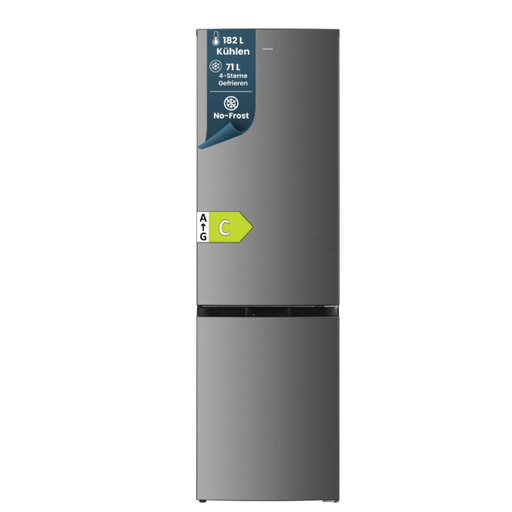
Why this product suits this profile: The combination of 182 litres of fridge space and 71 litres of freezer space is suitable for smaller families and households with regular day-to-day requirements.
The stated No Frost technology reduces ice build-up; the 39 dB(A) noise level, 141 kWh per year and energy rating C are also clearly specified.
Super Freeze function, adjustable feet, LED lighting and reversible door.
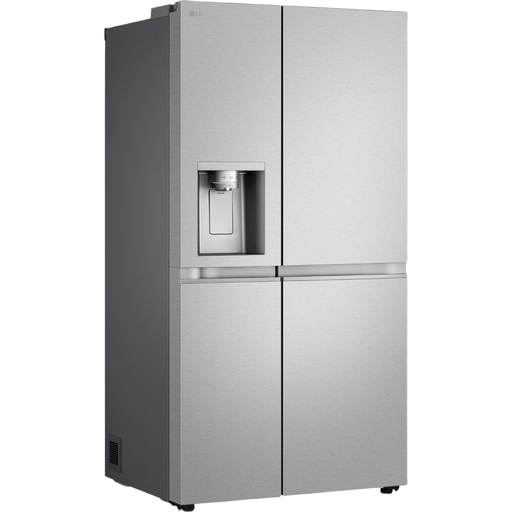
Why this product suits this profile: This model combines a total capacity of 623 litres with Total No Frost, a noise level of 32 dB(A) and several convenient electronic features.
Alongside its large capacity, the energy rating B, 175 kWh per year and noise level are clearly stated.
Super Cooling, Super Freezing, DoorCooling+, app connectivity and an integrated water and ice dispenser.
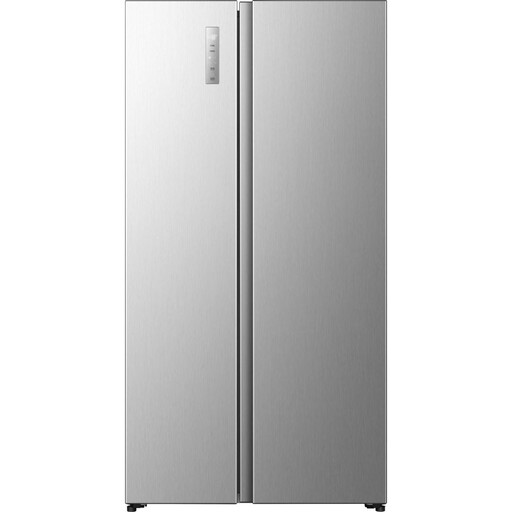
Why this product suits this profile: With 347 litres of fridge space and 197 litres of freezer space, this appliance is designed for larger households with substantial storage needs.
Total No Frost, annual consumption of 204 kWh and an inverter compressor are listed in the technical specifications.
Super Cool function, XXL door shelf, Big Box compartment, nine shelves and door-open alarm.
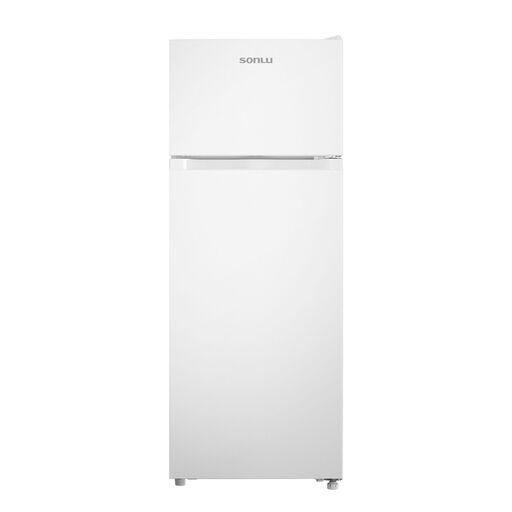
Why this product suits this profile: Its width of 55 cm is useful in smaller kitchens, while adjustable shelves make the interior more flexible.
The slim appliance body is combined with adjustable feet and adaptable shelves; the energy rating E should be factored into the running-cost calculation.
206 litres of total capacity, LED lighting, salad crisper and fast cooling and fast freezing functions.
We have put together a complete, regularly updated list of products that fully meet these strict selection criteria and the safety regulations applicable in the EU.
This depends on the model. The minimum clearances specified in the installation instructions are decisive. Good air circulation at the rear and sides helps dissipate heat. An appliance positioned too close to the wall may therefore run more frequently and for longer.
Its service life depends on the design, usage, location, cleaning and maintenance. Regularly cleaning the door seals, keeping ventilation openings clear and ensuring the appliance is correctly levelled can help support reliable operation. If you notice unusual noises, damaged cables or reduced cooling performance, contact the manufacturer’s customer service team.
A fridge with energy rating C can be a suitable option for everyday use, particularly when its annual consumption is proportionate to its usable capacity. Compare several models based on annual kWh consumption and capacity. A smaller appliance with a different energy rating may be more economical where requirements are lower; the key factor is your individual usage profile.