What should you look for when buying?
A more compact fridge freezer
A good fit if: Your regular shop and a few portions of cheese will fit in the available fridge space, and your kitchen has limited width for an appliance. Beko lists the B3RCNO255XB model as 54 cm wide.
Consider: A narrower appliance doesn’t, by itself, tell you how much usable shelf space it has or how much room the door needs to open.
More fridge space for your regular shop
A good fit if: You regularly need room for larger quantities of fresh food as well as portions of cheese. Bosch lists 218 l of fridge capacity for the KGN36VICT model.
Consider: Compare the fridge and freezer capacities, as well as the annual energy consumption of each model. Total capacity and fridge capacity are not the same thing.
A large appliance for substantial food stocks
A good fit if: You genuinely need plenty of room for food you keep in stock. Samsung lists a total capacity of 538 l and a width of 759 mm for the RB53DG706AS9EF model.
Consider: Portions of cheese for a single evening don’t, by themselves, call for extra space. Make sure the appliance fits the available space and that the door can open fully.
| Buying priority |
What to check |
Who it matters most to |
| Keeping cheese chilled and easy to reach |
Check the storage advice for the type of cheese and the usable shelves in the fridge compartment. |
If you want to store several portions neatly and appropriately until mealtime, cheese storage is a priority; around 29 % of consumers rank it first. |
| Everyday fridge space |
Check fridge and freezer capacities separately, and take the usable shelves into account. |
If you need to store your regular shop as well as cheese, having the right amount of fridge space is key; around 24 % of consumers put everyday capacity first. |
| Ongoing electricity consumption |
Once you’ve found a suitable size, compare the stated kWh per year. |
If the appliance runs all year round, its stated energy consumption has a bearing on running costs; around 18 % of consumers prioritise energy use. |
| Kitchen space |
Check the width, height and depth, as well as the space needed for the door to open and any model-specific requirements. |
In a narrow kitchen or next to other furniture, the appliance needs to remain accessible in its intended position; around 17 % of consumers prioritise a good fit. |
| Noise in living areas |
Compare the stated noise level in dB(A) for the exact model with your other criteria. |
If the fridge freezer is close to a dining or living area, its operating noise may matter; around 12 % of consumers make this a priority. |
The Verbraucherzentrale recommends choosing a size that meets your actual needs and comparing energy consumption figures and energy labels. For cheese, the advice on the individual packaging remains the most important guide.
Suitable products on Joybuy
This selection includes fridge freezers with different fridge and freezer capacities, as well as options for narrower spaces. Compare the details for each model with your regular needs and the space available.
 No image available
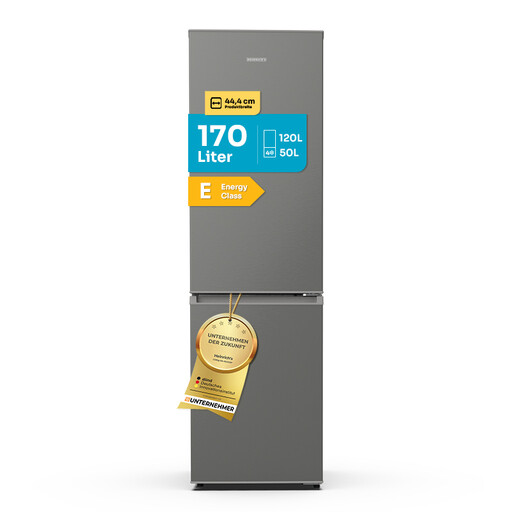
Heinrich´s fridge freezer, 170 l
The stated split makes it easier to compare fridge and freezer space with your needs.
- Total capacity: 170 l
- Fridge compartment: 120 l; freezer compartment: 50 l
- Noise level: 40 dB
- Energy class E; stainless steel
View on Joybuy
 No image available
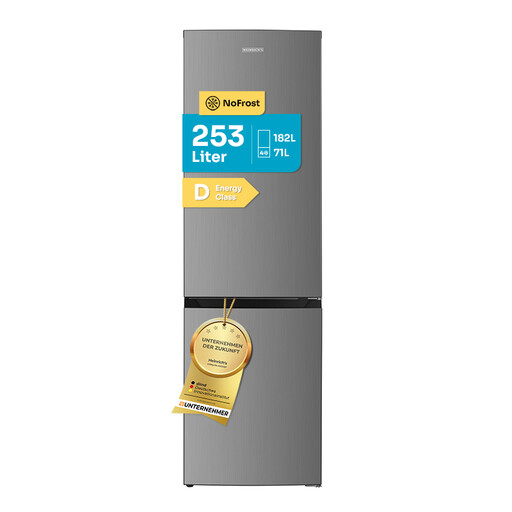
Heinrich´s fridge freezer, 253 l
The larger stated fridge compartment can be compared with the space you regularly need for fresh food.
- Total capacity: 253 l
- Fridge compartment: 182 l; freezer compartment: 71 l
- Noise level: 39 dB
- No Frost; LED lighting; reversible door
- Energy class E; stainless steel
View on Joybuy
 No image available
Exquisit KGC5232-60-E-040C, 173 l
Its compact design may suit a limited space; check the dimensions against the intended location.
- Total capacity: 173 l
- Freestanding; LED lighting
- 4-star freezer compartment; stainless steel look
According to the product description, allow for a depth of 101 cm with the door open.
View on Joybuy
 No image available
LG GBBS727AEV Fit&Max, 375 l
The stated capacity and energy class give you useful points of comparison. Check the fridge capacity listed for this specific model to make sure it suits your needs.
- 375 l stated in the product name
- Freestanding; energy class A
The product description specifies clear space for front ventilation and a 110° door opening.
View on Joybuy
 No image available
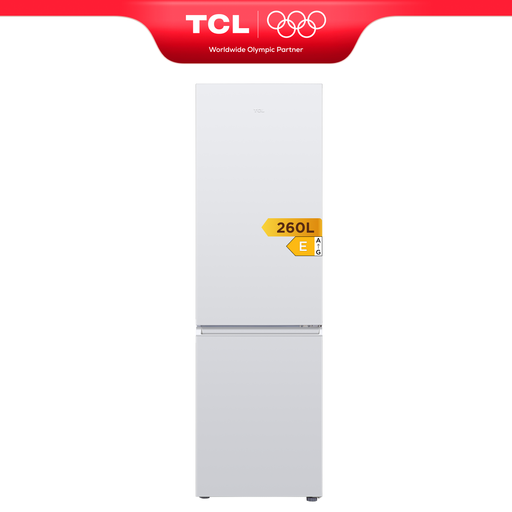
TCL RF338BWE0DE, 260 l
The separately stated capacities make it easier to compare the space you need for chilled and frozen food.
- Fridge compartment: 187 l; freezer compartment: 73 l
- Total capacity: 260 l
- Width: 55 cm; reversible door
- Height-adjustable shelves; energy class E
View on Joybuy
Frequently asked questions
Which shelf should I keep portions of cheese on?
Start by following the storage advice on the packaging. As a general guide for cheese, the Verbraucherzentrale suggests around 8 °C on the top shelf of the fridge. If the packaging gives different instructions for that particular type, follow those instead.
Should I wrap cheese airtight?
The Verbraucherzentrale generally recommends not wrapping cheese airtight, so it can continue to mature. Also follow the advice for the type of cheese, and handle it hygienically when cutting portions.
How can I compare energy consumption before buying?
For appliances of a suitable size, compare the stated kWh per year. The Verbraucherzentrale recommends taking energy consumption figures and the EU energy label into account when choosing. Actual household energy use may differ from the declared figure.
What should I check about delivery and disposing of my old appliance?
Before ordering, check the route for delivery, the installation dimensions and any services offered for connection and removal of your old appliance. According to the German Federal Ministry for the Environment, old electrical appliances must not be put in household waste. Retailers must take back equivalent old appliances under certain legal conditions. For some online purchases, free collection from your home is available if agreed when the contract is made.
How can I tell how much energy a new fridge will use?
Compare the energy label and stated annual consumption for the specific model. Your Europe explains that fridges are labelled on the A-to-G scale; the older plus-rating classes are no longer used for fridges.


