
Lieferung heute & morgen

Qualitätsgarantie

Willkommens-Angebote freischalten: KOSTENLOSE Lieferung | Bis zu 80 % RABATT | Kostenlose 30-Tage-JoyPlus-Testphase
App herunterladen
A fridge-freezer needs to fit not only in your kitchen, but also with your shopping habits, household and chosen location. A small fridge with an integrated freezer compartment is often enough for a single-person flat. Families, on the other hand, need more usable space and a separate freezer compartment. However, if you judge a product description solely by its capacity in litres or its energy rating, you may overlook important details.
The stated total capacity doesn’t always reflect how much space is actually available. Shelves, drawers, door compartments and the division between the fridge and freezer reduce the usable volume. So check how the space is divided — for example, 153 litres of fridge space and 52 litres of freezer space — rather than looking only at the total capacity.
A quiet fridge should have a specific noise level listed. Models rated at 37 to 40 dB are generally more suitable for open-plan kitchens, offices or bedrooms than appliances with significantly higher ratings. However, the perceived noise level can still be affected by the compressor starting up, vibrations and an uneven surface.
A Low Frost fridge-freezer reduces ice build-up, but doesn’t necessarily eliminate the need for occasional defrosting. A No Frost fridge-freezer is designed to remove moisture differently, helping it operate with little to no ice build-up. Check the manufacturer’s specifications for the exact features. Claims such as ‘never clean it again’ or blanket promises of a longer lifespan aren’t reliable criteria for choosing an appliance.
Measure not only the available space, but also the route to where the appliance will be installed. Remember to allow for:
A fridge-freezer with a reversible door is particularly useful in a small kitchen. On some appliances, the door can be fitted to open from the left or right. Adjustable feet also help you level a freestanding fridge-freezer on a slightly uneven floor.
A small fridge with around 80 to 100 litres of capacity may be enough for one person or an office. For a small family or a shared house, around 170 to 230 litres is often more practical. Larger households should look for separate compartments and check the size of the freezer section.
A fridge-freezer with a separate freezer compartment makes it easier to organise your food. Adjustable glass shelves are useful if you regularly store tall bottles, pans or larger packets. A salad drawer with adjustable humidity can make fruit and vegetables easier to organise, but it doesn’t guarantee they’ll stay fresh for longer.
The EU energy label uses ratings from A to G. The appliances mentioned here are rated E. The stated annual consumption in kilowatt-hours is also important when working out running costs. Compare this figure with how long you expect to use the appliance and your local electricity tariff.
A low dB rating is particularly important if the fridge-freezer will be in a living room, bedroom or office. The figure is measured under specific test conditions, so it may differ from the level you experience in everyday use. So when choosing an energy-efficient fridge-freezer, consider the energy rating, consumption and noise level — not just the marketing claims.
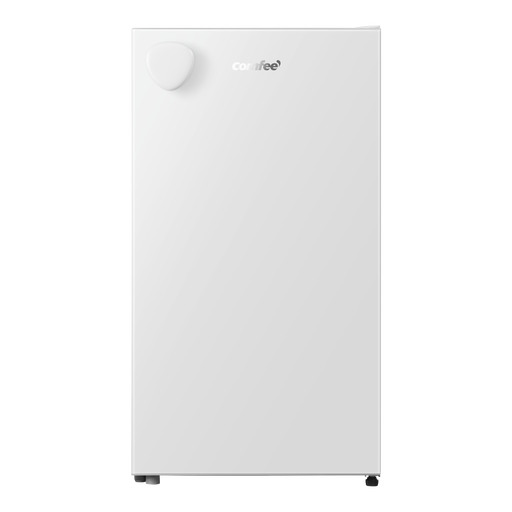
Why this product suits this type of buyer: Measuring 44,5 × 47 × 82,7 cm, this compact fridge is ideal for offices, bedrooms, holiday homes or studio flats where space is limited.
The stated external dimensions make planning easier. The reversible door helps prevent it from hitting furniture in a small kitchen.
88 litres of capacity, removable glass shelves, interior lighting and a separate compartment for chilling drinks.
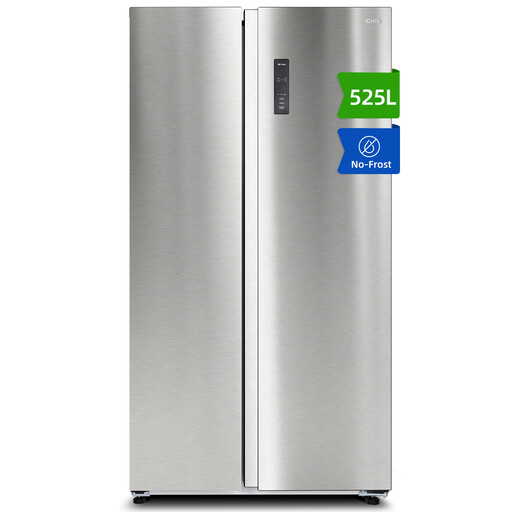
Why this product suits this type of buyer: This model is designed for households with substantial refrigeration and freezer needs. Its 333 litres of fridge space and 192 litres of freezer space keep food neatly separated.
The No Frost feature is clearly distinguished from Low Frost. Its noise level is also given as a specific figure: 37 dB.
525 litres of total capacity, Multi-Airflow, an inverter compressor and touch controls.
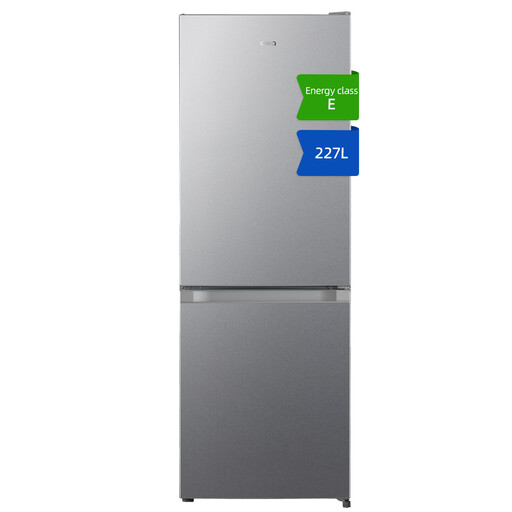
Why this product suits this type of buyer: At 54 cm wide and 55 cm deep, this appliance is suitable for small kitchens, yet offers 153 litres of fridge space and 74 litres of freezer space.
Its slim design, reversible door and adjustable feet make it easier to position flexibly. The Low Frost feature is clearly listed as such.
227 litres of total capacity, a 4-star freezer compartment, 39 dB and electronic temperature control.
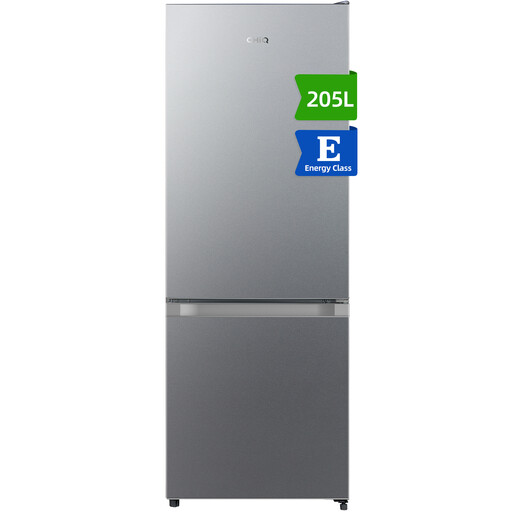
Why this product suits this type of buyer: With 153 litres of fridge space and 52 litres of freezer space, this model is a good fit for smaller families, shared houses or holiday homes.
The manufacturer clearly states the 39 dB noise level and Low Frost feature. This makes it easier to assess the noise and likely defrosting needs before you buy.
205 litres of total capacity, five cooling modes, adjustable shelves and a reversible door.
After transport, allow a fridge-freezer to stand before switching it on, following the manufacturer’s instructions. Place it on a stable, dry surface with enough room for air to circulate. Don’t cover the ventilation openings. It’s best to use a suitable socket on its own; only use an extension lead if this is expressly permitted.
Don’t set the temperature lower than necessary. Allow hot food to cool before putting it in the fridge. Clean the interior, seals and shelves regularly. If you have a Low Frost appliance, remove the ice once it has built up into a noticeably thick layer.
We’ve put together a complete, regularly updated list of products that meet these strict selection criteria and fully comply with the safety regulations in force in the EU.
As well as allowing for the appliance’s dimensions, you’ll need extra room for ventilation, opening the door and pulling out the drawers. Check whether skirting boards, walls or nearby furniture will get in the way of the door.
It depends on how you use it. A small fridge takes up less floor space and may be enough for one person. If you regularly store frozen food, you’ll usually make better use of the space in a separate fridge-freezer. When it comes to running costs, the stated annual energy consumption matters more than the appliance’s overall size.
Its lifespan depends on factors such as how it’s used, where it’s installed, and how well it’s cleaned and maintained. There’s no reliable way to guarantee a set number of years. Look for accessible product information, details of spare parts and servicing, and make sure the appliance is installed correctly.