
Lieferung heute & morgen

Qualitätsgarantie

Willkommens-Angebote freischalten: KOSTENLOSE Lieferung | Bis zu 80 % RABATT | Kostenlose 30-Tage-JoyPlus-Testphase
App herunterladen
A fridge-freezer should keep your food chilled and frozen reliably for many years. However, eye-catching designs, seemingly extensive features and low prices do not automatically lead to the right purchasing decision. The key factors are the dimensions, the genuinely usable storage space, energy consumption and the conditions at the installation location.
This buying guide from the Joybuy Product Recommendation Officer helps you put marketing claims into perspective and choose the right fridge-freezer for small kitchens, couples, families or particularly large stocks of food.
A fridge may be listed as only 55 or 60 centimetres wide in the product details, yet be considerably deeper. The door also needs enough space to open fully. With a side-by-side fridge or French-door fridge, wide doors and greater weight are often additional considerations.
Before buying, you should check:
Energy efficiency classes for household refrigeration appliances range from A to G. However, the letter alone does not show how much electricity a model actually uses. Also compare the stated annual energy consumption in kWh.
A larger appliance may use more electricity than a smaller model, even if it has a good energy efficiency class. Consumption should therefore be considered in relation to the required usable capacity. For a large family fridge, you should also take into account the split between the fridge and freezer compartments, as well as how frequently each is used.
A fridge with a water dispenser, ice maker, app control or internal camera can be practical. However, this equipment takes up additional space, can make cleaning more involved and may require careful installation if a mains water connection is needed.
No Frost technology reduces ice formation in the freezer compartment and usually eliminates the need for manual defrosting. Low Frost reduces ice formation, but does not remove the need to defrost completely. If you want to keep maintenance to a minimum, these two systems should not be treated as equivalent.
For one person or a couple, a fridge with a freezer compartment and around 200 to 260 litres may be sufficient. Families often need more fridge space and several freezer drawers. Look at the net capacity, rather than just the gross volume.
Useful features include:
Noise emissions are stated in dB(A). Models producing around 35 to 40 dB(A) are generally more suitable for open-plan kitchens, locations near bedrooms or a home office. The perceived noise level also depends on the floor, the wall and whether the appliance has been aligned correctly.
Adjustable feet can help reduce vibrations. The appliance should stand securely and level.
A No Frost fridge circulates cold air through a fan-assisted system and prevents ice formation in the freezer compartment. Multi-airflow systems can distribute the air more evenly. Fast cooling and fast freezing functions are useful if you regularly store large quantities of fresh food.
The temperature should be set according to the manufacturer’s instructions. A temperature of around 3 to 5°C is often recommended for the fridge compartment, while the freezer compartment is generally kept at approximately −18°C. The instructions in the relevant operating manual remain authoritative.
The following models are designed to meet different requirements. The details are based on the respective product data and should be checked against the current offer, delivery conditions and installation dimensions before purchase.
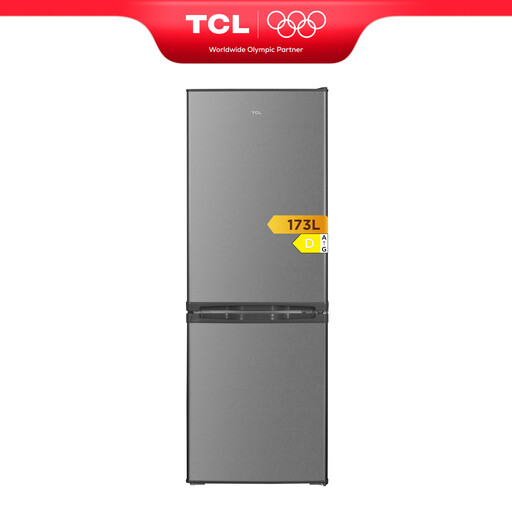
Why this product suits this profile: With 121 litres of fridge capacity and 52 litres of freezer capacity, this combination is suitable for smaller households with limited space.
The compact capacity figures make it clear that this model is not intended for storing large quantities of food. This helps prevent overloading caused by limited interior space.
Energy efficiency class D, LED lighting, height-adjustable shelves and a Fresh-Zone drawer.
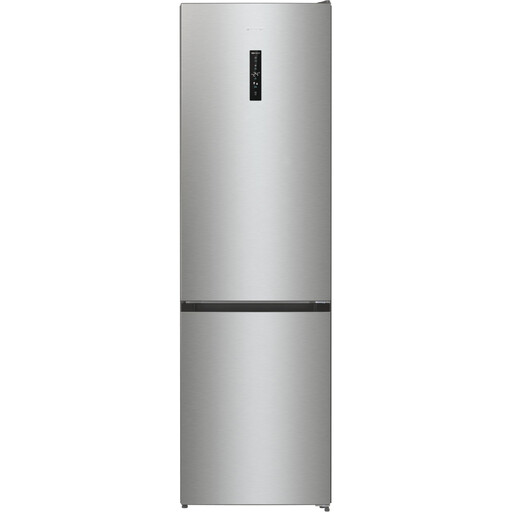
Why this product suits this profile: With 331 litres of usable capacity, No Frost and a stated noise level of 35 dB(A), this model is aimed at households looking to combine ample storage with reduced maintenance.
No Frost is specified here as a particular technical feature and is not confused with Low Frost. Energy consumption is listed separately at 158 kWh per year.
Energy efficiency class C, 235 litres of fridge space, 96 litres of freezer space, plus fast cooling and fast freezing functions.
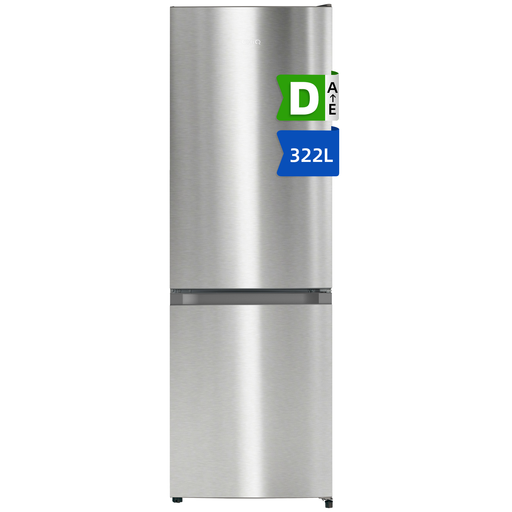
Why this product suits this profile: This model combines 322 litres of usable capacity with Total No Frost, 37 dB(A) and four climate classes. It is therefore suitable for families and certain utility rooms or additional spaces.
The installation conditions are clearly stated: 10 to 43°C and a depth of 63.5 centimetres. This makes it possible to check in advance whether a garage, utility room or chosen location is suitable.
Energy efficiency class D, annual consumption of 196 kWh, 226 litres of fridge space and a Fast Freeze function.
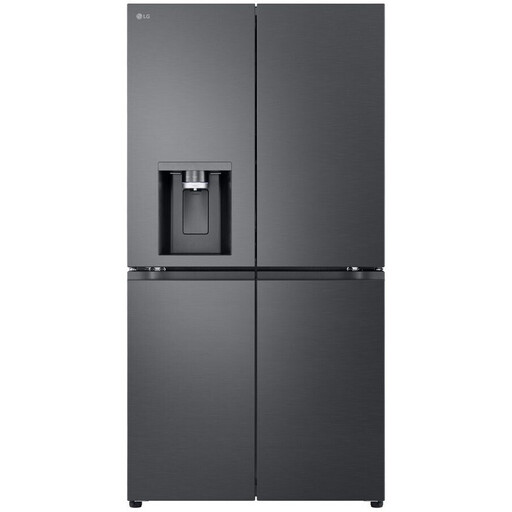
Why this product suits this profile: This multi-door fridge offers 645 litres of total capacity, an integrated water and ice dispenser, and app compatibility for households with demanding storage needs.
The large design is specified with exact dimensions of 179.2 × 91.4 × 73.3 centimetres and a weight of 141 kilograms. The installation space and transport route must be checked before purchase.
No Frost, energy efficiency class C, 34 dB(A), 384 litres of fridge space and 261 litres of freezer space.
We have put together a complete, regularly updated list of products that fully meet these strict selection criteria and the safety regulations applicable in the EU.
Place the fridge-freezer on a firm, level surface and observe the ventilation clearances specified in the instructions. After transporting the appliance on its side, leave it standing upright for several hours before switching it on. A separate earthed socket is preferable; extension leads and multi-socket adapters should be avoided in accordance with the manufacturer’s instructions.
For running costs, the calculation is straightforward:
Annual consumption in kWh × electricity price per kWh = annual electricity costs
The actual lifespan depends on usage, location, maintenance and the quality of the power supply. Regularly cleaning the seals, keeping ventilation openings clear and avoiding overloading all help ensure trouble-free operation. If you notice unusual noises, damaged cables or a damaged refrigerant line, stop using the appliance.
For couples, around 200 to 300 litres is often sufficient, provided you do not regularly store large quantities of food. Families generally benefit from 300 litres or more. The layout is crucial: if you freeze a lot of food, you will need a larger freezer compartment and several drawers.
No Frost can be worthwhile if you want to avoid manual defrosting. Low Frost generally means that ice builds up more slowly, but regular defrosting may still be necessary. Compare the specific technology, annual consumption and purchase price before making your decision.
Models producing around 35 to 40 dB(A) are often considered suitable for open-plan kitchens and living areas. How much noise you notice is influenced by the installation: an uneven floor or direct contact with a wall can increase vibrations.