
Lieferung heute & morgen

Qualitätsgarantie

Willkommens-Angebote freischalten: KOSTENLOSE Lieferung | Bis zu 80 % RABATT | Kostenlose 30-Tage-JoyPlus-Testphase
App herunterladen
A fridge freezer needs to do more than simply look good in your kitchen. The key considerations are suitable external dimensions, a well-planned usable capacity and energy consumption that fits your everyday needs. A single person will have different requirements from a family or a holiday home.
Many purchasing decisions come down to details that are barely noticeable in product images. That is why you should check these three common pitfalls before buying.
The stated width is not the only relevant measurement. Additional clearance is often needed behind and beside the appliance to allow heat to escape. The door must also be able to open fully so that drawers and shelves can be pulled out.
You should therefore measure:
A compact fridge measuring 47 to 55 cm in width may be more suitable for a small kitchen than a larger model, even if this means having less usable capacity.
A No Frost fridge circulates cold air and reduces ice build-up in the freezer compartment. This can significantly reduce the need for manual defrosting. With Low Frost or MinFrost systems, ice may still form, although more slowly.
Pay attention to the manufacturer’s precise wording:
The energy efficiency class on the EU energy label is a comparison value within the current A to G scale. The stated annual consumption in kilowatt hours is also important when calculating running costs. Despite having a favourable energy class, a larger appliance may use more electricity than a smaller model.
You should therefore compare usable capacity, energy efficiency class and annual consumption together. Ambient temperature, how fully the appliance is loaded, the temperature setting and how often the door is opened also affect actual consumption.
A fridge freezer combination should not be chosen based on total capacity alone. Check how the space is divided between the fridge and freezer compartments:
A 300-litre fridge freezer may be an appealing choice for a multi-person household, while 80 to 120 litres may be enough for an office, holiday home or single person.
A freestanding fridge freezer can be positioned flexibly, but it needs sufficient air circulation. Adjustable feet make it easier to level the appliance. A fridge with a reversible door is particularly practical if you may change your kitchen layout in the future.
The installation instructions in the user manual should be followed. The appliance must be connected to an earthed socket. Extension leads and multi-socket adapters are generally not intended for powerful household appliances.
Noise levels are measured in decibels. Even a difference of a few decibels can be noticeable in an open-plan kitchen and living area. Models producing around 34 to 38 dB are often described as quiet; however, how loud they seem depends on the flooring, distance from the wall and operating status.
A fridge with an inverter compressor can regulate its output more precisely according to demand. Whether this offers an advantage in terms of noise or energy consumption depends on the appliance as a whole and how it is used. Do not rely on the description alone: check the energy class, annual consumption and dB rating.
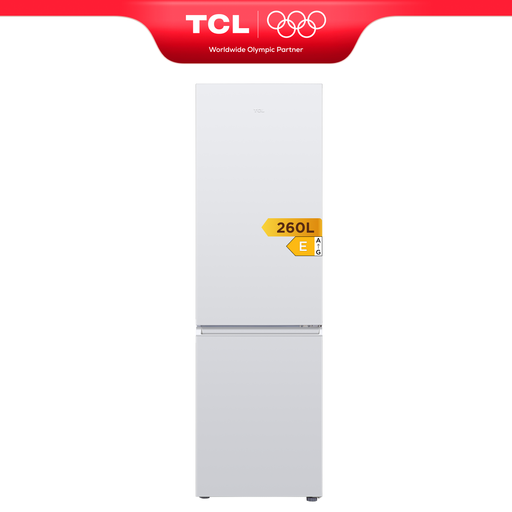
Why this product suits this profile: Measuring 55 cm wide, with 187 litres of fridge capacity and 73 litres of freezer capacity, this model is suitable for smaller kitchens and modest-sized households.
The compact width makes planning easier. Height-adjustable shelves and a reversible door help you adapt the interior and positioning to the available space.
The listed features include a Fresh Zone, LED lighting, adjustable feet and easy-to-clean door seals.
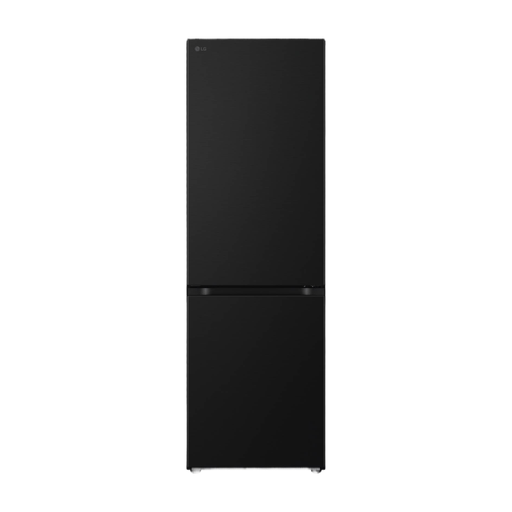
Why this product suits this profile: This appliance offers 344 litres of total capacity, including 234 litres for the fridge and 110 litres for the freezer. It is designed for households that shop regularly and need plenty of organisation options.
The specifications state NoFrost for the freezer compartment and give precise dimensions of 59,5 × 186 × 67,5 cm. This makes it easier to check the required space before buying.
The listed features include energy efficiency class A, MultiAirflow, three glass shelves, two salad drawers and three freezer drawers.
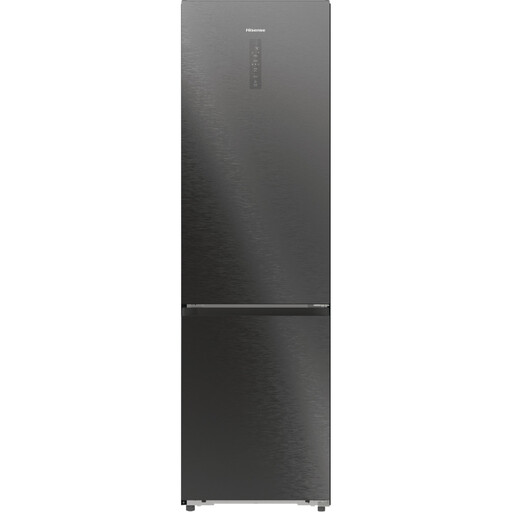
Why this product suits this profile: With 413 litres of total capacity, 283 litres of fridge space and 130 litres of freezer space, this model is aimed at larger households with high storage needs.
The stated Total No Frost technology reduces the maintenance required due to ice build-up. The dimensions of approximately 203 × 59,5 × 65,8 cm must be checked carefully against your available space before ordering.
The listed features include energy efficiency class C, annual consumption of around 182 kWh, approximately 34 dB, electronic controls, and rapid cooling and rapid freezing functions.
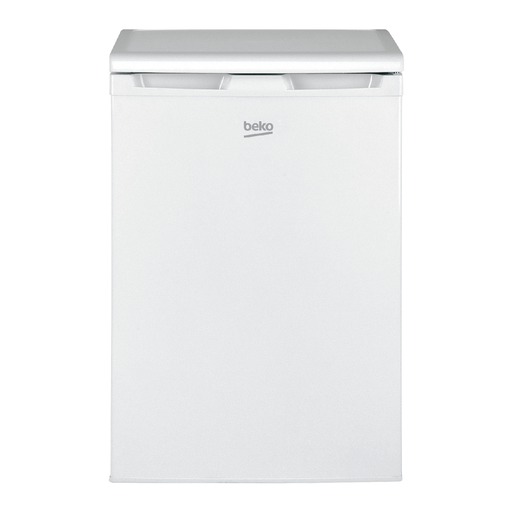
Why this product suits this profile: This fridge with freezer compartment offers 114 litres of total capacity and stands 84 cm tall. It is suitable for small flats, offices or an additional property.
The compact dimensions make installation easier. According to the product specifications, MinFrost reduces ice build-up but does not eliminate the need for manual defrosting altogether.
The listed features include a 13-litre freezer compartment with a 4-star rating, a reversible door, LED lighting and a noise level of around 36 dB.
We have put together a complete, regularly updated list of products that fully meet these strict selection criteria and the safety regulations applicable in the EU.
After transport, the appliance should be left upright for several hours in accordance with the instructions before it is connected. Position the fridge freezer level and keep the ventilation areas clear. Food should only be placed inside once the set temperature has been reached.
For even cooling:
This depends on shopping habits and the number of people in the household. For one person or a holiday home, an appliance with around 80 to 150 litres may be sufficient. Couples and small families often choose models with a capacity of between 200 and 350 litres. For larger households, a total capacity of more than 400 litres may be useful.
You can estimate the costs using the annual consumption shown on the EU energy label: kilowatt hours per year multiplied by your personal electricity tariff. Actual figures may vary depending on the installation location, room temperature, how full the appliance is and how it is used. An energy-efficient fridge should therefore always be assessed alongside its usable capacity.
It is not possible to guarantee a fixed service life for every model. It depends, among other things, on operating conditions, care, ventilation and the strain placed on the seals and hinges. Keeping the appliance level, ensuring adequate ventilation and cleaning it regularly can help support proper operation.