
Lieferung heute & morgen

Qualitätsgarantie

Willkommens-Angebote freischalten: KOSTENLOSE Lieferung | Bis zu 80 % RABATT | Kostenlose 30-Tage-JoyPlus-Testphase
App herunterladen
Purchasing a new fridge-freezer is a major decision for any household. But the market is saturated with technical jargon, marketing promises, and a seemingly endless array of options. Many buyers only realise months later that their new appliance is impractical, noisy, or more expensive to run than expected. As your Joybuy Product Recommendation Officer, I'll help you identify the common pitfalls and make an informed decision.
Before we dive into the key features, let's expose the most common marketing traps that often lead to disappointment.
To make a choice you'll be happy with long-term, you should focus on objective, measurable parameters. These three criteria are crucial.
Since 2021, the new EU energy label with classes from A (very efficient) to G (less efficient) has been in effect. An energy-efficient refrigerator saves real money over its lifespan. However, don't just look at the letter; pay close attention to the annual energy consumption in kilowatt-hours (kWh/a). This figure indicates how much electricity the appliance uses under typical conditions and allows for a direct cost comparison. A Class C appliance might, in some cases, have a similar annual consumption to a more expensive Class B model.
In modern, open-plan kitchens, the refrigerator's noise level is a critical factor. Noise emission is measured in decibels (dB). A refrigerator that is quiet should have a value of 35 dB or less, which is roughly equivalent to a whisper. Appliances around 40 dB are noticeably louder and can be perceived as disruptive in quiet environments. Look for the noise emission class (A to D), where A represents the quietest devices.
The choice of build type depends on your available space and needs.
As a rule of thumb for usable capacity: plan for about 50–70 litres per person in the household. A family of four is generally well-served with a total volume of 250–350 litres.
Here are some recommendations tailored to different requirements and households.
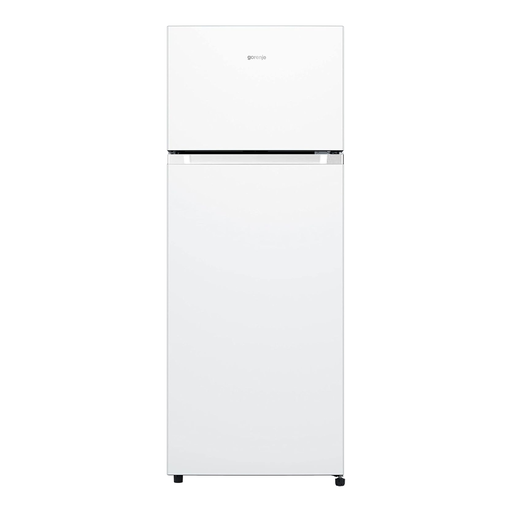
Why This Fits Their Persona: This model is ideal for one to two-person households or as a secondary appliance. It focuses on the core functions of cooling and freezing without inflating the price with complex extras. Its compact footprint also fits into smaller kitchens.
It deliberately omits expensive smart features, offering solid, reliable cooling performance instead. The stated usable capacity of 165L for the fridge and 41L for the freezer is realistic and practically laid out for this appliance size.
The reversible door hinge offers maximum flexibility in placement. The LED interior lighting provides excellent visibility and is more energy-efficient than traditional bulbs.
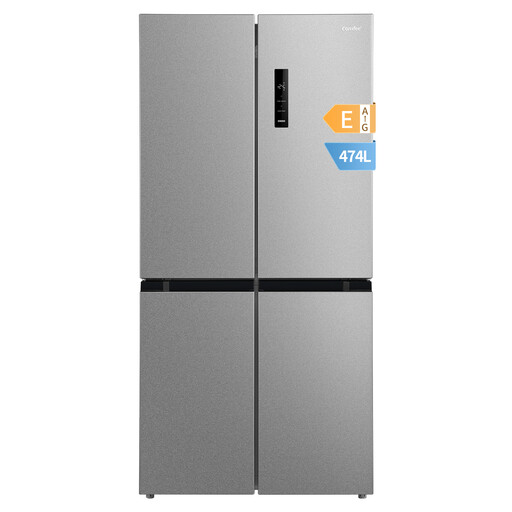
Why This Fits Their Persona: With a total capacity of 474 litres and a 4-door design, this model is perfect for families who want to store their weekly groceries in an organised way. The separate compartment arrangement minimises cold air loss when opening.
Instead of gimmicks, this appliance focuses on genuine, practical flexibility. The Vario Box and collapsible freezer drawers (Flip Tray) maximise the actual usable storage space and adapt to bulky frozen items.
The vegetable drawer with three adjustable temperature levels allows for targeted storage of delicate foods. The external display control prevents unnecessary opening and saves energy.
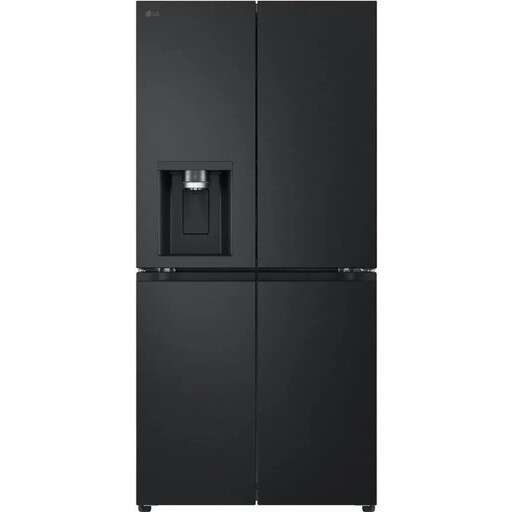
Why This Fits Their Persona: This model combines an elegant, black French Door refrigerator design with advanced technology. It is ideal for users who value aesthetics, convenience, and meaningful smart functions.
The smart features offer real benefits: the ThinQ app allows for remote control and diagnostics, while the water dispenser's UVnano technology improves hygiene. These aren't gimmicks, but practical everyday aids.
According to LG, the UVnano technology purifies the water dispenser's outlet and reduces bacteria. The Linear Cooling technology minimises temperature fluctuations, keeping food fresher for longer.
We have compiled a complete, up-to-date list of products that fully meet these strict selection criteria and UK safety regulations.
For sufficient air circulation and to prevent the compressor from overheating, a clearance of 5 to 10 cm on the sides and at the back is generally recommended. A clearance of at least 5 cm at the top is also important. Always refer to the specific instructions in the manufacturer's installation manual.
The climate class indicates the optimal ambient temperature range in which the appliance operates efficiently. The most common classes in the UK and Europe are:
Even though a No Frost refrigerator does not need to be manually defrosted, the interior should be cleaned every two to three months for hygiene reasons. To do this, remove all food and wipe the compartments and drawers with a mild vinegar or washing-up liquid solution. This prevents odours from developing and ensures a clean storage environment.