
Lieferung heute & morgen

Qualitätsgarantie

Willkommens-Angebote freischalten: KOSTENLOSE Lieferung | Bis zu 80 % RABATT | Kostenlose 30-Tage-JoyPlus-Testphase
App herunterladen
A fridge-freezer should provide reliable everyday cooling, plenty of storage space and a good fit for your existing kitchen. However, some common buying decisions can lead to unnecessary extra costs. A larger appliance is not automatically the right choice, a low noise rating says little about how it will perform in your kitchen, and “No Frost” does not replace the need to check energy consumption, dimensions and features.
That is why our selection focuses on clear, comparable specifications such as usable capacity, energy efficiency class, annual consumption, noise level, dimensions and cooling technology.
Manufacturers sometimes state the total capacity, whereas the internal layout is often more important in everyday use. A fridge with a freezer compartment, for example, may offer plenty of fridge space but only a small internal freezer compartment. For families, separate freezer drawers are usually more practical than a single compartment.
A No Frost fridge-freezer defrosts automatically. With Low Frost, ice forms more slowly, but the freezer compartment still needs to be defrosted manually from time to time. The CHiQ JR263LGE, for example, is listed as a Low Frost appliance, while the homeX CFSN2531C-S and LG GBBSJ1CCPY are specified as No Frost models.
The EU energy efficiency scale runs from A to G. For running costs, the stated annual consumption in kilowatt-hours is also important. A larger appliance rated D may use more electricity than a smaller model rated E. That is why you should compare kWh per year, usable capacity and household size.
Do not just measure the available alcove. Also check:
A freestanding fridge-freezer needs enough space for air circulation. The CHiQ JR318WSD, for example, is 59.5 cm wide, 185.5 cm high and 63.5 cm deep. Its depth may mean that the appliance protrudes slightly beyond the kitchen units.
For one or two people, around 200 to 260 litres is often sufficient, depending on how frequently you shop and how much food you store. A family fridge-freezer should offer more fridge space and well-organised freezer drawers. The separately stated capacities provide a useful guide:
A 70/30 split with a larger fridge compartment is suitable for households that mainly store fresh food. If you regularly buy frozen goods, you will need a larger freezer section.
Noise levels are stated in dB(A). Ratings between 34 and 40 dB(A) may be particularly relevant for open-plan or kitchen-diners. However, the actual noise you perceive also depends on the floor, distance from the wall and operating status.
When comparing an energy-saving fridge-freezer, always check its annual consumption. Examples from our selection include:
Electricity consumption depends on factors including ambient temperature, how full the appliance is, how often the door is opened and the temperature setting.
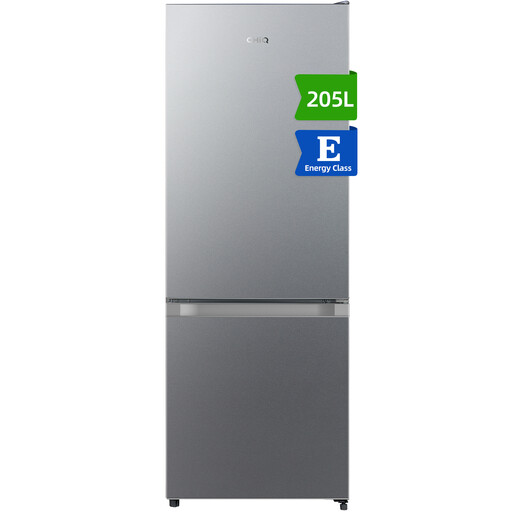
Why this product suits this profile: This compact appliance offers 153 litres of fridge space and 52 litres of freezer space, while measuring 54 cm wide and 144 cm high. It is well suited to smaller kitchens, flats or two-person households.
The product specifications clearly state that this is a Low Frost appliance. Buyers can therefore plan for reduced, but not completely eliminated, defrosting.
Reversible door, five cooling modes, an operating noise level of 39 dB(A) and adjustable feet.
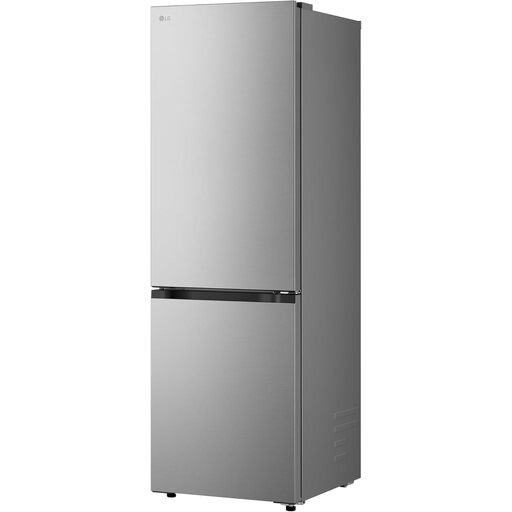
Why this product suits this profile: With 333 litres of total capacity, Total No Frost, energy efficiency class C and a noise level of 34 dB(A), this model combines generous storage with clearly stated operating data.
The specifications separate fridge and freezer capacity and state annual consumption of 169 kWh. This makes it easier to balance the appliance size against its running costs.
FRESHConverter+ zone, three freezer drawers, reversible door, and fast cooling and fast freezing functions.
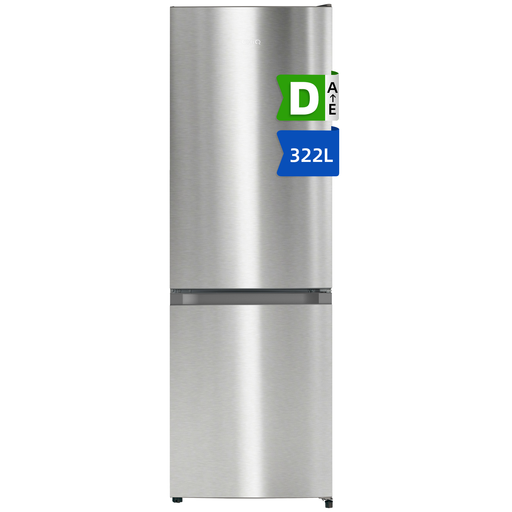
Why this product suits this profile: Its 70/30 split provides 226 litres of fridge space and 96 litres of freezer space. The 37 dB(A) noise level, Total No Frost technology and annual consumption of 196 kWh are all relevant for everyday use.
The precise external dimensions show that, at 63.5 cm deep, the appliance may stand proud of the kitchen units. This should be taken into account before ordering.
Total No Frost, fast freezing function, climate classes N, SN, ST and T, plus a stated operating range of 10 to 43 °C.
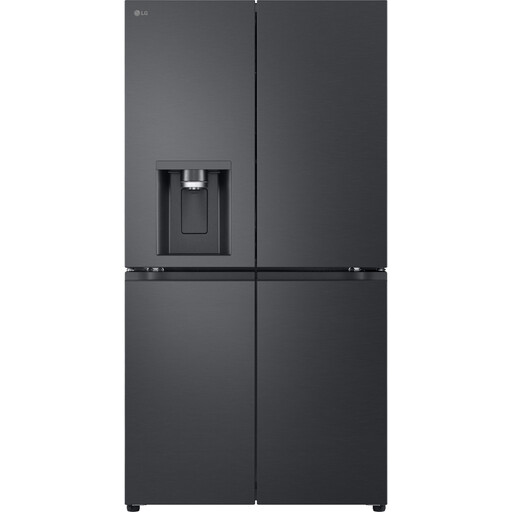
Why this product suits this profile: This FoodCenter offers 645 litres of usable capacity, four doors and a water and ice dispenser. It is designed for large households with substantial refrigeration and freezing needs.
The dimensions of 91.4 × 72.9 × 179.2 cm and annual consumption of 352 kWh show why you should check both the space required and the running costs before buying.
645 litres of usable capacity, No Frost, four doors, LED lighting, and water and ice dispenser.
We have put together a complete, regularly updated list of products that fully meet these strict selection criteria and the safety regulations applicable in the EU.
Before switching the appliance on, make sure it is standing on a stable, level surface. If it has been transported on its side, observe the waiting time specified in the instruction manual. Do not cover the ventilation openings. Use a suitable earthed socket and avoid unsuitable extension leads.
If you are buying a fridge-freezer with a water dispenser, you should also check whether the water tank needs to be filled manually or whether a mains water connection is required. Water-carrying components should be cleaned regularly in accordance with the manufacturer’s instructions.
As a general guide, 200 to 260 litres is often enough for one or two people. Families will often benefit from 300 litres or more. The right choice depends on how frequently you shop, how much food you store and how much freezer space you need.
No Frost reduces the need to defrost the freezer compartment manually. Whether the extra cost is worthwhile depends on how often you store frozen food and how important low-maintenance use is to you. With Low Frost, regular defrosting is still necessary.
The stated annual consumption is the key figure. A simple calculation is: annual consumption in kWh × your electricity price per kWh. Only compare appliances with a similar usable capacity and similar features, as large FoodCenter models naturally use more energy to provide more storage space.