
Lieferung heute & morgen

Qualitätsgarantie

Willkommens-Angebote freischalten: KOSTENLOSE Lieferung | Bis zu 80 % RABATT | Kostenlose 30-Tage-JoyPlus-Testphase
App herunterladen
A fridge freezer combines a fridge and freezer in one appliance. This saves space and makes buying simpler. However, models vary considerably in usable capacity, design, noise levels, energy consumption and features. So it’s worth looking beyond price and appearance when choosing the right appliance.
A side-by-side fridge freezer or American-style fridge can look spacious thanks to its width. But the layout can vary: some models offer plenty of freezer space, while the fridge may be less flexible when it comes to storing tall bottles or wide dishes. What matters is the net capacity of the fridge and freezer compartments, not just the total volume.
A No Frost fridge uses circulating air to prevent ice from forming in the compartments. This can remove the need for manual defrosting. However, you’ll still need to clean the interior, door seals, water containers and drainage channels regularly. Appliances with ice and water dispensers also need their tanks or water filters maintained.
The energy efficiency rating alone isn’t enough to compare appliances. A large fridge can use more electricity than a smaller freestanding fridge freezer, even if it has a better rating. Check the annual energy consumption in kWh and compare it with your electricity tariff. A simple calculation is:
Annual electricity costs = kWh per year × price per kWh
Actual energy use also depends on the ambient temperature, how full the appliance is, how often you open the doors and the temperature setting.
A compact appliance with a capacity of around 170 to 250 litres may be enough for one or two people. Families and larger households often need considerably more space. As a guide, consider how much you buy, how much you store and how many frozen foods you keep.
Measure more than just the space where the appliance will go: check the route it needs to take to get there, the width of the doors and the space needed to open them. For many models, you’ll also need to allow for the depth with the door open. Make sure you leave the clearances required by the manufacturer for ventilation.
With a freestanding fridge freezer, adjustable feet and reversible door hinges can make positioning easier. For side-by-side models, allow for their width of around 90 centimetres and the space needed to open the doors fully.
A quiet fridge producing around 35 to 40 dB(A) is a better choice for open-plan kitchens or rooms near a bedroom. Always check the product description to confirm the noise level.
A fridge with an ice and water dispenser can be handy. Check whether it needs a mains water connection or uses a removable water tank. A tank makes positioning easier, but it needs to be refilled and cleaned regularly.
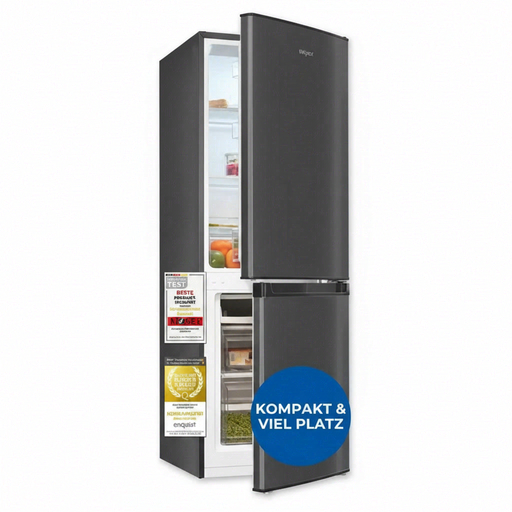
Why this product suits this household: With 121 litres of fridge space and 52 litres of freezer space, this compact freestanding appliance is a good fit for smaller kitchens or two-person households. It measures 49.5 cm wide.
The clearly stated capacities for each compartment help you look beyond the total volume. At 40 dB(A), the appliance is relatively unobtrusive in many open-plan kitchens.
Energy efficiency class C, annual energy consumption of 124 kWh, LED lighting and reversible door hinges.
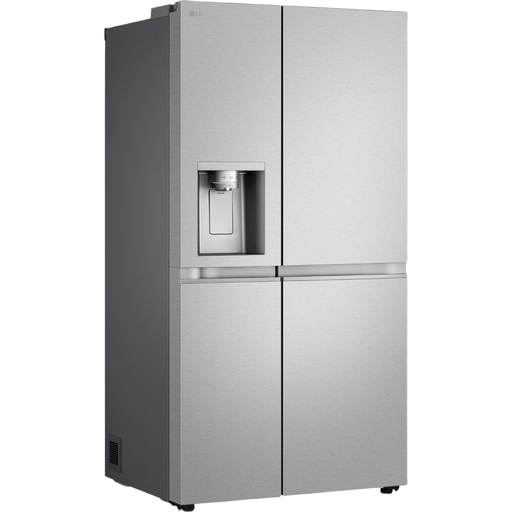
Why this product suits this household: This spacious fridge freezer offers 404 litres of fridge space and 219 litres of freezer space. At 91.3 cm wide, it’s designed for households with room to spare.
The stated annual energy consumption of 175 kWh makes it easier to estimate running costs. Measure the 73.1 cm depth and check the door clearance before you buy.
Energy efficiency class B, Total No Frost, 32 dB(A), water and ice dispenser, and app compatibility.
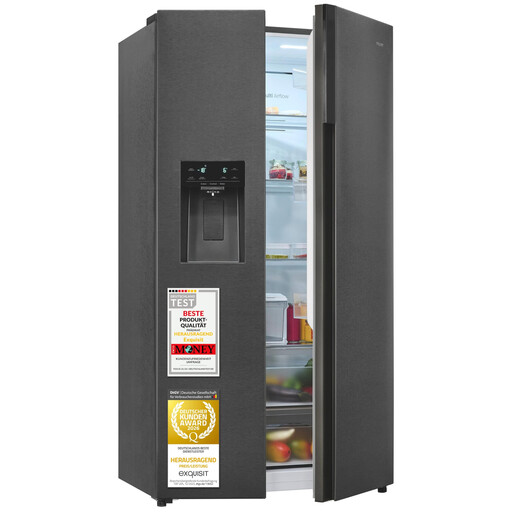
Why this product suits this household: With 347 litres of fridge space and 181 litres of freezer space, there’s room for family food shops and batch-cooked meals.
According to the product details, the dispenser uses a removable 4.5-litre water tank and doesn’t need a mains water connection. The tank and dispenser still need regular cleaning and maintenance.
No Frost, 37 dB, energy efficiency class C, and water, ice cube and crushed ice dispensers.
We’ve put together a complete, regularly updated list of products that meet these strict selection criteria and the applicable EU safety regulations.
Before switching it on, make sure the appliance is stable and level. Depending on the manufacturer’s instructions, you may need to leave it to stand for a while after transport. Use a properly earthed socket and don’t block any ventilation openings.
Follow the manufacturer’s temperature recommendations for storing food. Typical settings are around 4 to 5 °C in the fridge compartment and −18 °C in the freezer compartment. Allow hot food to cool before putting it away. If there’s a power cut, keep the doors closed as much as possible to help maintain the temperature inside.
It depends on the size of your household, how often you shop and how much you store. Models with a capacity of around 400 litres or more may suit households with several people. The layout matters too: if you keep lots of frozen food, look for a model with a suitably large freezer compartment.
No Frost prevents ice from forming and reduces the need for defrosting. However, energy use depends on the appliance’s overall design, size, energy efficiency class and annual consumption. So compare the kWh figure on the energy label.
There’s no guaranteed lifespan. It depends on factors including how the appliance is used, the ambient temperature, maintenance, door seals and compressor technology. Regular cleaning, good ventilation and avoiding unnecessarily long periods with the doors open can help keep it working properly.