
Lieferung heute & morgen

Qualitätsgarantie

Willkommens-Angebote freischalten: KOSTENLOSE Lieferung | Bis zu 80 % RABATT | Kostenlose 30-Tage-JoyPlus-Testphase
App herunterladen
A fridge-freezer should store food neatly, keep it reliably chilled and require as little effort as possible in everyday use. For families and larger households, capacity, noise levels, energy consumption and the available floor space are particularly important. However, marketing terms such as “smart”, “inverter” or “Total NoFrost” do not automatically indicate that an appliance is the right choice.
A large fridge with, for example, 400 litres can be divided up in very different ways. Always check the figures for the fridge and freezer compartments separately. A household that cooks fresh food frequently may need more fridge space. If you store lots of frozen food, on the other hand, you should look for sufficient freezer capacity and a well-designed drawer layout.
The external dimensions are also important: an appliance with a capacity of 600 litres may be considerably wider and deeper than a conventional freestanding fridge-freezer. Side-by-side fridges in particular often require more than 90 centimetres of floor width.
A fridge with an inverter compressor can adjust its performance to the actual cooling demand. This can contribute to quieter operation and more consistent temperatures. However, the figure that matters for running costs is the stated annual consumption in kWh.
EU energy-efficiency classes for refrigeration appliances range from A to G. Compare the kilowatt-hours per year directly. A simple calculation is:
Annual consumption in kWh × your electricity tariff = estimated annual electricity costs
The actual costs depend on your electricity tariff, room temperature, how fully the appliance is loaded and how it is used.
A NoFrost fridge-freezer prevents manual ice build-up in the freezer compartment where suitable systems are used. This makes maintenance easier, but it does not replace regular cleaning of door seals, shelves, water containers or air channels. If the appliance has a water dispenser, you should also check whether it requires a mains water connection or uses a tank.
As a general guide, smaller households may manage with around 200 to 300 litres. Families often benefit from 350 to 450 litres. A 400-litre fridge or larger can be useful if you regularly store larger grocery shops. Very large households may want to consider multi-door or side-by-side models with more than 500 litres.
Also pay attention to:
Measure more than just the recess. Check doors, stairwells and corridors too. Make sure the appliance door can open fully and that drawers can be pulled out. A freestanding fridge-freezer with a reversible door offers greater flexibility. With larger appliances, you must also maintain the wall clearance and ventilation spaces specified in the operating instructions.
The noise rating in dB(A) is particularly relevant in open-plan kitchens or small flats. Models rated at 29 to 35 dB are listed as quiet in the product data; 37 to 40 dB may be more noticeable depending on the room acoustics. Compare the figures directly rather than relying solely on terms such as “whisper-quiet”.
Useful features include:
An app is most useful when it provides practical notifications, such as an open door or a rise in temperature. It should not, however, be treated as a substitute for checking the appliance itself.
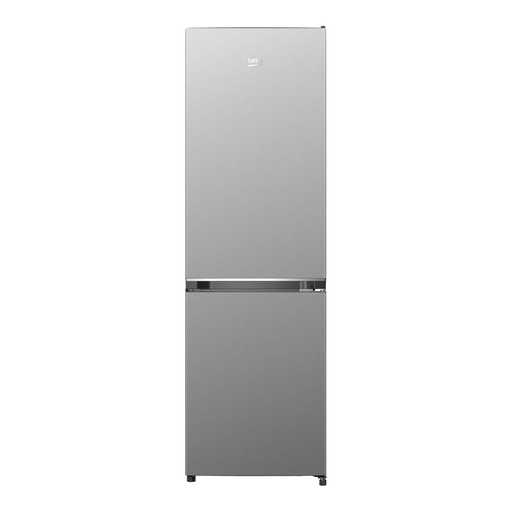
Why this product suits this profile: With a total capacity of 250 litres, this model is suitable for smaller households, flats or use as a second appliance. Its width of 54 cm makes it easier to find a suitable spot.
No Frost reduces ice build-up in the freezer compartment. The stated annual consumption is 172 kWh, while the noise level is 39 dB.
250 litres of usable capacity, a reversible door and suitability for environments down to -15 °C according to the product details.
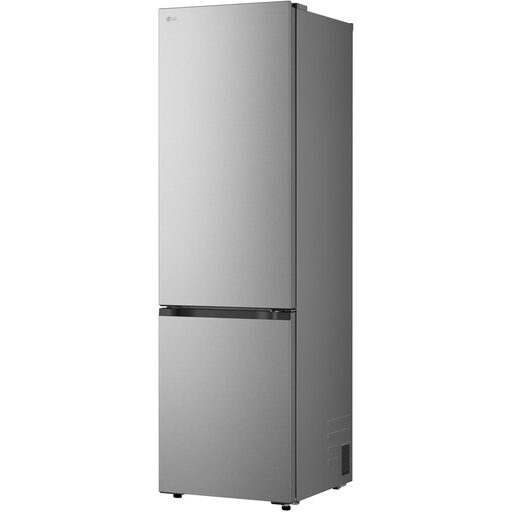
Why this product suits this profile: This model combines 375 litres of usable capacity with NoFrost, app control and a Smart Inverter Compressor. At 29 dB, it is suitable for noise-sensitive living areas.
The product data states annual consumption of 112 kWh, energy-efficiency class A and automatic defrosting in both compartments.
Zero-clearance design, 375-litre capacity and the LG ThinQ app with temperature and door alerts.

Why this product suits this profile: With a total capacity of 541 litres, including 343 litres of fridge space and 198 litres of freezer space, this model is designed for large households with substantial storage needs.
According to the product details, Total No Frost prevents ice build-up. The 40 dB noise level and energy-efficiency class E should be considered alongside the installation location and running costs before buying.
Dual Inverter system, Multi Airflow, Super Cooling and Super Freezing, plus two separate usable compartments.

Why this product suits this profile: According to the product data, this appliance offers 621 litres of net capacity, including 419 litres of fridge space and 202 litres of freezer space. It is 86 cm wide.
Twin NoFrost, a door alarm and a stated noise level of 35 dB address maintenance requirements and noise levels.
Energy-efficiency class B, Flex Cool & Freeze for converting the freezer compartment and a VitaFresh plus compartment, according to the manufacturer’s details.
We have put together a complete, regularly updated list of products that fully meet these strict selection criteria and the safety regulations applicable in the EU.
This depends on your shopping habits and freezer requirements. For several people, 350 to 450 litres is often suitable. If you freeze supplies or shop less frequently, you may need a model with more than 500 litres. The specific division between fridge and freezer compartments is what matters.
Its lifespan depends on build quality, usage, ventilation and maintenance. Regularly cleaning the door seals, keeping the air channels clear and choosing a suitable installation location all help support reliable operation. If you notice unusual noises, continuous operation or reduced cooling performance, you should contact customer service.
For a realistic estimate, multiply the stated annual consumption by your electricity price per kilowatt-hour. An appliance using 150 kWh per year would cost around 52,50 Euro in annual electricity costs at a tariff of 0,35 Euro per kWh. Actual consumption may vary depending on room temperature and usage.