
Lieferung heute & morgen

Qualitätsgarantie

Willkommens-Angebote freischalten: KOSTENLOSE Lieferung | Bis zu 80 % RABATT | Kostenlose 30-Tage-JoyPlus-Testphase
App herunterladen
Choosing a new fridge-freezer combination is a major decision for any household. The appliance runs around the clock, impacting not only the freshness of your food but also your electricity bill and the convenience of your kitchen. Given the vast array of models, technologies, and sizes, the search can quickly become overwhelming.
As a Joybuy Product Recommendation Officer, my role is to provide you with clear and objective guidance. This article analyses the crucial criteria for making a purchase and introduces a selection of models whose specific features make them relevant for modern households.
To find the right appliance for your needs, three main aspects should be considered: the design and capacity, energy efficiency, and technological features.
The most common type is the freestanding fridge-freezer combination, where the freezer compartment is usually located below the fridge section. These models offer flexible placement and are available in many widths. For larger households or those who like to buy in bulk, a large XXL-format fridge or a side-by-side fridge may be a sensible choice. The latter often provide additional features like water or ice dispensers.
As a rule of thumb for capacity:
An energy-efficient fridge not only protects the environment but also your budget. The new EU energy label, with classes from A (very efficient) to G (less efficient), has been in effect since 2021. Appliances that were previously in class A+++ are now often found in classes B, C, or D. A class A appliance represents the highest level of efficiency currently available.
A quiet fridge-freezer combination is crucial, especially in open-plan kitchens. The noise level is indicated in decibels (dB). Models with a value below 40 dB are considered quiet, while appliances around 35 dB are barely perceptible.
Modern appliances offer a range of convenient features. A No Frost fridge is almost standard today. This technology prevents ice build-up in the freezer compartment, completely eliminating the need for manual defrosting and keeping energy efficiency consistently high.
A smart fridge with Wi-Fi can be controlled via an app on your smartphone. You can adjust the temperature, activate an energy-saving mode, or receive notifications if the door is left open. This provides added convenience and control over energy consumption.
Based on the criteria mentioned, we have compiled a selection of models that stand out for their specific features.

Why it stands out: This model combines an exceptionally large capacity with high flexibility. The Flex Cool & Freeze function allows the freezer compartment to be converted into an additional cooling space when needed, offering maximum adaptability for bulk shopping or parties.
Advantages:
Who is it for?: Ideal for large families and multi-person households looking for a very spacious, flexible, and quiet fridge with advanced freshness technologies.
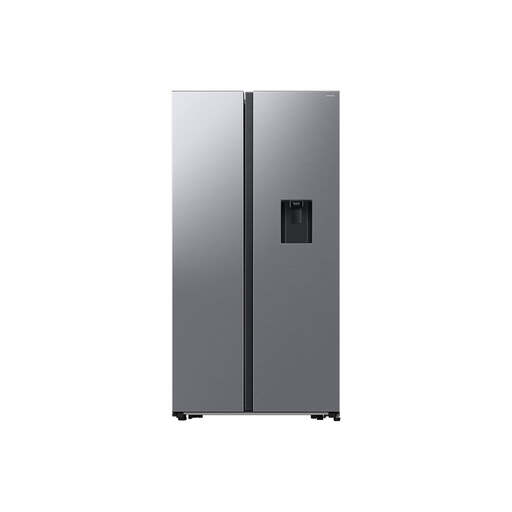
Why it stands out: This side-by-side refrigerator is designed for smart connectivity and convenience. The AI Energy Mode optimises energy consumption based on usage patterns, and the comprehensive SmartThings app integration allows for full control from anywhere.
Advantages:
Who is it for?: Perfect for tech-savvy households that appreciate a modern design, the convenience of a water dispenser, and the benefits of a fully connected smart home appliance.
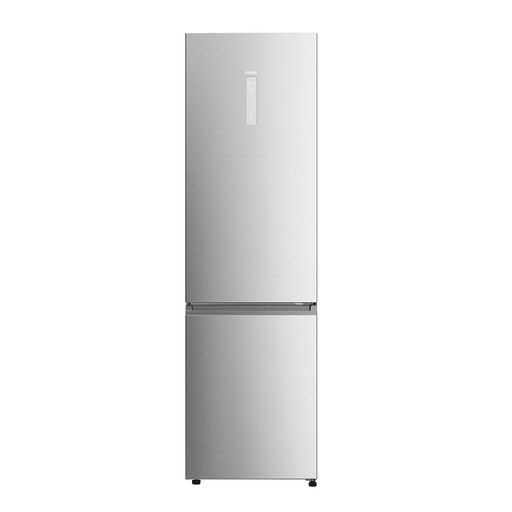
Why it stands out: With its energy efficiency class A, this model sets the benchmark for low power consumption. Combined with specialised freshness zones like My Zone and Humidity Zone, it offers precise and highly efficient storage for different types of food.
Advantages:
Who is it for?: An excellent choice for eco- and cost-conscious buyers who want top energy efficiency and quiet operation without sacrificing smart features and modern freshness technologies.
The models presented here cover a range of different needs. However, if you want to compare other versions or filter specifically for certain features, you might find the right appliance in our broader selection.
Discover our entire range of No Frost fridges and find the perfect model for your kitchen.
No-Frost technology prevents the formation of ice and frost in the freezer section. A circulating air system wicks moisture away from the interior. This has two key advantages: you never have to manually defrost the appliance again, and energy consumption remains consistently low because no insulating layer of ice can form.
The EU energy label, valid since March 2021, ranges from class A (highest efficiency) to G (lowest efficiency). The scale is stricter than the previous one (A+++ to D). An appliance that achieves class B or C today is already very energy-efficient. Class A is reserved for exceptionally economical models. The annual energy consumption in kilowatt-hours (kWh/a), also shown on the label, provides a concrete indication of the running costs.
The noise level is measured in decibels (dB). Appliances with a value below 40 dB are generally perceived as quiet and are suitable for most living situations. Models at 35 dB or less, like the Bosch and Haier units featured here, are considered exceptionally quiet and are barely audible even in very quiet environments or open-plan kitchens.