
Lieferung heute & morgen

Qualitätsgarantie

Willkommens-Angebote freischalten: KOSTENLOSE Lieferung | Bis zu 80 % RABATT | Kostenlose 30-Tage-JoyPlus-Testphase
App herunterladen
A fridge freezer is one of the household appliances that runs every day and takes up kitchen space for years. That is why your choice should not be based solely on price or a stainless-steel finish. Usable capacity, energy consumption, noise level, door hinge, and the actual space available are all key considerations.
A large litre capacity may sound convincing at first. For everyday use, however, what matters is how much storage space is actually available in the fridge and freezer compartments. A 250-litre appliance may be enough for a couple or a small household, while families will often benefit from 300 litres or more.
You should also consider the layout: a fridge freezer with a large freezer compartment makes sense if you regularly store frozen food. If you mainly buy fresh food, you may need more fridge than freezer capacity.
A No Frost fridge freezer prevents ice build-up through automatic air circulation and defrosting processes. This reduces the need for manual defrosting. However, the interior surfaces, drainage channels, door seals and ventilation areas still need to be cleaned regularly.
“Total No Frost” also says nothing about the energy class, noise level or quality of the interior layout. These details should be checked separately.
In addition to width, height and depth, a freestanding fridge freezer needs sufficient clearance from the wall and neighbouring furniture. You also need to allow space for doors and drawers to open. With a side-by-side fridge freezer or multi-door fridge freezer, the actual clearance required can be considerably greater.
Before buying, measure the delivery route, door openings, staircases and the width of the installation area. Particularly deep models may protrude beyond the kitchen units.
The EU energy label for refrigeration appliances ranges from A to G. The class alone is not enough for comparison: the stated annual consumption in kilowatt hours (kWh) is also important. Two appliances in the same class may use different amounts of electricity depending on their capacity and features.
An energy-efficient fridge freezer with a larger capacity may therefore have a higher annual consumption than a smaller model. Always compare consumption alongside usable capacity.
Noise levels are given in dB(A). Values of around 35 to 40 dB are generally suitable for open-plan kitchens, flats or rooms close to a bedroom. Actual perceived noise also depends on the floor, distance from the wall and compressor cycles.
A quiet fridge freezer is particularly useful if the kitchen is not separated from the living area by a door. In addition to the dB value, check the noise emission class if one is provided.
Measure:
A reversible door hinge makes it easier to adapt the appliance to different kitchen layouts. Height-adjustable feet, adjustable glass shelves and a fridge freezer with LED lighting are also practical features. LED lighting improves visibility inside the appliance, but it does not replace sensible organisation.
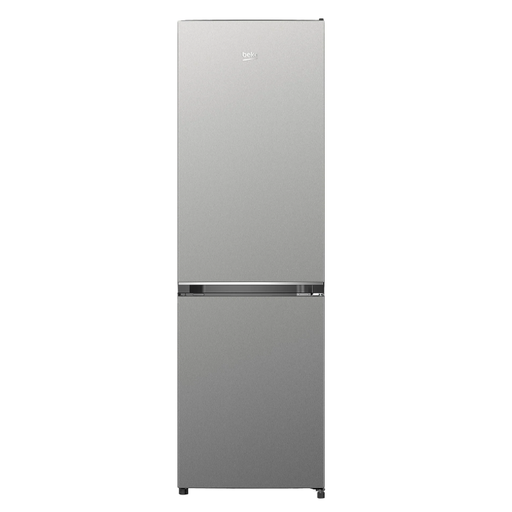
Why this product suits this profile: This freestanding fridge freezer offers 180 litres of fridge capacity and 70 litres of freezer capacity in a compact design.
The stated total capacity of 250 litres, Energy Class C and annual consumption of 140 kWh provide a sound basis for comparison. No Frost reduces the need for manual defrosting.
LED interior lighting, reversible door hinge, Fast Cooling and Fast Freezing, plus a noise level of 39 dB(A).
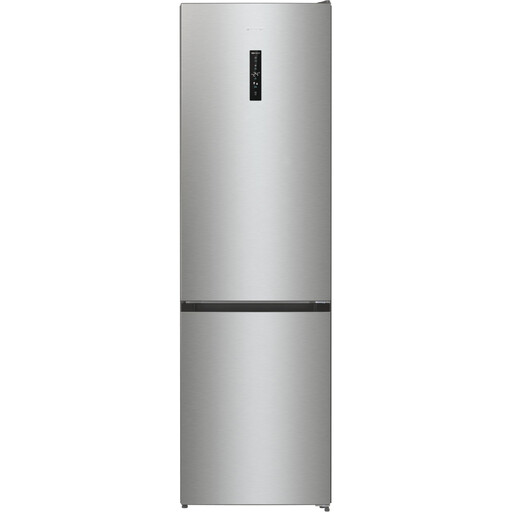
Why this product suits this profile: With 235 litres of fridge capacity and 96 litres of freezer capacity, it offers more storage space for families and regular weekly shops.
The product data specifies annual consumption of 158 kWh, a noise level of 35 dB and a height of 200 cm. This allows you to check energy requirements, noise level and installation space before buying.
No Frost in both compartments, Multi-Airflow, five fridge shelves, three freezer drawers, plus Super Cool and Fast Freeze.
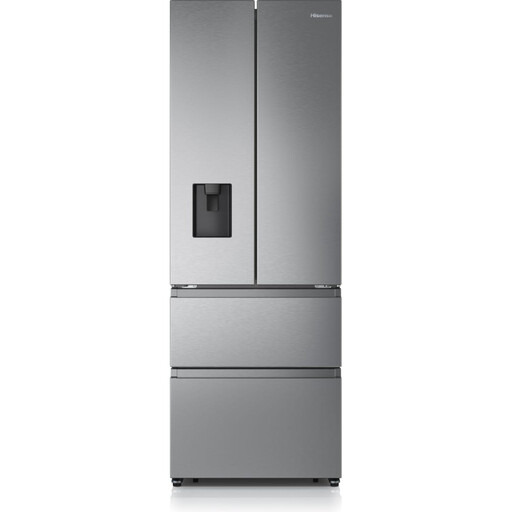
Why this product suits this profile: The French-door design, with 336 litres of fridge capacity and 149 litres of freezer capacity, is aimed at households that need plenty of storage.
At 70 cm wide, 200 cm high and 69.4 cm deep, the space requirements are clearly stated. The specified water tank prevents the assumption that a mains water connection is required.
NoFrostPlus, inverter compressor, 360° air circulation, CrispZone and SuperCool water dispenser, operating at 38 dB.
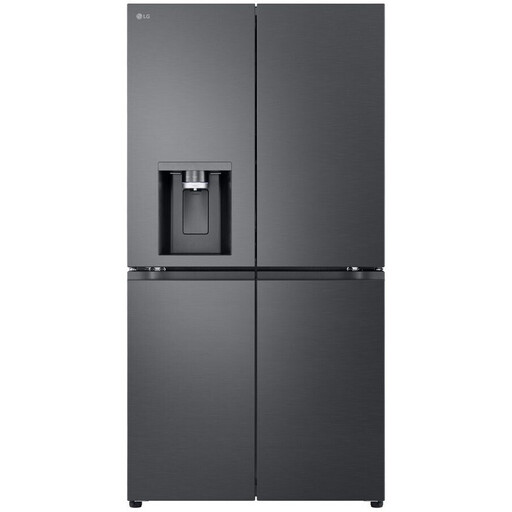
Why this product suits this profile: This multi-door appliance provides 384 litres of fridge capacity and 261 litres of freezer capacity for substantial food supplies.
The width of 91.4 cm, depth of 73.3 cm and weight of 141 kg should be taken into account before ordering and arranging delivery. The water and ice dispenser is clearly listed as a feature.
645 litres of total capacity, No Frost, 34 dB, LED lighting, four freezer drawers and Energy Class C.
We have put together a complete, regularly updated list of products that fully meet these strict selection criteria and the safety regulations applicable in the EU.
Around 200 to 300 litres may be sufficient for one person or a couple. Depending on shopping habits and how much food they store, families often need 300 to 500 litres. The division between fridge and freezer capacity is the key consideration.
No Frost can reduce maintenance for the freezer compartment because less ice forms when the system is working correctly. Whether the higher purchase price is worthwhile depends on how often you freeze food and how important avoiding manual defrosting is to you.
Lifespan depends on the model, usage, installation location, ventilation and maintenance. Regularly cleaning the seals and ventilation areas, as well as choosing a suitable location that is not too warm, can help ensure reliable operation. You should check the exact manufacturer’s warranty and service details for the relevant product before buying.