
Lieferung heute & morgen

Qualitätsgarantie

Willkommens-Angebote freischalten: KOSTENLOSE Lieferung | Bis zu 80 % RABATT | Kostenlose 30-Tage-JoyPlus-Testphase
App herunterladen
A fridge freezer should keep food reliably chilled, store frozen goods in an organised way and require as little effort as possible in everyday use. For households in Germany, capacity and price are not the only considerations. Available space, energy consumption, noise level and use in unheated rooms can also determine whether an appliance remains suitable for your living situation over time.
An appliance with a width of 60 cm will not automatically fit flush into every kitchen run. You also need to consider depth, door-opening angle, clearance from the wall and ventilation space. A freestanding fridge freezer may therefore stand in front of the kitchen units or hit furniture when the door is opened.
The route into your home should also be checked: doors, staircases and lifts must be wide enough. This is particularly important for large side-by-side or multi-door fridges.
A No Frost fridge freezer prevents ice from forming in the freezer compartment and usually eliminates the need for manual defrosting. However, the interior surfaces, door seals and ventilation openings still need to be cleaned regularly. The appliance should also not be overloaded, so that air can circulate properly.
Low Frost appliances develop less ice than conventional freezer compartments, but occasional defrosting may still be necessary.
The EU energy label ranges from A to G. For comparison purposes, it is also important to check the stated annual consumption in kWh. Despite having a similar energy class, a larger fridge may use more electricity than a more compact model. For a simple cost estimate, multiply the annual consumption by your electricity tariff.
An energy-efficient fridge should also be positioned a sufficient distance from radiators and the cooker. High ambient temperatures, dirty seals and frequent door opening can increase energy consumption.
The litre figure describes the usable total capacity, but it should be considered separately for the fridge and freezer compartments. A combination with a 70/30 split offers more space for fresh food. However, anyone who regularly stores supplies, frozen meals or larger quantities of frozen food will need a larger freezer compartment or a separate freezer.
As a guide:
Noise levels are stated in dB(A). Even a difference of a few decibels can be noticeable in an open-plan living area. Models rated at 34 to 40 dB(A) are often described as suitable for living spaces, although individual perception depends on room acoustics, flooring and compressor cycles.
For an open-plan kitchen, home office or small flat, choose a quiet fridge with the lowest possible dB rating. Also check the airborne acoustical noise emission class on the energy label.
The climate class indicates the ambient temperatures for which the appliance is designed. Models with the classes N, SN, ST and T cover a broad temperature range. For garages, utility rooms or other secondary spaces, the manufacturer’s stated minimum ambient temperature is particularly important.
A reversible door hinge makes installation easier. Adjustable feet help you level the appliance on uneven floors. Before buying, you should also take account of the wall clearances and ventilation required according to the instruction manual.
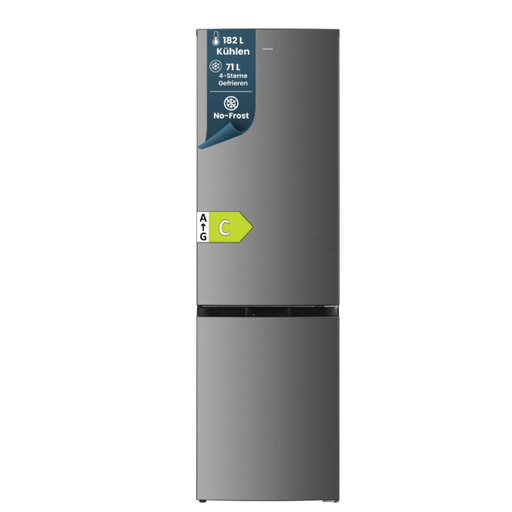
Why this product suits this profile: This combination offers 253 litres of total capacity, comprising 182 litres of fridge space and 71 litres of freezer space. With 39 dB(A), No Frost and a reversible door hinge, it is well suited to smaller families, flats or offices.
The No Frost function reduces the need for defrosting. The technical specifications also state annual consumption of 141 kWh, making it easier to compare this appliance with other models.
Energy efficiency class C, 253 litres of usable capacity, Super Freeze function and adjustable glass shelves.
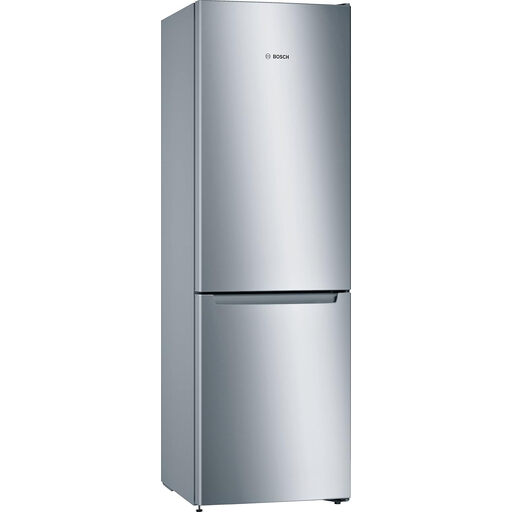
Why this product suits this profile: This model combines 282 litres of usable capacity with No Frost, Multi Airflow, Super Freeze and a reversible door hinge. It is designed for standard kitchen runs around 60 cm wide.
The specifications of 42 dB(A), 237 kWh per year and a freezing capacity of 10 kg within 24 hours make it easier to assess the appliance objectively rather than comparing design alone.
Three freezer drawers, height-adjustable shelves, door alarm and SN-T climate class.

Why this product suits this profile: This separate freezer provides 286 litres of usable capacity and, according to the product specifications, is suitable for unheated rooms down to −15 °C. This makes it suitable for storing supplies in utility rooms or garages.
Its suitability for cold secondary spaces and No Frost technology are expressly stated. Nevertheless, ventilation and the actual room temperature must be checked before buying.
286 litres, energy efficiency class D, 34 dB and five drawers or compartments.
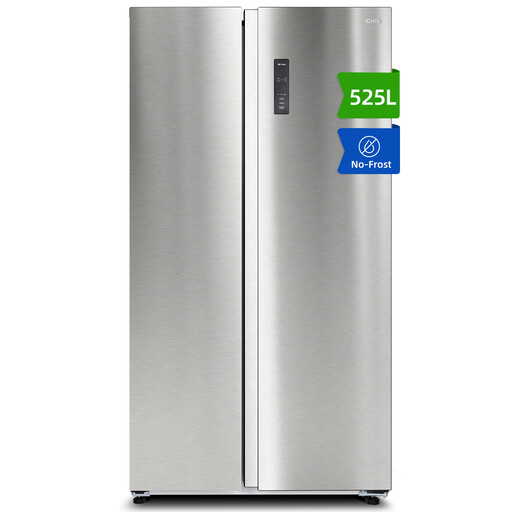
Why this product suits this profile: With 525 litres of total capacity, comprising 333 litres of fridge space and 192 litres of freezer space, this model is aimed at families and house shares with extensive storage needs.
The product data states 37 dB, Total No Frost and Multi Airflow. Before ordering, measure the greater width required as well as the necessary clearance for the doors and walls.
Inverter compressor, touch controls, reversible door hinge and energy efficiency class E.
After transport, a fridge should initially be left upright in accordance with the instruction manual before it is connected. The appliance must be level and have sufficient airflow. Hot food should only be placed in the fridge once it has cooled down.
Many models allow the temperature to be adjusted electronically or mechanically. Commonly used guidelines are around 4 °C in the fridge compartment and −18 °C in the freezer compartment. The manufacturer’s specifications and the actual temperature inside the appliance remain the deciding factors.
We have put together a complete, regularly updated list of products that fully meet these strict selection criteria and the safety regulations applicable in the EU.
It depends on how often you shop and how much freezer space you need. For several people, 250 to more than 300 litres may be suitable. Anyone who regularly freezes supplies should also consider the size of the freezer compartment or plan for a separate freezer.
The service life depends on usage, maintenance, installation location and components. Clean door seals, unobstructed ventilation paths and a suitable temperature range all support reliable operation. It is not possible to state one general service life for every model.
No Frost can significantly reduce the need for regular defrosting and help maintain a more consistent amount of usable freezer space. Whether the extra cost is worthwhile depends on how often the freezer compartment is used, how important low maintenance is to you, and how the energy consumption and purchase price compare.