
Lieferung heute & morgen

Qualitätsgarantie

Willkommens-Angebote freischalten: KOSTENLOSE Lieferung | Bis zu 80 % RABATT | Kostenlose 30-Tage-JoyPlus-Testphase
App herunterladen
Purchasing a new fridge-freezer is a major decision for any household. The right appliance reliably preserves your food and works efficiently in the background. But the market is flooded with models whose marketing promises often confuse more than they help. Before you make a choice, it's crucial to understand the most common pitfalls that can lead to dissatisfaction and unnecessary costs.
As your Joybuy Product Recommendation Officer, I'll help you find objective criteria for your decision. We'll focus on the facts that truly matter.
The 3 Most Common Traps When Buying a Fridge-Freezer:
To make an informed decision, you should focus on three core aspects. These determine whether a fridge-freezer fits your lifestyle and will satisfy you in the long run.
The capacity, measured in litres (L), is the first criterion. A fridge-freezer that is too large consumes unnecessary energy, while one that is too small makes daily life difficult. The following values serve as a general guide:
Also, check the external dimensions of the appliance and plan for sufficient space on the sides and back for ventilation. Most models are designed as freestanding fridge-freezers, allowing for flexible placement. A reversible door hinge offers additional flexibility during installation.
Since 2021, a new EU scale for energy efficiency has been in effect, ranging from A (very efficient) to G (less efficient). Many appliances previously rated A++ or A+++ are now found in classes C, D, or E. Don't let this confuse you.
An energy efficiency class C is already considered very economical under the new standard. The annual electricity consumption in kilowatt-hours (kWh) is indicated on the energy label and allows for a direct comparison of operating costs. Investing in a more efficient model almost always pays off over the appliance's lifespan.
The operating noise is measured in decibels (dB). For living spaces, especially open-plan kitchens, a quiet fridge-freezer is crucial.
Modern technologies like No Frost prevent ice build-up in the freezer section, saving you from manual defrosting. Look for systems like "Total No Frost," which regulate moisture throughout the entire appliance to keep food fresh for longer.
Here are some models that represent a considered choice for different needs, based on objective features.
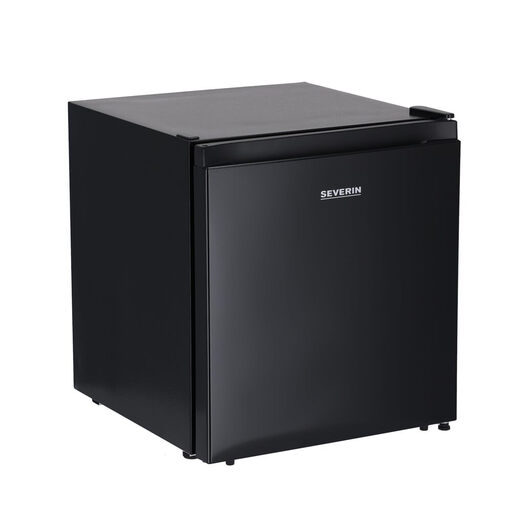
Why This Fits Their Persona: This model is ideal for small kitchens, offices, or as a secondary appliance. With 45 litres of capacity, it offers enough space for the essentials without taking up valuable room. Its design as a black refrigerator blends discreetly into modern environments.
With an operating noise of just 39 dB, this appliance sidesteps the noise trap, making it perfect for quiet environments. It also avoids unnecessary energy costs thanks to its size, which is tailored to actual needs.
Compact dimensions and a reversible door hinge for maximum installation flexibility. Integrated 5-litre freezer compartment for small frozen goods.
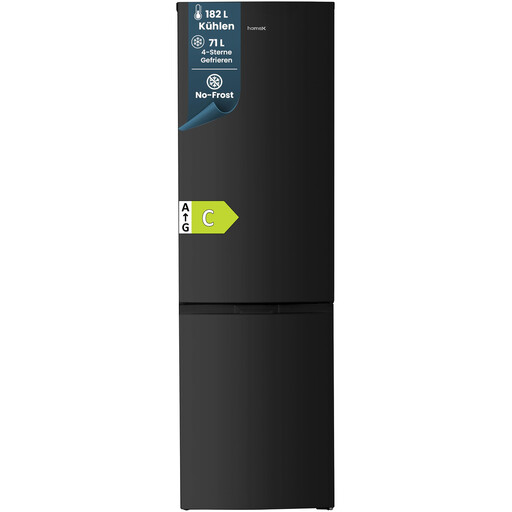
Why This Fits Their Persona: An excellent choice for price- and energy-conscious families. With 253 litres, the appliance offers ample space and combines it with a very good energy efficiency class C to keep running costs low.
This model directly addresses the energy cost trap with its C efficiency rating. The Total NoFrost technology is a clear plus, increasing convenience and ensuring freezing efficiency.
Low annual energy consumption of 141 kWh. The Super-Frost function freezes fresh food quickly, preserving nutrients.
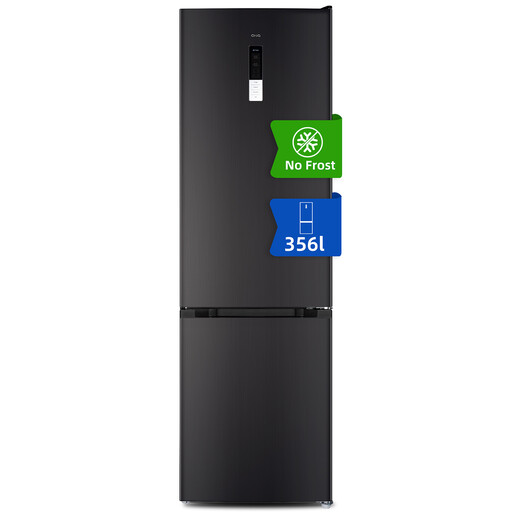
Why This Fits Their Persona: With a very large capacity of 351 litres, this appliance is designed for large families or shared living spaces that require a lot of storage. Modern inverter technology ensures stable and quiet operation.
The Total No Frost technology, combined with a multi-airflow system, ensures even cooling and reliably prevents icing. This bypasses the disadvantages of simpler No Frost systems.
Very large capacity of 351 litres. The inverter technology ensures quiet and energy-efficient operation. According to the manufacturer, a 12-year warranty is provided for the compressor.
We have compiled a complete, up-to-date list of products that fully meet these strict selection criteria and German safety regulations.
A No Frost fridge uses a convection system to circulate cold, dry air in the freezer compartment. This air removes moisture from the environment, so no ice can form on the inner walls or on the frozen food. This completely eliminates the need for manual defrosting. High-quality systems ("Total No Frost") regulate moisture throughout the entire appliance to create optimal conditions in the refrigerator section as well.
An operating noise level of below 40 decibels (dB) is generally perceived as quiet and is comparable to a soft whisper or the sound in a library. Models in this range are ideal for open-plan kitchens or studio apartments, as they do not disrupt the living comfort. Look for this value on the appliance's energy label.
A modern energy efficiency class C fridge-freezer consumes significantly less electricity than a 10 to 15-year-old appliance. While an old model often requires 300-400 kWh per year, the consumption of a comparably sized class C device today is around 140-170 kWh. At an electricity price of 40 cents/kWh, this can mean an annual saving of over €60.