For freshly baked cake slices, choose a fridge freezer with a freezer compartment specifically designed for freezing and enough room for wrapped portions alongside your other frozen food. Then compare the appliance dimensions and stated annual energy consumption. NoFrost means you won’t need to defrost manually, while LowFrost and MinFrost only reduce ice build-up. If your cake has a filling that needs to be kept chilled, plan how you’ll keep it cool while travelling too, as the German Federal Institute for Risk Assessment points out.
Which solution is right for you?
Freezing portions for the week
If you like to bake ahead, you’ll need a freezer compartment suitable for freezing and drawers that make it easy to find individual wrapped slices among your other frozen food. The consumer advice centre recommends taking the appliance’s freezing capability and your needs into account when choosing a model.
Keeping energy costs in check
As your appliance runs all the time, it’s worth comparing the right size with its stated annual energy consumption. The consumer advice centre and the European Commission highlight the energy consumption figures shown in kWh per year.
Limited kitchen space
If floor space or room for the door to open is limited, check the external dimensions, door hinges and the space needed to pull out the freezer drawers. The consumer advice centre recommends choosing an appliance size that suits your actual needs.
What should you look for when buying?
First, check that the freezer compartment and drawers have room for your portions. Then compare the dimensions and annual energy consumption, and decide how much defrosting you’re prepared to do.
| What matters |
What to check before buying |
Who is this important for? |
| Freezing and retrieving portions |
A suitable freezer compartment; freezer capacity, drawers and room for your own containers. If you have a small ice box, look for the 4-star rating, as recommended by the consumer advice centre. |
If I’m freezing cake slices for several days of the week, I want to be able to take them out individually without searching for ages. Around 36% of consumers prioritise freezer space for portions when choosing. |
| Energy consumption |
Compare kWh/year on the EU energy label for appliances of a similar size; work out the cost using your own electricity rate. |
If the appliance runs all the time, I compare energy consumption without choosing more freezer space than I need. Around 29% of consumers put running costs first. |
| Fit in the kitchen |
Check the width, height and depth, as well as the door hinges and the space needed to pull out the drawers. |
If my kitchen has limited floor space, the appliance needs to fit and the freezer drawers must remain accessible. For around 21% of consumers, fitting into the kitchen is the top priority. |
| Defrosting |
Check whether NoFrost or a technology that reduces ice build-up is specified for the freezer compartment of the exact model. |
If I want to defrost manually as rarely as possible, I look for the technology specifically listed for the freezer compartment. Around 14% of consumers prioritise less defrosting. |
Common selection mistakes
-
Assuming total capacity equals usable freezer space
Total capacity alone doesn’t tell you how many wrapped cake slices will fit in the drawers alongside your other frozen food. The consumer advice centre recommends taking your freezer needs into account when choosing the appliance size.
Compare the stated freezer capacity and the interior layout with your containers and other frozen food, rather than looking only at the total capacity in litres.
An unnecessarily large appliance takes up more floor space and can use more energy.
-
Confusing LowFrost or MinFrost with NoFrost
For the Siemens KG39EAICA, “Never defrost again” is listed as “No”. Beko describes MinFrost as a technology that reduces ice build-up; this does not mean the freezer compartment never needs to be defrosted manually.
Check the defrosting technology specifically for the exact model and its freezer compartment.
With technology that reduces ice build-up, you may still need to defrost.
-
Assuming a frozen slice will stay safe during transport
According to the German Federal Institute for Risk Assessment, it’s important to keep perishable food at a sufficiently low temperature during transport and storage. Freezing it doesn’t remove the need to plan how you’ll keep it cool until it’s eaten.
Consider the recipe and filling, as well as a suitable way to keep it cool in a lunch box, regardless of which appliance you choose.
Brands and models at a glance
Bosch
The freestanding KGN39AIBT fridge freezer offers a useful comparison point, with separate figures for fridge and freezer capacity as well as NoFrost.
- Bosch lists 260 l of fridge capacity, 103 l of freezer capacity and “Never defrost again: Yes” for the KGN39AIBT.
- The model is 203 cm high; these figures don’t apply to every Bosch appliance. Source: Bosch Home Appliances Germany.
Siemens
The KG39EAICA is a useful comparison point for a fridge freezer with LowFrost rather than a freezer compartment that never needs defrosting.
- Siemens lists 94 l of freezer capacity and 149 kWh/year for this model.
- “Never defrost again” is listed as “No”. Siemens says LowFrost reduces ice build-up, but it doesn’t eliminate the need to defrost. Source: Siemens Home Appliances Germany.
LG
The GBB92MBB3P is a useful comparison point for a larger fridge freezer with Total No Frost.
- LG lists a total capacity of 381 l and energy consumption of 88 kWh/year for this model.
- Total capacity alone doesn’t show how many wrapped cake slices will fit in the drawers. Information about freshness features doesn’t, by itself, prove that cake will keep for longer. Source: LG Germany.
Beko
Beko offers models with different designs and defrosting technologies, including NoFrost and MinFrost.
- Beko lists the B3RCNO255XB as 54 cm wide with NoFrost; the RCSA366K40XBN is described as 59.5 cm wide with MinFrost.
- The RCSA366K40XBN reduces ice build-up, but doesn’t prevent it completely. Features and defrosting requirements vary by model. Source: Beko Germany.
Liebherr
The CNsfc 573i Plus is a useful comparison point for a larger NoFrost fridge freezer.
- Liebherr lists a total capacity of 359 l and external dimensions of 201.5 × 59.7 × 67.5 cm.
- The manufacturer’s claims about freshness and odour transfer don’t prove that cake slices will keep for longer. Source: Liebherr.
Fridge freezers at Joybuy
These models are for households that want to freeze cake slices in individual portions. Choose one with a freezer compartment, capacity and defrosting technology to suit your needs.
 No image available
LG GBBSJ1CCPY, 333 l, Total No Frost
The listed 4-star freezer compartment is suitable for freezing, and three drawers provide separate storage.
113 l freezer capacity; 169 kWh/year; energy class C.
Joybuy
 No image available
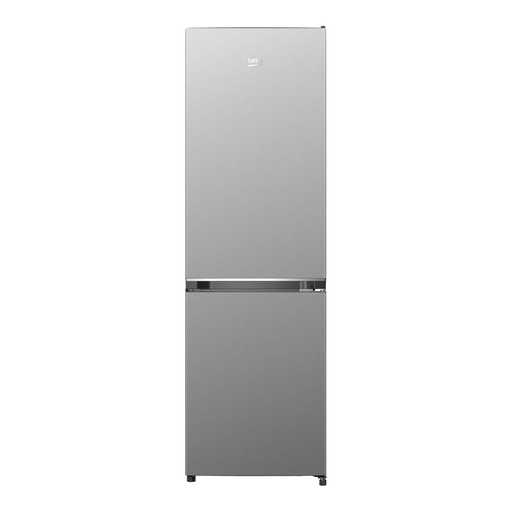
Beko B3RCNO255XB, 250 l, No Frost
If you’re looking for a slim design, compare the external dimensions with your available space and check that the freezer compartment is suitable for freezing fresh cake slices.
180 l fridge capacity and 70 l freezer capacity; 54 cm wide and 57.6 cm deep; 172 kWh/year; energy class D. The door hinges are reversible.
Joybuy
 No image available
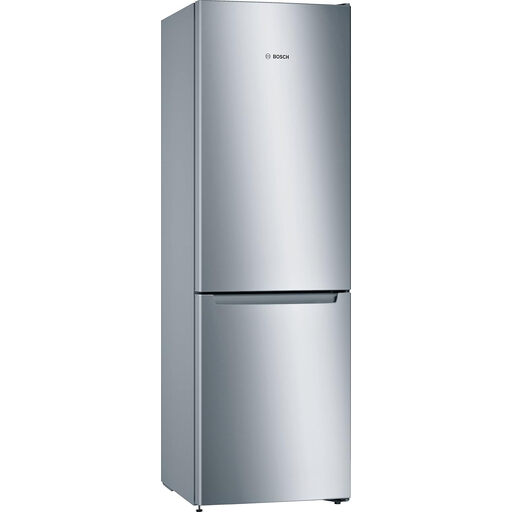
Bosch KGN33NLEB Series 2, NoFrost
This model is listed with NoFrost and three freezer drawers. Check that the capacity and dimensions suit your weekly portions.
176 × 60 cm; 192 l fridge capacity and 87 l freezer capacity; freezing capacity of 10 kg per 24 hours; energy class E.
Joybuy
 No image available
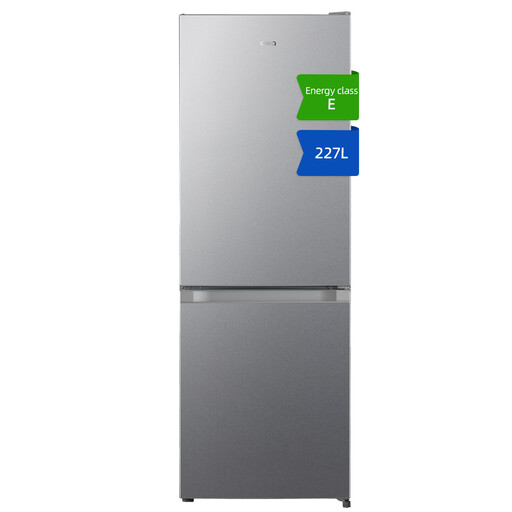
CHiQ JR227LSE, 227 l, Low Frost
The 4-star freezer compartment is listed as suitable for freezing, while the 54 cm-wide design may suit kitchens with limited space.
153 l fridge capacity and 74 l freezer capacity; 54 cm wide and 55 cm deep; energy class E; reversible door hinges. Low Frost reduces ice build-up, but doesn’t eliminate the need to defrost manually.
Joybuy
 No image available
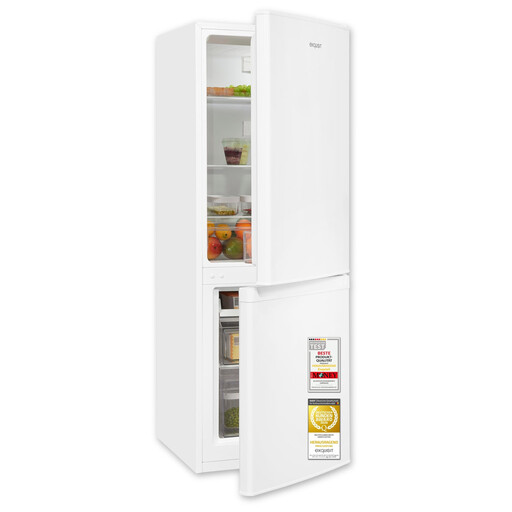
Exquisit KGC5232-60-E-040E, 173 l
The 4-star freezer compartment is suitable for freezing fresh food, and its compact width may be useful if floor space is limited.
52 l freezer capacity; 49.5 cm wide; two freezer drawers. The freezer compartment needs to be defrosted manually if ice builds up.
Joybuy
Frequently asked questions
Is a small ice box big enough for freshly baked cake slices?
Only if it’s suitable for freezing. The consumer advice centre recommends looking for the 4-star rating on ice boxes. If the appliance has a separate freezer compartment, check its freezing capability and usable space.
How can I keep the portions organised?
Use freezer-safe containers and label them with the contents and date they were frozen, as recommended by the consumer advice centre. Whether the icing or filling keeps its desired consistency after thawing depends on the recipe; custard and gelatine-based desserts can change texture when frozen.
Can a slice with a delicate filling stay unrefrigerated in a bag until lunchtime?
If the food needs to be kept chilled and is perishable, you should plan how to keep it cool until it’s eaten. The German Federal Institute for Risk Assessment warns about insufficient temperatures during transport and storage; it isn’t possible to give a general safe time limit.
How do I compare the running costs of two appliances?
First, compare suitable appliances using the kWh/year figure on the EU energy label. To estimate the cost for yourself, multiply the difference in consumption in kWh/year by your electricity price in euros/kWh and the same planned number of years in use. Actual consumption also depends on how and where the appliance is used. The European Commission explains the label’s annual energy consumption figure, while the consumer advice centre explains how to calculate costs using your electricity price.


