Choose according to how you plan to store your food. For portions you’ll eat soon, you’ll need enough usable fridge space and a temperature you can control; for meals you’ll eat later, you’ll also need a suitable freezer compartment. The BfR recommends storing perishable foods at between 2 °C and 7 °C, and advises eating cooked leftovers within two to three days. Also check the appliance’s dimensions, compartment layout and annual energy consumption. It won’t replace prompt cooling, or keeping food chilled in transit and at work.
Which option is right for you?
Preparing lunches for the next few days
If you’re preparing cooked chicken to eat soon, allow space for covered portions and make sure they can be kept at the right temperature. The BfR recommends storing perishable foods at between 2 °C and 7 °C; cooked leftovers should be eaten within two to three days.
Freezing portions for the week ahead
If you prepare larger quantities to eat later, make sure the freezer has enough room for your containers as well as the fridge. The Federal Centre for Nutrition explains that a four-star compartment is also suitable for freezing food.
Buying for a small kitchen
If you need both temperature zones, check the appliance’s external dimensions, door clearance and compartment layout against the space available. The consumer advice centre points out that fridges and freezers run all year round; the European Commission lists annual energy consumption and compartment volumes on the EU energy label.
What should you look for when buying?
Fridge space for food you’ll eat soon
A good fit if: you prepare portions for the next few days and want to store your covered containers with ease.
Keep in mind: cooked leftovers can only be kept in the fridge for a limited time. Extra fridge space doesn’t replace freezing portions you’ll need later.
Freezer space for portions you’ll eat later
A good fit if: you batch-cook for the days ahead and want to freeze individual portions.
Keep in mind: check that the freezer compartment is suitable for freezing fresh food, and plan how you’ll defrost and transport it while chilled.
The BfR recommends storing perishable foods at between 2 °C and 7 °C. This table shows which appliance features to check against your storage plans.
| What you need |
What to check when buying |
Who will find this especially useful? |
| Fridge space for portions you’ll eat soon |
Check there’s room for your covered containers and that they’re easy to reach; consider the required storage temperature. |
If I need to fit several lunch boxes in for the next few days, well-organised fridge space matters; around 36 % of consumers rank this as their top priority. |
| Freezer space for meals you’ll eat later |
Compare the freezer volume and drawer dimensions with your containers; check that the compartment is suitable for freezing fresh food. |
If I prepare larger quantities for later, I need space to freeze portions individually; around 29 % of consumers prioritise freezer space for this. |
| Fit in the kitchen |
Compare the exact model’s external dimensions, door clearance and installation type with the space available. |
If space is limited, I want to be sure the appliance and its door will fit in my kitchen; around 21 % of consumers put fit at the top of their list. |
| Ongoing energy use |
Compare annual consumption in kWh alongside the separate compartment volumes; work out your own electricity costs using your tariff. |
Once an appliance meets my space and storage needs, I also compare its annual energy consumption; around 14 % of consumers prioritise this. |
Avoid common misconceptions
-
A freshness zone automatically keeps cooked chicken safe for longer
Manufacturers’ claims about freshness features apply to specific foods or functions on particular models. They don’t replace food safety guidance for cooked leftovers.
Follow the BfR’s recommendations on storage and how soon to eat leftovers. If you’ll need portions later, you could freeze them in good time.
-
Total capacity is enough to compare appliances
Lunch boxes and portions for freezing need space in different compartments. A large total capacity in litres doesn’t tell you on its own whether your containers will fit comfortably.
Compare the separate fridge and freezer volumes, along with the layout of the specific model, against your containers.
-
Low Frost and No Frost mean the same thing
The terms describe different approaches to ice build-up and defrosting. Siemens describes the KG39E8IBA model as lowFrost, while Bosch says the KGN36VICT model doesn’t need defrosting.
Check the technology and care instructions for the specific model rather than assuming it has features found in another range.
-
Keeping food chilled at home will keep your lunch cold on the way to work
Your appliance can’t control the food’s temperature while you’re travelling or where you eat it.
Plan how you’ll transport your lunch and keep it chilled at work. The BfR recommends using a cool bag to carry prepared meals.
Brands and models at a glance
Bosch
Bosch lists 218 l of fridge space, 103 l of freezer space and No Frost for its freestanding KGN36VICT fridge-freezer.
- This model is also listed as having door and temperature alarms.
- These details apply to the KGN36VICT. Freshness claims don’t prove that cooked chicken can be kept safely for longer.
LG
LG lists a total capacity of 375 l and annual energy consumption of 175 kWh for the GBBS322CEV model.
- The model specifications let you compare total capacity with the stated annual energy consumption.
- These figures come from LG and aren’t independent measurements. Freshness claims don’t prove the food safety or shelf life of pre-cooked poultry.
Siemens
Siemens lists 249 l of fridge space and 94 l of freezer space for the freestanding iQ500 KG39E8IBA.
- The separate capacity figures help you check the model against your fridge and freezer needs.
- Siemens describes this model as lowFrost, not No Frost. Less ice build-up doesn’t mean it never needs defrosting.
Liebherr
Liebherr lists a total capacity of 371 l and No Frost for the CNsdc 5703 Pure.
- This model provides another total capacity figure to compare.
- Check the capacity of each compartment. EasyFresh claims about fruit and vegetables don’t prove that cooked chicken can be kept safely for longer.
Beko
Beko lists the B5RCNA406OHG fridge-freezer with a bottom freezer as an option to consider.
- You can include this model in your comparison of fridge-freezers with a bottom freezer.
- Compare the compartment volumes and energy label for the exact model. HarvestFresh claims about fruit and vegetables don’t prove any benefit for cooked poultry.
Joybuy products
Compare the fridge-freezers below for chilled lunch portions and meals frozen in individual servings. For each model, check that it can maintain the storage temperature you need, and see how its compartment layout, dimensions and transport requirements fit into your routine.
 No image available
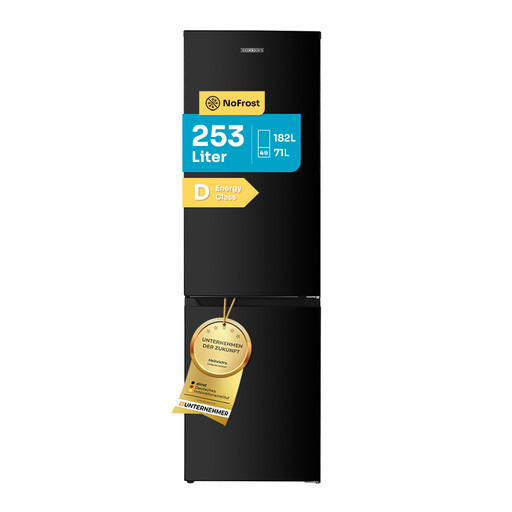
Heinrich’s fridge-freezer, 253 l
Compare the separate fridge and freezer compartments with the space you need for lunch portions and other food.
253 l total capacity; 182 l fridge space and 71 l freezer space. The product name also lists No Frost, LED lighting and 39 dB.
View at Joybuy
 No image available
CHiQ JR263LGE, 262 l
The stated 70/30 split and appliance dimensions give you specific details to compare when checking compartment layout and kitchen space.
54 cm wide and 176 cm high; described as Low Frost in the product name. Check the separate usable volumes and the model’s care instructions.
View at Joybuy
 No image available
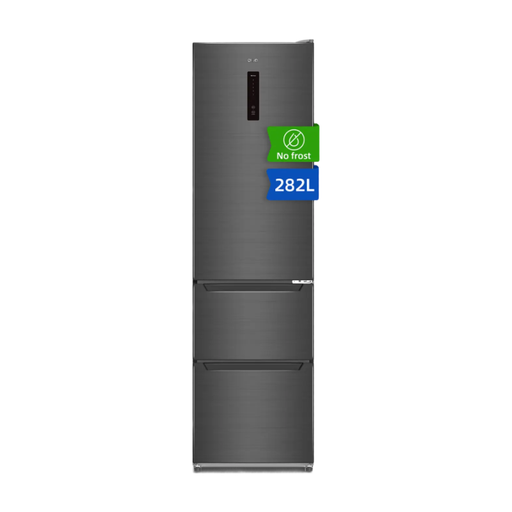
CHiQ CID282NEIBE, 282 l
The stated total capacity and dimensions help you compare the model with the space available and the containers you need to store.
54 cm wide and 192 cm high; the product name lists energy class E, No Frost, Dual Inverter and touch controls. Check the product description for the clearance needed for ventilation and the door to open.
View at Joybuy
 No image available
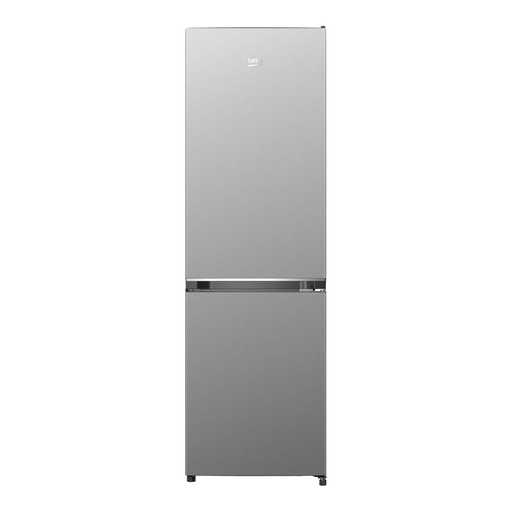
Beko B3RCNO255XB, 250 l
The compartment split listed in the product name can be compared with the space you need for chilled and frozen portions.
250 l total capacity, listed as 180 l of fridge space and 70 l of freezer space. The product name also lists No Frost and energy class D.
View at Joybuy
 No image available
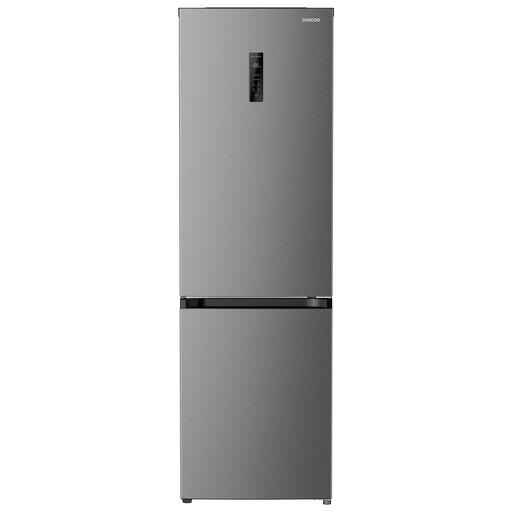
coocaa SRD-489CBEP, 344 l
The stated total capacity and freezer features give you points of comparison if you’re planning meals for later as well.
The product name lists Total No Frost, Super Freezer and energy class E. Check the separate compartment volumes and annual energy consumption for the specific model.
View at Joybuy
Frequently asked questions
Can I keep cooked chicken in the fridge from Sunday until Friday?
Don’t assume a new fridge makes it safe to keep food chilled for a whole working week. The BfR recommends keeping cooked leftovers chilled and eating them within two to three days; you could freeze portions in good time if you’ll need them later.
Is a three-star freezer compartment suitable for freezing freshly prepared portions?
According to the Federal Centre for Nutrition, a four-star compartment is suitable for freezing food. Check the rating on the specific appliance if you want to freeze freshly prepared portions yourself.
What should I do after cooking and on the way to work?
If you’re keeping hot food for later, cool it quickly to below 7 °C and store perishable food chilled. The BfR recommends using a cool bag to transport prepared meals and advises planning how you’ll keep them chilled where you’re going to eat.
Which energy consumption details should I compare?
Compare annual consumption in kWh alongside the compartment volumes and appliance size. Since 1 March 2021, the EU energy label for household refrigeration appliances has used a scale from A to G; the European Commission also lists capacity and noise emissions on the label.


