
Lieferung heute & morgen

Qualitätsgarantie

Willkommens-Angebote freischalten: KOSTENLOSE Lieferung | Bis zu 80 % RABATT | Kostenlose 30-Tage-JoyPlus-Testphase
App herunterladen
A new fridge-freezer combination should store food reliably, fit into your kitchen and operate for years with reasonable electricity costs. Many models look similar at first glance, yet differ considerably in usable capacity, defrosting system, noise level and installation requirements.
The most important purchase decisions therefore concern neither design nor additional display functions, but the technical specifications. Checking these before buying helps you avoid common mistakes.
A large total capacity sounds appealing, but on its own says little about the storage space actually available. What matters are the separately stated usable capacities of the fridge and freezer compartments. A fridge-freezer with a large freezer compartment may be useful for families, while couples often manage well with a larger refrigerator section and a smaller freezer.
As a general guide:
A No-Frost fridge-freezer circulates cold air throughout the freezer compartment, thereby reducing ice formation. This generally eliminates the need for manual defrosting. However, No Frost is not an energy-efficiency standard in its own right. Running costs are determined primarily by the energy-efficiency class and annual consumption in kilowatt-hours.
The EU energy label scale ranges from A to G. A class C fridge-freezer with an appropriate usable capacity may consume less electricity than a larger class D or E model. Always compare the stated kWh per year, rather than looking only at the letter on the energy label.
A freestanding fridge-freezer needs sufficient clearance for heat dissipation and a door that can open fully. In addition to width and height, depth, door hinge position, wall clearance and the delivery route are all relevant. A model measuring 63.5 centimetres deep may protrude noticeably in front of a standard kitchen run.
Before ordering, measure:
The internal layout has a greater impact on everyday use than the litre capacity alone. A 70/30 split with the freezer compartment at the bottom makes it easier to access frequently used chilled goods. A fridge-freezer with the freezer compartment at the top can be practical for smaller households that use the freezer regularly.
For frozen-food storage, you should also consider the number and depth of the drawers. Large, separate drawers make organisation easier, but require sufficient clearance to open fully.
A No-Frost system is particularly convenient for frequently used or large freezer compartments. In a compact fridge-freezer, Low Frost may be an adequate solution if a lower purchase price is more important.
A quiet fridge-freezer often operates at around 35 to 40 dB(A). This can be particularly relevant in an open-plan kitchen, office or studio apartment. Noise emissions should be considered alongside annual energy consumption.
For example, the CHiQ JR318WSD is listed in the product specifications at 37 dB(A), 322 litres of usable capacity, No Frost and 196 kWh per year. The homeX CFSN2531C-S is specified at 39 dB(A), 253 litres, energy-efficiency class C and 141 kWh per year. Such figures can be compared directly provided they are based on the same labelling standard.
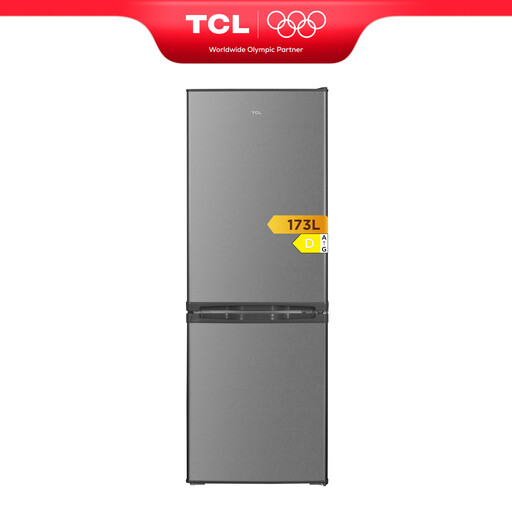
Why is this model a good fit? With 121 litres of refrigerator capacity and a 52-litre freezer compartment, this appliance is suitable for individuals, couples or smaller kitchens.
The separate refrigerator and freezer capacities are clearly stated. Adjustable shelves help you make the most of the limited interior space.
LED interior lighting, a Fresh Zone drawer and energy-efficiency class D according to the product specifications.
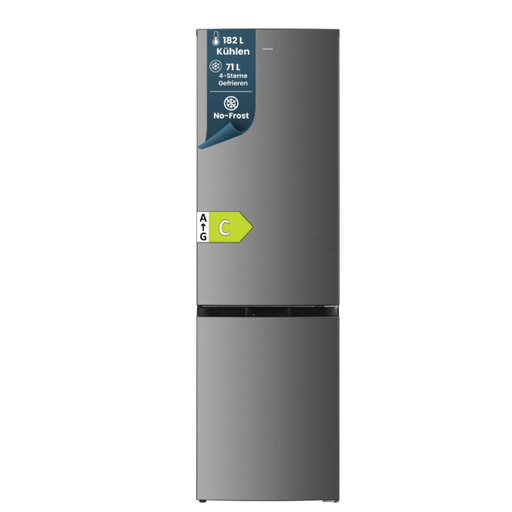
Why is this model a good fit? The appliance combines 253 litres of usable capacity with No Frost and energy-efficiency class C. It is designed for households with regular refrigeration and freezing needs.
No Frost reduces maintenance, while an annual consumption of 141 kWh provides a clear basis for comparison.
182 litres of refrigerator capacity, 71 litres of freezer capacity and 39 dB(A) according to the product description.
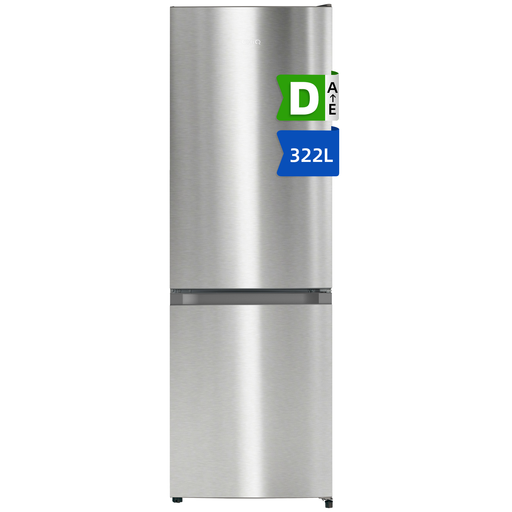
Why is this model a good fit? With 226 litres of refrigerator capacity and 96 litres of freezer capacity, it offers ample space for larger shops and supplies for several people.
The full dimensions of 59.5 × 63.5 × 185.5 centimetres make it easy to verify the space required before ordering.
Total No Frost, 37 dB(A), energy-efficiency class D and climate classes N, SN, ST and T according to the manufacturer.
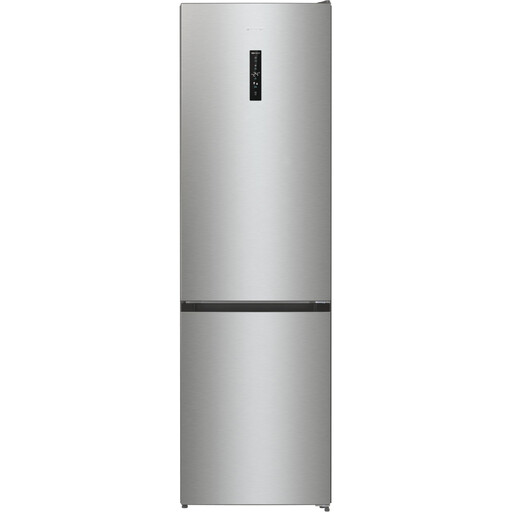
Why is this model a good fit? With a total capacity of 331 litres, this freestanding fridge-freezer is well suited to families and open-plan kitchen areas.
No Frost in both compartments reduces the need for manual defrosting. The reversible door supports flexible installation.
Energy-efficiency class C, 158 kWh per year and 35 dB(A) according to the product specifications.
We have put together a current selection of products that meet these criteria and the relevant safety requirements for Germany.
Place the appliance on a level, stable surface and observe the clearances specified in the manual. After transport on its side, the fridge-freezer should remain upright for several hours before being switched on. The exact waiting time depends on the manufacturer’s instructions.
There is no universally defined service life. It depends on factors including usage, ambient temperature, door seals, ventilation and maintenance. Clean the seals and interior regularly, avoid overfilling the compartments and keep air vents clear. For use in a cellar or garage, the stated climate class must match the temperature in that location. An appliance designed for ambient temperatures from 16°C may not be suitable for a cold winter environment.
Class C can be an attractive option when the dimensions and usable capacities are appropriate. The specific annual consumption in kWh remains the key consideration. Compare appliances with similar capacities and also take their anticipated service life into account.
In addition to the appliance width, you need space for ventilation, door opening and pulling out the drawers. Also check the delivery route. The manufacturer’s minimum-clearance specifications take precedence over a tight measurement of the installation space.
No Frost can reduce maintenance because it eliminates the need to manually defrost the freezer compartment. Whether the higher purchase price is worthwhile depends on how frequently you freeze food, how large the freezer compartment is and the stated energy consumption.