
Lieferung heute & morgen

Qualitätsgarantie

Willkommens-Angebote freischalten: KOSTENLOSE Lieferung | Bis zu 80 % RABATT | Kostenlose 30-Tage-JoyPlus-Testphase
App herunterladen
A fridge-freezer combination should match the available space, shopping habits and electricity budget. However, prominent product names and convenience features alone reveal little about whether an appliance is genuinely suitable for everyday use. What matters are transparent specifications such as net capacity, energy consumption, noise level, dimensions and the configuration of the freezer compartment.
A large refrigerator may look appealing at first glance. However, the key figure when choosing a model is its net usable capacity—the storage space actually available. Interior walls, drawers and technical components reduce the usable volume. Always compare the following separately:
For example, a side-by-side refrigerator may offer considerable capacity but require significantly more floor space than a compact fridge-freezer combination.
Noise levels are specified in decibels (dB). Even a difference of a few decibels can be noticeable in an open-plan living area. In principle, an appliance rated at 35 to 39 dB is better suited to an open-plan kitchen than a model rated at 42 dB. The figure should be considered alongside the airborne acoustical noise emission class shown on the energy label.
A No Frost fridge-freezer combination prevents ice from forming in the freezer compartment through automatic air circulation and defrosting technology. This reduces the need for manual defrosting. Nevertheless, door seals, interior surfaces, ventilation areas and, where applicable, water tanks still need to be cleaned regularly. Appliances with a water dispenser also require you to follow the manufacturer’s instructions for cleaning and filter replacement.
For one or two people, a refrigerator with freezer compartment or a combination offering around 200 to 280 litres may be sufficient. Families will often benefit from 300 litres or more. If you store large quantities of food, frozen meals or substantial grocery purchases, assess the freezer compartment separately. A large refrigerator with a small freezer compartment is not automatically suitable for a multi-person household.
The EU energy label uses a scale from A to G. It also states annual consumption in kilowatt-hours. For running costs, this figure is more informative than the efficiency class alone.
A simple rule of thumb:
Annual cost = consumption in kWh × individual electricity price per kWh
An appliance using 141 kWh per year would cost approximately €49 annually at an assumed electricity price of €0.35 per kWh. The actual amount depends on your tariff. Compare consumption, size and features together. A larger model may use more electricity despite having a favourable efficiency class.
Before purchasing, measure:
Depending on its depth, a freestanding refrigerator may project beyond the kitchen units. Multi-door and side-by-side refrigerators also require substantial door-opening clearance. The climate class is important for garages and utility rooms. Not every appliance is suitable for unheated spaces. The specific minimum and maximum ambient temperatures should be stated in the product description or operating instructions.
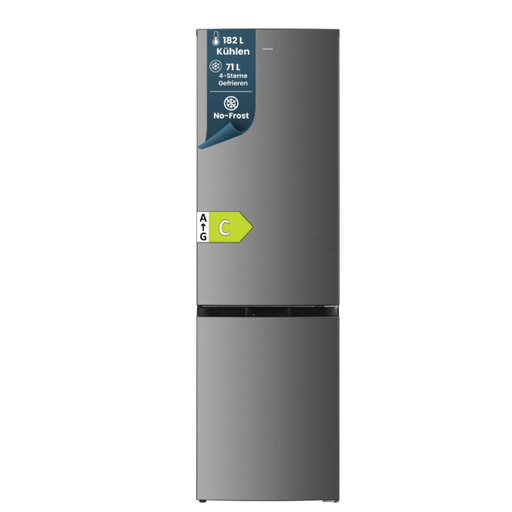
Why this model is a good fit: With 182 litres of refrigerator space and 71 litres of freezer space in a width of 54.5 cm, this combination is well suited to couples and smaller households. It also works well in more compact kitchens.
The stated usable capacity is broken down into refrigerator and freezer space. No Frost reduces the need for manual defrosting, while the 39 dB rating provides a clear indication of operating noise.
253 litres of total capacity, energy efficiency class C, LED interior lighting, reversible door hinge and annual consumption of 141 kWh according to the product specifications.
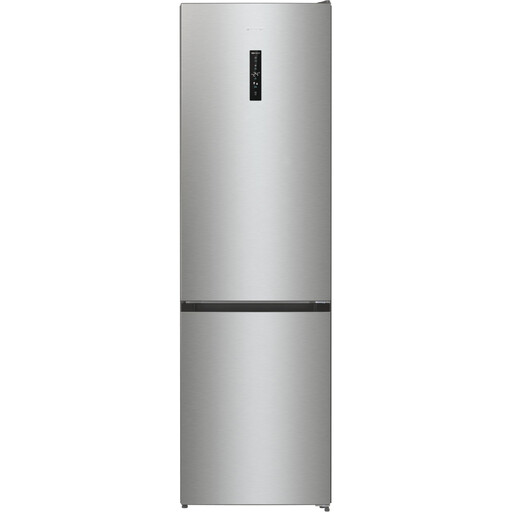
Why this model is a good fit: With 235 litres of refrigerator space and 96 litres of freezer space, it offers families greater flexibility. Before buying, check that its 200 cm height is compatible with the room height and delivery route.
The product specifications list refrigerator and freezer capacities separately. They also specify a door alarm, temperature alarm and reversible doors rather than making vague claims about convenience.
Energy efficiency class C, annual consumption of 158 kWh, 35 dB, Multi Airflow, No Frost in both compartments, plus Super Cool and Fast Freeze functions.
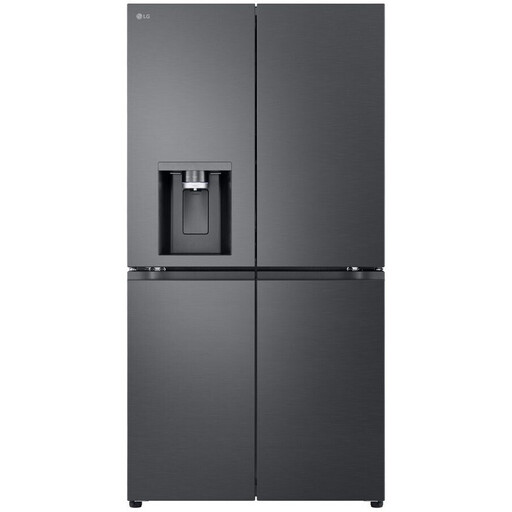
Why this model is a good fit: This appliance is designed for households with substantial refrigeration and freezer requirements. Its 384 litres of refrigerator space and 261 litres of freezer space provide ample room for bulk purchases and stored provisions.
Before purchasing, check the 91.4 cm width, 73.3 cm depth and the clearance required to open the doors. The water dispenser also requires regular cleaning.
Energy efficiency class C, 230 kWh per year, 34 dB, No Frost, LED lighting, ice and water dispenser, plus app compatibility according to the product description.
Our full selection includes No Frost fridge-freezer combinations in a range of sizes, configurations and feature packages for households in the UK.
Service life depends on the model, usage, ambient temperature, care and maintenance. Regularly cleaning the seals and ventilation areas can help ensure reliable operation. If you notice unusual noises, damaged cables or visible damage to the refrigeration circuit, stop using the appliance.
The exact consumption is shown on the energy label and given in kWh per year. Smaller models may use less than 200 kWh annually, while large side-by-side or multi-door appliances can consume significantly more despite having a favourable efficiency class. The decisive comparison is therefore between consumption and usable capacity.
No Frost is particularly useful if you regularly store frozen food and want to avoid manual defrosting. With a compact combination featuring Low Frost, the lower purchase price may be a worthwhile consideration if you are prepared to defrost the appliance occasionally. The right choice depends on your freezer requirements and the level of maintenance you are willing to undertake.