What should you look for when buying?
First, work out whether you’ll mainly be chilling portions to eat soon or regularly freezing food for later. The German Federal Institute for Risk Assessment recommends keeping leftovers chilled and eating them within two to three days. Appliance size alone won’t tell you whether your containers will fit comfortably.
| Priority |
What to check when buying |
Who is this particularly important for? |
| Fridge space for portions you’ll eat soon |
Check the fridge capacity, shelf layout and space for shallow, covered containers. |
If I want to chill several portions separately, I need easy-to-reach shelves; around 33% of consumers put available fridge space first. |
| Freezer space for food to store |
Compare the freezer capacity and drawer dimensions with the containers you use. |
If I regularly batch cook more than I’ll eat soon, I need room in the freezer for extra portions; around 27% of consumers prioritise this freezer space. |
| Fit and access |
Check the height, width and depth, door hinge and clearance for opening at the intended location. |
If the kitchen is small, I want to be able to open doors and drawers without obstruction; around 20% of consumers check how well an appliance will fit first. |
| Energy consumption and noise |
Compare annual energy consumption in kWh and noise levels in dB(A) for appliances with a suitable capacity. |
If we share the electricity costs or the appliance is near a living area, energy use and operating noise matter; around 20% of consumers prioritise these ongoing aspects of use. |
Joybuy appliance selection
Joybuy fridge-freezers for chilling cooked portions and storing extra food in the freezer.
 No image available
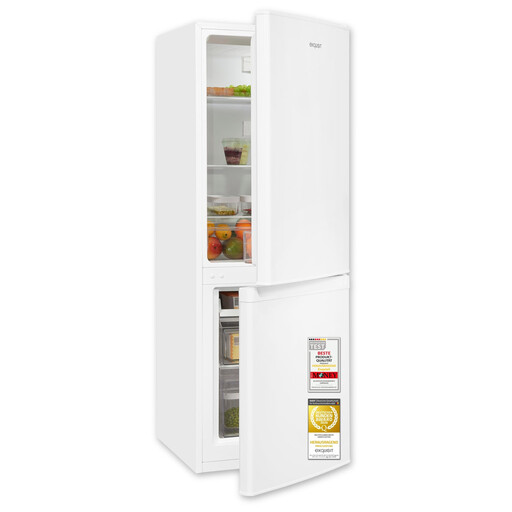
Exquisit KGC5232-60-E-040E, white
An option if you’re looking for a fridge-freezer with a stated total usable capacity of 173 l.
Listed features: temperature control, glass shelves and a freezer compartment.
View at Joybuy
 No image available
Exquisit KGC5232-60-E-040C Inoxlook-az
A freestanding fridge-freezer for anyone looking for an appliance with a stated total usable capacity of 173 l.
Listed features: LED lighting and a 4-star freezer compartment.
View at Joybuy
 No image available
LG GBBS727AEV Fit&Max, black
A good fit if you’re looking for a freestanding fridge-freezer with stated fridge and freezer compartments.
Total capacity: 375 l; energy rating A.
Zero Clearance+ door functionality requires at least 4 mm of clearance between the side of the appliance and the wall.
View at Joybuy
 No image available
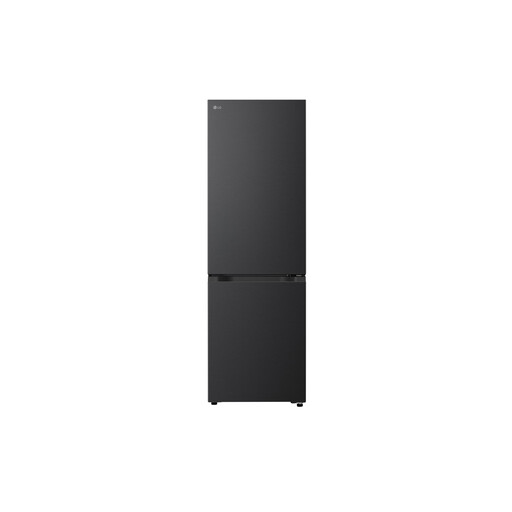
LG GBBS716AEV, Essence Black Steel
A fully integrated option if it suits your kitchen and you need both fridge and freezer space.
Total capacity: 333 l; energy rating A; stated noise level: 29 dB.
Listed features: two vegetable drawers and three freezer drawers.
View at Joybuy
 No image available
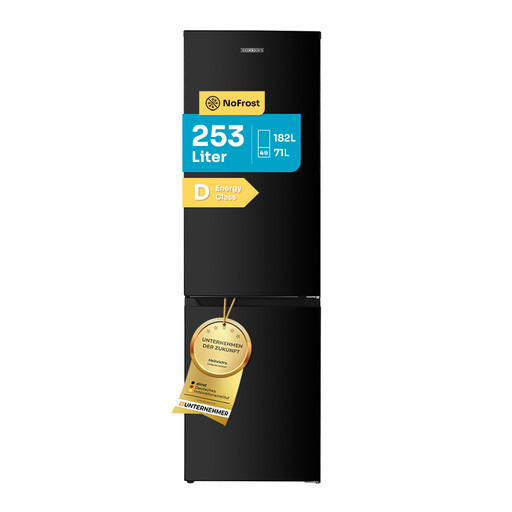
Heinrichs fridge-freezer, 253 l
An option if you want to compare the stated fridge and freezer capacities separately with your needs.
Fridge capacity: 182 l; freezer capacity: 71 l.
Listed features: No-Frost, 39 dB and a reversible door.
View at Joybuy
Frequently asked questions
How long can cooked vegetable leftovers stay in the fridge?
The German Federal Institute for Risk Assessment recommends cooling leftovers to below +7 °C within a few hours, keeping them chilled and eating them within two to three days. To help larger quantities cool, divide them between several shallow dishes. This is food hygiene advice, not a guarantee of how long an appliance will keep food safe.
Should cooked vegetable portions go in the salad drawer?
A drawer described as being for fresh fruit and vegetables doesn’t prove that it offers any particular safety benefit for cooked leftovers. Store portions covered and separately, and make sure they’re kept at a suitable temperature with enough space around them.
How do I compare the running costs of two appliances?
For appliances of a suitable size, compare the annual energy consumption in kWh shown on the EU energy label. For a simple estimate of electricity costs, multiply the annual figure by your own electricity price per kWh. Compare any other offer terms separately.
Which energy label applies when buying a new appliance in Germany?
According to the European Commission, household fridges and freezers have used the EU A-to-G scale since 1 March 2021. The label shows details including annual energy consumption, compartment capacity and noise level. Your Europe also states that the label must be displayed online for products covered by the rules.
What should I check about delivery and disposing of my old appliance?
Before ordering, check whether the specific offer includes delivery to the installation location, connection, changing the door hinge and taking away your old appliance. The German Consumer Advice Centre explains that larger old appliances can be taken back when you buy a corresponding new one, subject to legal requirements. Check the arrangements with the retailer in advance.


