Households with staggered mealtimes
If you cook lentils for several meals close together, you’ll need easy-to-access fridge space for separate, covered portions. The BfR recommends eating cooked leftovers within two to three days.


If you’ll eat cooked lentils within two to three days, easy-to-access fridge space is the right choice. For meals planned further ahead, usable freezer space matters. The BfR recommends cooling cooked leftovers quickly to below 7 °C and storing them at between 2 °C and 7 °C. According to the Lower Saxony Consumer Advice Centre, freezing can affect their flavour or texture.
If you cook lentils for several meals close together, you’ll need easy-to-access fridge space for separate, covered portions. The BfR recommends eating cooked leftovers within two to three days.
If you prepare more portions than you’ll eat in a few days, check the available freezer space and how the compartments are laid out. The Lower Saxony Consumer Advice Centre notes that freezing can affect texture or flavour.
If you need to balance your fridge and freezer requirements with limited space, compare the dimensions, door opening and stated energy consumption of the specific appliance. The Consumer Advice Centre recommends checking the energy label and consumption figures too.
Suitable when: If you’ll eat the lentils within two to three days, chilling is a suitable way to store cooled, separate portions.
Bear in mind: You’ll need space for shallow containers. The recommended storage period is not a guaranteed shelf life for every preparation.
Suitable when: If you won’t need the portions until later, freezing them individually is an alternative to short-term fridge storage.
Bear in mind: You’ll need enough freezer space. Flavour or texture may change, and you’ll need to plan ahead for defrosting.
For cooked leftovers, the BfR recommends cooling them quickly, keeping your fridge between 2 °C and 7 °C, and eating them within two to three days. When comparing appliances, the Consumer Advice Centre recommends checking the separate fridge and freezer capacities, as well as the stated annual energy consumption. The European Commission uses energy efficiency classes A to G for household fridges and freezers.
| What you need | What to check when buying | Who is it most relevant to? |
|---|---|---|
| Safe short-term chilling | Space for shallow, covered containers and an achievable storage temperature of between 2 °C and 7 °C. | If I want to keep several portions chilled for the next few meals, I need space for separate containers. Around 36% of consumers prioritise safe short-term chilling. |
| Freezer space for later | Compare the stated freezer capacity and the layout of the drawers. | If I won’t need the portions until after my next few meals, I need a freezer compartment that can accommodate a practical supply of food. Around 29% of consumers prioritise freezer storage. |
| Available space and appliance dimensions | Check the fridge and freezer capacities separately, along with the height, width, depth and door opening. | If space is limited, the dimensions and interior layout need to suit my household. Around 21% of consumers prioritise finding an appliance with the right amount of space. |
| Energy use and maintenance | Check the annual consumption in kWh and the specific model’s stated defrosting requirements. | If I’m weighing up ongoing energy use against the effort of defrosting, I want to compare both details for the specific model. Around 14% of consumers prioritise keeping ongoing effort to a minimum. |
Freshness features are designed for specific foods or storage zones; they don’t replace food hygiene guidance for cooked leftovers.
Choose based on temperature, space for hygienically stored portions and when you plan to eat them, rather than relying on the name of a freshness system alone.
The Bosch and Siemens models checked, which are marked “Never defrost again: No”, are not frost-free.
Check the defrosting information for the specific model and compare it with NoFrost appliances if you regularly freeze portions.
Total capacity doesn’t show how much space is available for chilled and frozen portions separately. The Consumer Advice Centre also points out that larger appliances can use more electricity.
Compare the separate usable capacities, dimensions and annual consumption in kWh on the same basis.
The product pages for the Serie 6 KGE39AICA and Serie 4 KGN36VICT list different fridge and freezer capacities.
The German product pages for the iQ500 KG39EAICA and KG39E8IBA each list 249 l of fridge space and 94 l of freezer space.
The CNc 5203 Pure is listed with a total capacity of 330 l, NoFrost and separate cooling circuits.
The product page for the B5RCNA406OHG describes a freestanding fridge freezer with the freezer compartment at the bottom.
The RB53DG706AS9EF is listed with a total capacity of 538 l and a width of 759 mm.
The fridge freezers below vary in their fridge and freezer capacities, defrosting type and width. Check the details for each model that matter for your available space and portions.
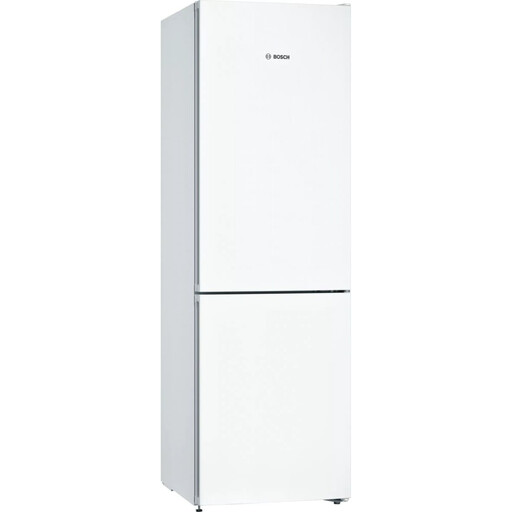 No image available
The separate capacity figures make it easier to plan fridge space for meals coming up soon and freezer space for portions you’ll eat later.
237 l of fridge space and 89 l of freezer space; NoFrost; fridge and freezer temperatures can be adjusted separately.
 No image available
The separate compartments give you figures to compare for chilled portions and a smaller supply of frozen food.
121 l of fridge space and 52 l of freezer space; 124 kWh/year; external dimensions 142,5 × 49,5 × 56 cm; reversible door; freezer compartment with a 4-star rating.
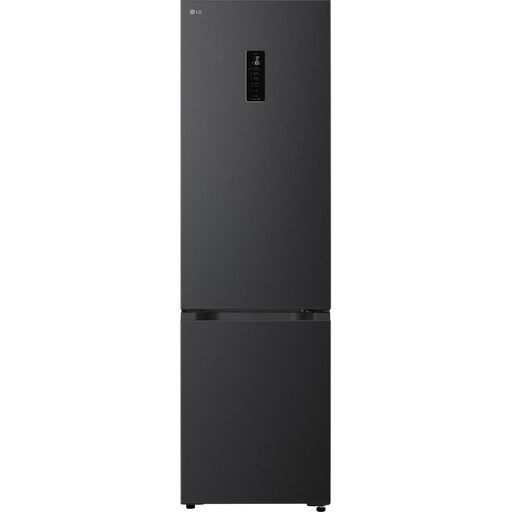 No image available
The stated fridge and freezer capacities, along with the drawer layout, help you plan storage for several portions.
262 l of fridge space and 113 l of freezer space; NoFrost; three freezer drawers; four glass shelves; reversible door.
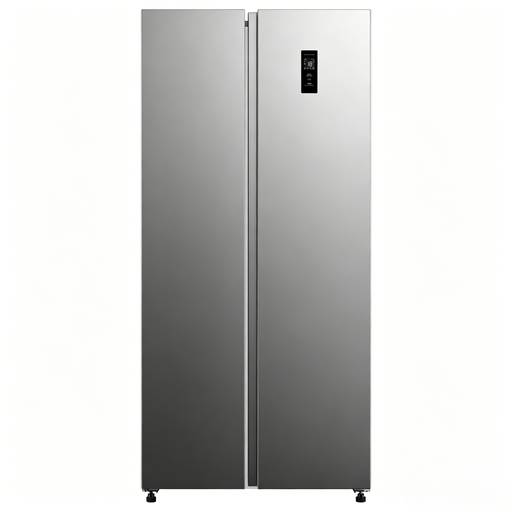 No image available
The stated freezer capacity may suit larger food supplies, provided the wide design fits in your kitchen.
276 l of fridge space and 168 l of freezer space; No Frost; separate digital temperature controls; dimensions 830 × 610 × 1785 mm; 83 cm wide.
 No image available
The separate capacities and stated width make it easier to check how the appliance fits your portions and available space.
187 l of fridge space and 75 l of freezer space; 54 cm wide; three freezer drawers; three of the four glass shelves are height-adjustable. According to the description, the Low-Frost freezer compartment needs to be manually defrosted around once or twice a year.
The BfR recommends keeping cooked leftovers in the fridge and eating them within two to three days. To cool larger quantities quickly, divide them between several shallow containers. They should be stored at between 2 °C and 7 °C. This is food hygiene guidance, not a statutory minimum durability date.
Yes, you can freeze leftover food to build up a supply for later. However, the Lower Saxony Consumer Advice Centre warns that its texture and flavour may change. When reheating, the BfR recommends heating food to 70 °C for at least two minutes throughout.
For appliances of a suitable size, compare the stated annual consumption in kWh as well as the energy efficiency class. Since 1 March 2021, the EU energy label for household fridges and freezers has used a scale from A to G. Your personal electricity price per kWh also affects your running costs.
Check the external dimensions and door opening against the space available and your delivery route, and follow the installation instructions for the specific model. LowFrost doesn’t automatically mean an appliance is frost-free, so check the manufacturer’s explicit information.
Electrical appliances must not be put in household waste. The Federal Environment Ministry also outlines take-back obligations for online retailers. Whether free collection from your home is available depends, among other things, on the appliance and the arrangements agreed at the time of purchase. Check the specific return options before ordering.