Families with leftovers regularly
If you often need to chill several covered containers, look for shelves you can make good use of and a temperature suitable for the food you’re storing. Cooked meals should be eaten again promptly.


Choose a fridge-freezer based on the space you need in the fridge compartment for several shallow, covered containers, then consider how much freezer space you actually need. The German Federal Institute for Risk Assessment (BfR) recommends cooling hot food quickly to below 7 °C. Perishable food should be stored in the fridge at no more than 7 °C, and ideally at 5 °C. Compare the fridge and freezer capacities, the space available and the annual energy consumption too, rather than relying on the total capacity alone or assuming a fresh-food compartment for raw vegetables is what you need.
If you often need to chill several covered containers, look for shelves you can make good use of and a temperature suitable for the food you’re storing. Cooked meals should be eaten again promptly.
If you batch-cook larger quantities, check that the freezer drawers and capacity can accommodate the portions you plan to eat later.
The available floor space or housing unit, door opening and energy consumption all affect which size of appliance will work in your kitchen.
First, check that the appliance has enough fridge space and can maintain a suitable temperature for your meals. Then compare your freezer needs, the dimensions and energy consumption. The BfR recommends cooling hot food quickly and storing perishable food at no more than 7 °C, and ideally at 5 °C.
| Buying priority | What to check | Who should consider this? |
|---|---|---|
| Safe chilled storage | Check there’s room for several shallow, covered containers and see what temperature the fridge can reach; check the temperature during everyday use. | If I keep cooked food for upcoming meals, I need space for containers and a suitable fridge temperature. Around 31% of consumers are likely to put safe chilled storage first. |
| Space for family portions | Consider the fridge capacity separately from the freezer capacity, and check that the shelves can accommodate your containers in the sizes and quantities you use. | If you want to chill several bowls or boxes at once, check they’ll fit on the shelves. Roughly 25% of consumers are likely to prioritise space for family portions. |
| Freezing individual portions | Match the freezer capacity and drawers to the portions you plan to freeze; the German consumer advice centre recommends −18 °C as the optimal temperature for frozen food. | If I freeze meals for later, the space I can actually use in the freezer matters most. Around 19% of consumers are likely to consider frozen food storage their top buying priority. |
| Running costs | For appliances of a suitable size, compare the annual energy consumption in kWh on the EU energy label. To estimate your own costs, multiply the figure by your electricity price per kWh. | If you want to keep an eye on ongoing energy use, consider both the appliance size and its annual kWh consumption. Around 13% of consumers are likely to prioritise running costs. |
| Fit in your kitchen | Check the available floor space or housing unit, height, width and depth. For integrated appliances, also check the door fitting against the specifications for the specific model. | If your kitchen space or existing housing unit limits your options, the appliance and its door fitting must fit. Around 12% of consumers are likely to put kitchen fit first. |
A fresh-food compartment for unprocessed food doesn’t replace cooling hot food quickly or maintaining a suitable fridge temperature. The BfR recommends cooling hot food quickly to below 7 °C if you plan to store it for longer.
Check that there’s room for several shallow, covered containers, and monitor the temperature during everyday use.
The total capacity in litres doesn’t tell you how much space is available in the fridge or freezer, or whether your containers will fit on the shelves.
Compare the separate capacity figures and check that the interior layout works for your bowls and boxes.
NoFrost prevents ice building up in the freezer. It doesn’t replace cooling hot food quickly or prove that food can be stored safely for longer.
Think of NoFrost as a feature that makes freezer maintenance easier, and check the fridge temperature and space for meals separately.
The housing unit dimensions and door fitting can vary by model. For example, Liebherr specifies a fixed-door fitting for the ICNd 5123.
Before buying, check the height, width and depth of the housing unit, as well as the door fitting, against the specifications for the specific model.
If the appliance doesn’t fit the housing unit or the door fitting isn’t suitable, you may face extra appliance or installation costs.
The RL38C776ASR/EG is an example of a freestanding fridge-freezer with a stated total capacity of 387 l and an A energy rating.
The CNsda 5723 and ICNd 5123 illustrate freestanding and integrated designs. The manufacturer gives the freestanding model a capacity of 371 l and the integrated model a capacity of 253 l.
The freestanding RCNA366E60XBN fridge-freezer is an example with a bottom freezer and a manufacturer-stated width of 59,5 cm.
The NRK620AA1XL4 is a freestanding example with an A energy rating and NoFrost Plus.
This selection includes fridge-freezers for family meals, with different amounts of fridge and freezer space to suit a range of needs.
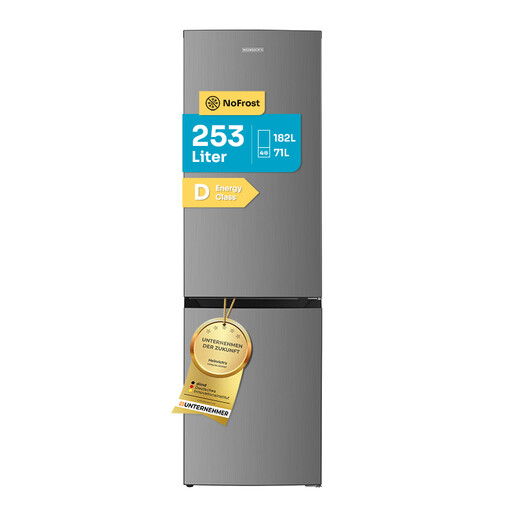 No image available
The separate capacity figures make it easier to check whether the fridge and freezer space meet your needs.
Fridge: 182 l; freezer: 71 l. The product details also list No Frost, LED lighting and a reversible door.
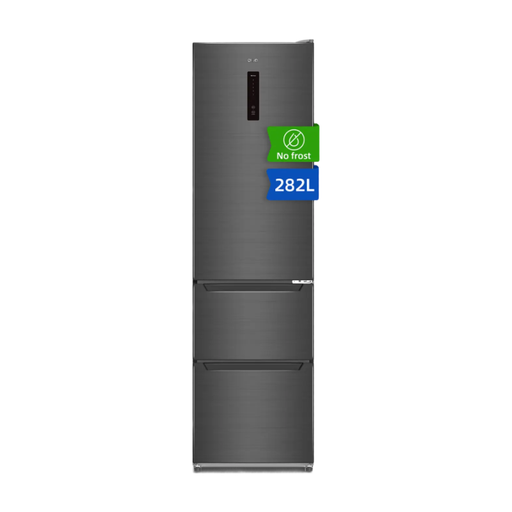 No image available
The stated fresh-food capacity can help you compare the space available for chilled portions.
Fresh-food compartment: 197 l; width: 54 cm; height: 192 cm. The product details list an E energy rating, No Frost, Dual Inverter and touch controls.
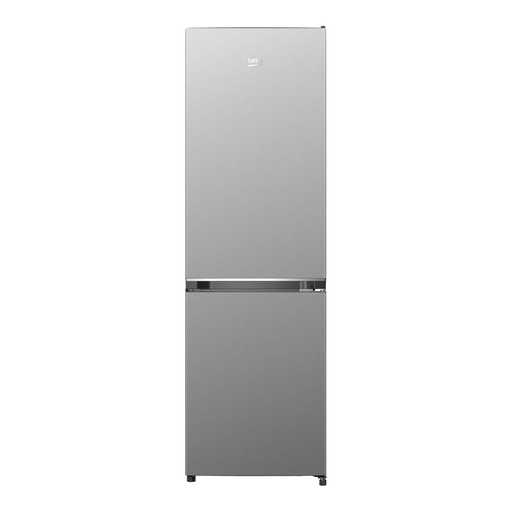 No image available
The separate fridge and freezer capacity figures help you check whether there’s enough room for meals and frozen supplies.
Fridge: 180 l; freezer: 70 l. Other listed features include a D energy rating, No Frost, four adjustable glass shelves and a reversible door.
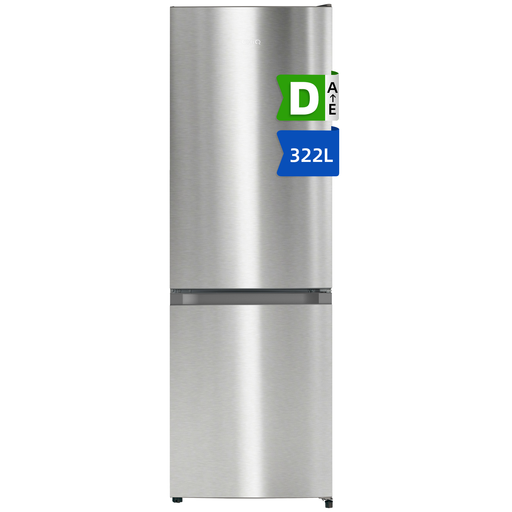 No image available
The separate capacity figures make it easy to compare your fridge and freezer needs.
Fridge: 226 l; freezer: 96 l; D energy rating; Total NoFrost. The stated depth is 63,5 cm, so according to the product description, the appliance extends beyond a 60-cm run of kitchen worktops.
 No image available
Compare the stated freezer capacity with the space you need for larger amounts of frozen food.
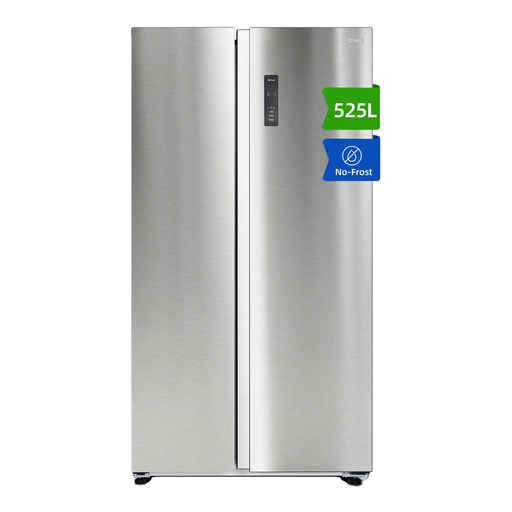
Fridge: 333 l; freezer: 192 l; E energy rating. The product details list No Frost, Multi-Airflow, adjustable shelves and a reversible door.
The BfR advises eating heated meals within 2–3 days or freezing them. It recommends keeping the fridge at no more than 7 °C, and ideally at 5 °C, and cooling hot food quickly. For meals containing raw ingredients, the BfR recommends a shorter storage time of no more than one day.
According to the BfR, hot food intended for longer storage should be cooled quickly to below 7 °C. Divide larger quantities between several shallow containers, and check that there’s enough room in the fridge.
The EU energy label shows energy consumption in kWh per year, along with fridge and freezer capacities. The German consumer advice centre recommends multiplying the annual consumption by your own electricity price per kWh to estimate your costs. Actual consumption may differ from the label figures.
No. EU labelling doesn’t require consumers to buy a particular efficiency class. Household refrigeration appliances covered by the rules must display the A to G scale, which, according to the European Commission, has been in use since 1 March 2021.