Hosts who prepare food in advance
If you’re making pasta for a meal with friends or family, you need space to chill portions quickly and keep them cool.


For cooked pasta you plan to serve that same evening, cooling it quickly and having enough usable fridge space matter more than having a particularly large freezer. Choose an appliance based on its dimensions, suitable shelves and stated energy consumption. A larger or low-frost freezer is mainly relevant if you regularly freeze extra portions. Appliance features are no substitute for hygienic cooling or checking the actual storage temperature.
If you’re making pasta for a meal with friends or family, you need space to chill portions quickly and keep them cool.
When floor space is limited, the appliance’s external dimensions need to work with the space available and the containers you use.
If you also freeze cooked food for later meals, factor in the freezer capacity and how easy it is to use.
First, work out how much space your containers will need in the fridge and whether the appliance will fit where you plan to put it. In relation to Bacillus cereus, the German Federal Institute for Risk Assessment advises cooling food quickly to no more than 7 °C. The consumer advice centre recommends considering appliance size and energy consumption together.
| Buying priority | What to look for | Who is this most relevant to? |
|---|---|---|
| Keeping pasta chilled safely until the evening | Check whether several shallow, covered containers will fit on the shelves and whether you can monitor the temperature where the food is stored. Cool the food quickly in smaller portions. | If I need to keep prepared pasta chilled until it’s served, suitable shelves and controllable storage conditions matter. Around 36 % of consumers put safely chilling the meal first. |
| Portion sizes and dimensions | Measure the appliance, the space available and the clearance needed to open the door. Compare fridge and freezer capacity separately: the total litre capacity doesn’t show whether your containers will fit. | If I’m preparing food for several people and have limited kitchen space, I need suitable external dimensions and usable shelves. Around 29 % of consumers prioritise space for several portions. |
| Energy consumption over time | Compare the stated annual consumption in kWh and the capacity you need among appliances that fit your space. To estimate your own running costs, multiply the consumption by your electricity tariff. | If I use the appliance all year round, I want to compare its stated consumption with the storage space I need. Around 21 % of consumers focus primarily on ongoing electricity costs. |
| Freezing extra portions | Compare freezer capacity and defrosting requirements with what you actually need. NoFrost prevents ice building up in the freezer; it doesn’t ensure cooked pasta is cooled safely. | If I regularly freeze extra portions for later, I need enough suitable freezer space. Around 14 % of consumers put this need for extra storage first. |
The litre capacity is divided between the fridge and freezer. The shelves and shape of your containers also affect what you can fit inside.
Compare fridge capacity, shelves and container dimensions separately from freezer capacity.
An unnecessarily large appliance may use more electricity, as the consumer advice centre explains.
NoFrost prevents ice building up in the freezer. For cooked pasta, cooling it quickly and storing it in suitable conditions are what matter.
Plan how you’ll cool the food quickly, regardless of the freezer’s features.
Siemens marks the specific KG39N2XAG model as no longer available.
Check the model number and current availability separately. Similar names don’t prove that it’s the same model.
The RK4182PW4 is an example of a narrower, freestanding fridge freezer for a more limited space.
The KGE398IBP is an example of a model with a larger stated fridge capacity and energy class B.
The KG39N2XAG is an example of the features available, but it’s no longer a current option to buy.
The GBBS322CEV is an example of a roomier fridge freezer, provided you have enough height for it.
The CNsfd 5204 Pure NoFrost is an example of a fridge freezer with NoFrost in the freezer.
This selection includes freestanding fridge freezers for different spaces and portion sizes. Compare the fridge and freezer compartments and the stated appliance dimensions with what you need.
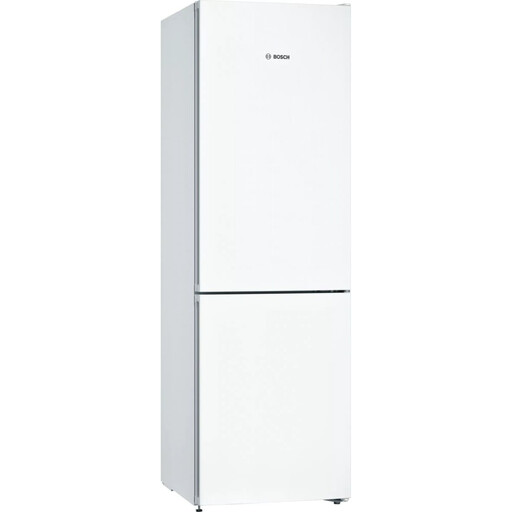 No image available
A freestanding fridge freezer for chilled portions and extra supplies in the freezer.
326 l total capacity, energy class E, NoFrost and VitaFresh.
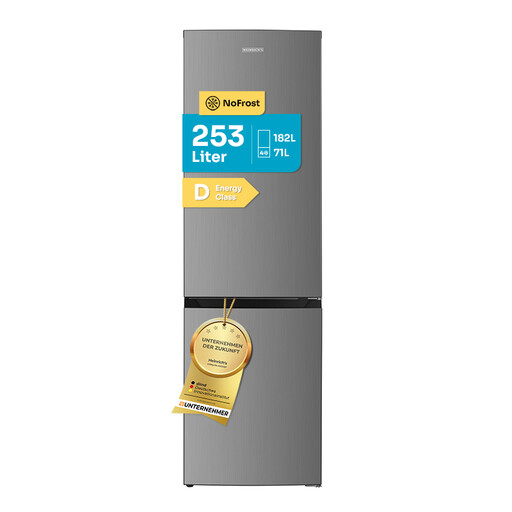 No image available
The separately listed fridge and freezer capacities make it easier to compare the available space with what your portions need.
253 l total capacity, including 182 l of fridge space and 71 l of freezer space; No Frost and 39 dB.
 No image available
This compact freestanding model may suit a narrow kitchen; check the dimensions before choosing it.
173 l total capacity, LED lighting and a 4-star freezer compartment.
 No image available
The stated total capacity gives households that want to store several portions a useful point of comparison.
375 l total capacity and energy class A.
 No image available
The stated width and height make it easier to check whether the appliance will fit in a limited space.
262 l, 70/30 split, 54 cm wide and 176 cm high; Low Frost.
Cool the pasta quickly and keep it chilled rather than leaving it lukewarm for a long time. In relation to Bacillus cereus, the German Federal Institute for Risk Assessment advises cooling food quickly to no more than 7 °C. Heat the food thoroughly before eating; this won’t reliably destroy any heat-stable toxins that may already have formed.
No. NoFrost prevents ice building up in the freezer and reduces the need to defrost it. For pasta kept in the fridge until the evening, what matters is cooling it quickly, having suitable shelf space and checking the actual storage temperature.
Measure the appliance and the space available, and allow room to open the door. For appliances that fit, compare the EU energy label and stated annual consumption. To estimate your own costs, multiply the kWh/year figure by your electricity tariff. Also follow the manufacturer’s installation instructions.
EU energy-labelling rules apply to the household refrigeration appliances covered by the regulations; the current label uses a scale from A to G. According to the German Environment Agency, large old appliances can also be returned free of charge when buying a similar replacement online with delivery. Check when ordering how collection will work in practice.