Shared kitchen with prepared snacks
If you prepare cucumber slices, you’ll need space in the shared fridge for a covered container, where food can be stored separately.


A fridge freezer isn’t worth buying for cucumber slices alone: raw cucumber turns mushy when thawed, so slices should be covered and stored separately in the fridge. A fridge freezer makes sense if the people sharing it also regularly store frozen food. In that case, compare the fridge and freezer capacities, dimensions, noise level and annual energy consumption of the specific model separately.
If you prepare cucumber slices, you’ll need space in the shared fridge for a covered container, where food can be stored separately.
If several people share an appliance, its size should suit everyone’s refrigeration needs. A freezer compartment is most useful when you regularly store other food in it.
If space is limited and the appliance is shared, compare the fridge and freezer capacities, external dimensions, noise rating and annual energy consumption of the specific model.
The German Federal Institute for Risk Assessment recommends washing vegetables thoroughly under running water and storing food covered and separately in the fridge. The Federal Centre for Nutrition says that cut cucumber will keep for one to two days in the salad drawer.
| Priority | What to check when buying | Who it matters most to |
|---|---|---|
| Space for cucumber slices | Allow room in the fridge for a covered container in a separate, easy-to-reach spot. | If I want to store cut cucumber separately from other food and keep it covered, I need a suitable place in the fridge. Around 31% of consumers put separate storage and hygiene first. |
| Shared storage space | Compare the fridge and freezer capacities separately with everyone’s food supplies, and check that the shelves suit your needs. | If several people store food in the same appliance, I need usable fridge space that can be divided sensibly. Around 25% of consumers prioritise shared storage space. |
| Energy consumption | Compare the annual kWh consumption of suitably sized appliances and take your own electricity tariff into account. | For an appliance that runs constantly, I want to compare its stated annual consumption with my tariff and avoid choosing a larger capacity than I need. Around 19% of consumers put energy consumption first. |
| Freezer compartment | First check whether you regularly store frozen food; assess the freezer and fridge capacities separately. | If we regularly store frozen food, I need a suitable freezer compartment for it; I wouldn’t choose one for cucumber slices alone. The Federal Centre for Nutrition points out that cucumber turns mushy when thawed. Around 13% of consumers prioritise extra freezer space. |
| Fitting and noise | Check the appliance and delivery dimensions, door clearance and noise level in dB(A) for the specific model. | If the kitchen is short on space or doubles as a living area, I want to check the dimensions and noise rating in advance. Around 12% of consumers prioritise a good fit and a low noise level. |
Raw cucumber turns mushy when thawed. For cucumber slices, fridge space matters – not the freezer compartment.
First check whether people using the kitchen regularly store other frozen food, then compare the fridge and freezer capacities separately.
An unnecessary freezer compartment takes up space; an appliance that’s too large can also use more energy.
A freshness feature is no substitute for washing food or storing it covered and separately. Cut raw vegetables are perishable.
Allow space for a suitable container and storage spot. Assess claims about freshness only in relation to the conditions the manufacturer actually describes.
Fridge and freezer space serve different purposes. The Federation of German Consumer Organisations points out that larger fridges can use more energy.
First compare the separate capacities with your needs, then compare the stated annual energy consumption of appliances that are suitably sized.
A large total capacity can obscure how much fridge space you need and take up more floor space than necessary.
The examples below refer to specific model ranges and manufacturer specifications. They aren’t a general assessment of the brands, nor do they prove that cut cucumber can be stored safely for longer.
Bosch home appliances lists a fridge capacity of 249 l and a freezer capacity of 94 l for the KGE39AICA; the KGN36VICT has 218 l of fridge space and 103 l of freezer space.
Siemens home appliances lists a fridge capacity of 249 l and a freezer capacity of 94 l for both the KG39EAICA and KG39E8IBA models.
LG Germany lists a total capacity of 375 l for the GBBS322CEV, with a height of 203 cm and a width of 59,7 cm.
Beko’s German model range includes fridge freezers with a bottom freezer compartment and other designs.
Liebherr offers freestanding and integrated fridge freezers, among other options. The CBNbda 5223 Plus has a listed total capacity of 320 l.
The Joybuy picks below are fridge freezers with a range of total capacities. They may suit kitchens where chilled food is stored communally; a freezer compartment is useful for this purpose only if you also regularly need to store frozen food.
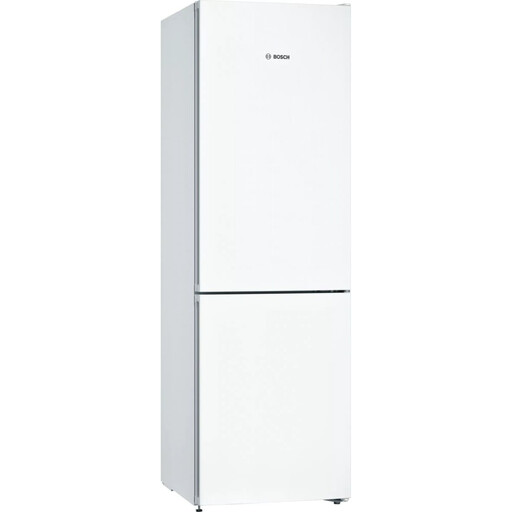 Image unavailable
For shared chilled food, the key question is whether the fridge capacity suits the kitchen’s needs; cucumber slices should be covered and stored separately in the fridge.
Listed in the product name: 326 l total capacity, NoFrost, VitaFresh and energy efficiency class E.
 Image unavailable
In a shared kitchen, the total capacity should suit everyone’s food supplies; the freezer compartment matters only if there’s an additional need for it.
Listed in the product name: 333 l total capacity, Total No Frost and energy efficiency class C.
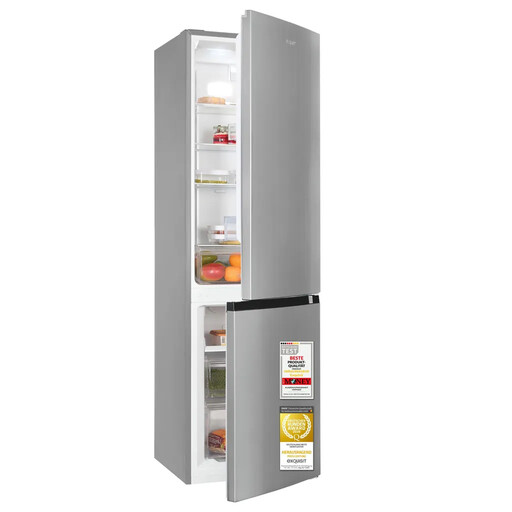 Image unavailable
If space is limited in the kitchen, check the dimensions of this specific model against the available space and the route it will need to take to get there before choosing it.
Listed in the product name: 253 l total capacity, No Frost, energy efficiency class C and stainless steel look.
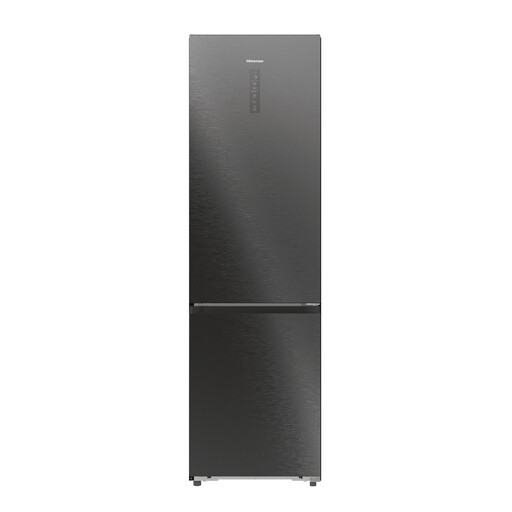 Image unavailable
If several people share food storage, check whether the total capacity and additional freezer space are really suited to the kitchen’s needs.
Listed in the product name: 413 l total capacity, Total No Frost and energy efficiency class C.
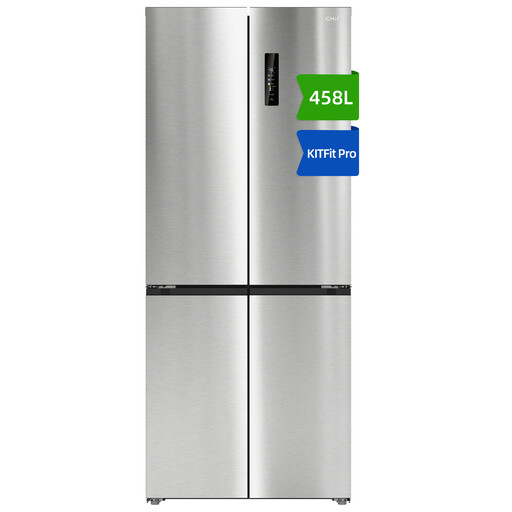 Image unavailable
With this model, pay particular attention to whether the stated total capacity and design suit the available space and the amount of food you’ll be storing together.
Listed in the product name: 458 l total capacity, including 300 l of fridge space and 158 l of freezer space, No-Frost and energy efficiency class E.
Wash cucumbers thoroughly before cutting them, and try to slice them shortly before eating. Until then, keep the slices chilled, covered and separate from other food. The Federal Centre for Nutrition says that cut cucumber will keep for one to two days in the salad drawer; this isn’t a guarantee for every portion of sliced cucumber.
If you want raw cucumber slices to stay crunchy after thawing, freezing isn’t a good option. The Federal Centre for Nutrition explains that cucumber has a high water content and turns mushy when thawed. A freezer compartment is worth considering only if the shared kitchen also stores other frozen food.
Check the external dimensions, delivery route, space needed to open the door and the installation instructions for your chosen model. Two appliances with the same width won’t necessarily have the same height or depth.
Multiply the stated annual energy consumption in kWh by your own electricity rate. The label figure is based on standardised conditions and isn’t a promise of what you’ll use. In Germany, if a new appliance is faulty, you generally have statutory consumer rights against the seller. The Federation of German Consumer Organisations says these rights apply for two years from the date the product is handed over or received; a voluntary guarantee is separate.
For household refrigeration appliances covered by the rules, EU requirements under Delegated Regulation (EU) 2019/2016 provide for an energy label and additional product information. At the end of its life, a fridge should be taken to a separate collection point for electrical waste, not put in household rubbish. The German Environment Agency says local collection points generally accept old appliances free of charge; if you return one to a retailer, check the terms of the specific offer.