What should you look for when buying?
First, check whether the fridge shelves will fit your dessert containers. Then make sure the freezer capacity, footprint and running costs are right for your shared kitchen. The BfR recommends a temperature of 2 °C to no higher than 7 °C for perishable food in the home. A dedicated freshness zone does not replace checking the storage conditions where you actually plan to keep the food.
| Consideration |
What to check when buying |
Who will find this most important? |
| Chilling and separate storage |
Check the temperature controls and whether the shelves can accommodate covered containers. |
If I store desserts that need to be kept chilled alongside other people’s food, I need suitable cooling and a clearly designated, covered space. Around 26% of consumers prioritise chilling and hygiene. |
| Usable fridge space |
Compare the fridge capacity and shelf layout with the height of your containers. |
For large bowls, what matters is whether they actually fit on the shelves, not just the stated overall capacity. Around 26% of consumers prioritise having suitable fridge space. |
| Energy consumption |
Compare kWh/year for appliances of a suitable size. |
If the appliance runs all the time, I want to avoid paying to cool unnecessary extra space and take the stated annual energy consumption into account. Around 16% of consumers prioritise running costs. |
| Fit and noise |
Check the dimensions, door clearance and noise level of the specific model. |
In a shared kitchen, the appliance needs to fit in its designated spot and the door must be able to open there. Around 21% of consumers prioritise the footprint, door clearance or noise level. |
| Freezer space and maintenance |
Choose the freezer capacity to suit your stocks and check whether the specific model has NoFrost. |
If I regularly stock up on frozen desserts or ingredients, I need enough freezer space. With NoFrost, the key consideration is how much maintenance the freezer compartment needs. Around 11% of consumers prioritise freezer storage. |
Fridge-freezers at Joybuy
This selection includes fridge-freezers for keeping desserts chilled, with extra freezer space for frozen food.
 No image available
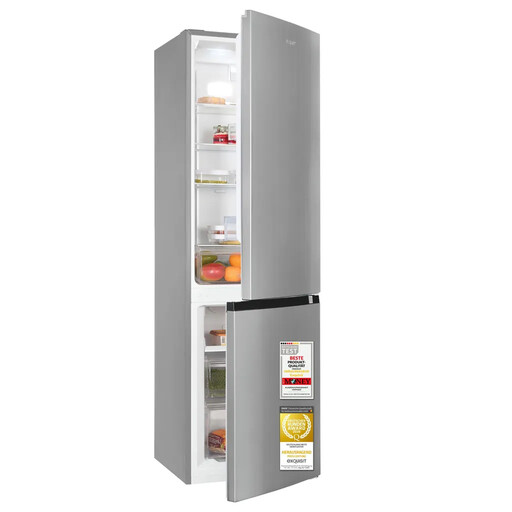
LG GBBSJ1CCPY fridge-freezer
An option to consider if you’re looking for a freestanding fridge-freezer with designated fridge and freezer compartments.
Features listed in the product name: Total No Frost, LinearCooling™, DoorCooling+™, Smart Inverter Compressor and energy efficiency class C.
Joybuy
 No image available
Exquisit KGC5265-70-NF-040C Inox Look
An option to consider if you’re looking for a fridge-freezer with No Frost in both the fridge and freezer compartments.
Features listed in the product name: 253 l, energy efficiency class C, 39 dB and electronic temperature control.
Joybuy
 No image available
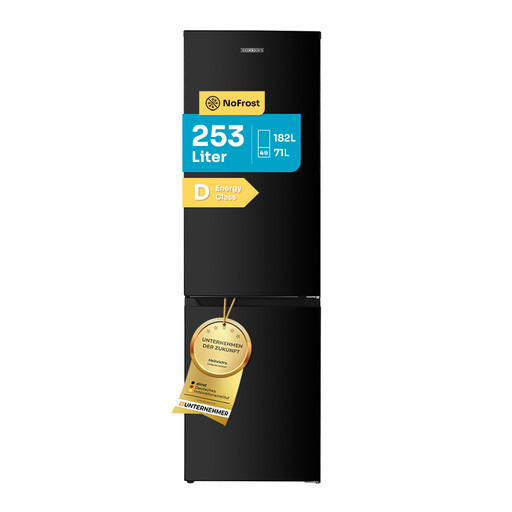
Heinrich’s fridge-freezer, 253 l
An option to consider if you want to compare fridge and freezer space separately and need a reversible door.
Features listed in the product name: 182 l fridge capacity, 71 l freezer capacity, No Frost, LED lighting and 39 dB.
Joybuy
 No image available
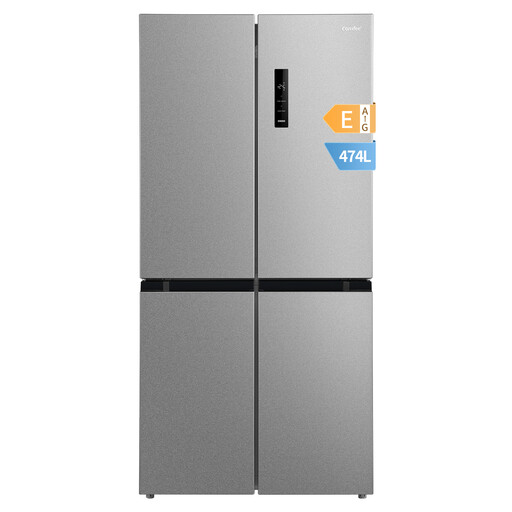
COMFEE RCF470LS2EU(E), 4 doors
An option to consider if you want easy access to separate sections and several compartments.
Features listed in the product name: 474 l, Vario Box, a vegetable drawer with three temperature settings and energy efficiency class E.
Joybuy
 No image available
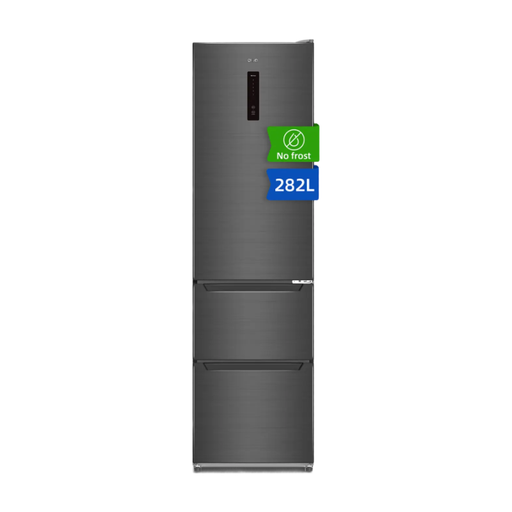
CHiQ CID282NEIBE multi-door fridge-freezer
An option to consider if you’re looking for a multi-door design with separate fridge and freezer compartments.
Features listed in the product name: 282 l, 54 cm wide, 192 cm high, energy efficiency class E, No Frost and touch controls.
Joybuy
Frequently asked questions
How should I store desserts that need to be kept chilled alongside other food?
The BfR recommends a temperature of 2 °C to no higher than 7 °C for perishable food in the home, as well as covered, separate storage. Also follow the specific storage instructions on shop-bought desserts; this recommendation does not guarantee a particular shelf life.
Do I need a large freezer compartment for the occasional dessert stash?
Not just for occasional storage. The consumer advice centre recommends choosing an appliance to suit your needs and gives −18 °C as the optimum freezer temperature. Compare the freezer capacity separately from the fridge capacity.
Which details help me compare energy consumption?
Compare the stated annual energy consumption in kWh for appliances with a suitable capacity. EU energy label figures are based on standardised conditions, while actual consumption can vary depending on how the appliance is used. The EU label for fridges and freezers uses a scale from A to G.
What should I consider when replacing an old fridge?
Take your old appliance to an authorised collection point. The Federal Ministry for the Environment points out that, under certain legal conditions, retailers must take back an equivalent old appliance when you buy a new one. Check the arrangements for collection when you place your order.
Do the same commercial food hygiene rules apply to every shared kitchen?
No. Regulation (EC) No 852/2004 excludes the domestic storage of food for private domestic consumption from its scope. Requirements apply to food businesses in relation to their activities; calling a space a “shared kitchen” alone does not determine how a particular case is classified.


