What should you look for when buying?
First, measure your dishes and containers. Then compare the separate compartment capacities with your cooking habits, and check that the appliance dimensions and annual energy consumption suit your kitchen and your actual storage needs.
| What you need |
What to look for |
Who will find this especially important? |
| Room for chilled desserts |
Compare the usable shelf width, depth and height with your own dishes; consider fridge and freezer capacity separately. |
If I want to chill several covered desserts at once, the shelves need to be the right size. Around 33% of consumers put having enough fridge space for desserts first. |
| Separate storage in a shared fridge |
Allow room for separate, covered containers and make sure you can adjust the temperature. The BfR recommends storing perishable foods at between 2 °C and no more than 7 °C. |
If several people put food away at different times, clear, separate storage is essential. Around 27% of consumers prioritise keeping things organised in this way. |
| Freezer space for future meals |
Compare the freezer capacity and drawers with your usual portion containers and frozen food. Match the capacity to the quantities you regularly freeze, as recommended by the Verbraucherzentrale. |
If I prepare suitable portions for future meals, I need reliable, usable freezer space. Around 20% of consumers put this need first. |
| Floor space and energy consumption |
Check the external dimensions and allow enough room to open the door. For appliances of a suitable size, compare annual consumption in kWh and the separate compartment capacities on the EU energy label. |
If my kitchen is short on space or I don’t need extra storage, I want to keep an eye on the appliance size and running costs. Around 20% of consumers prioritise floor space and energy consumption. |
Fridge-freezers at Joybuy
This selection includes fridge-freezers with stated fridge capacity for desserts and shared groceries. Compare the freezer capacity and appliance dimensions with your own needs too.
 No image available
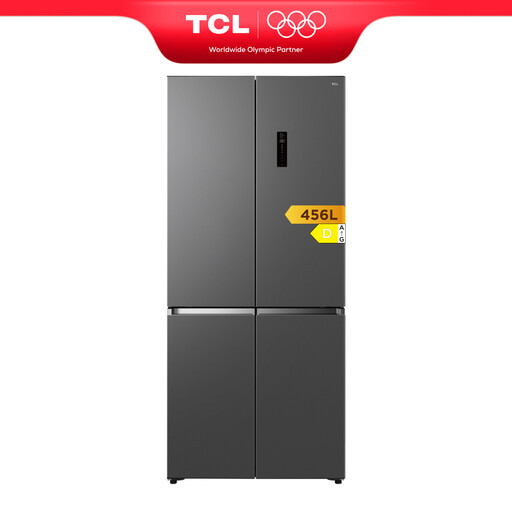
TCL RC593CSD0DE multi-door fridge-freezer
The stated fridge capacity may suit desserts and shared chilled groceries. Check the internal dimensions to make sure your dishes will fit.
Listed capacities are 312 l for the fridge, 66 l for the freezer and 78 l for the variable compartment. The model is listed as Total No Frost.
View at Joybuy
 No image available
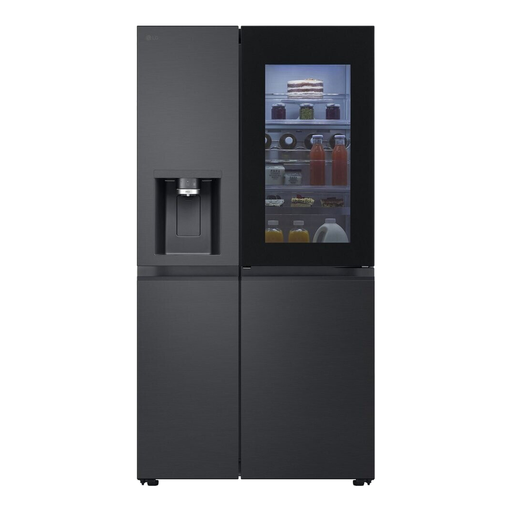
LG GSXB90EVDD InstaView side-by-side fridge-freezer
The stated fridge capacity gives you an idea of the space available for shared chilled groceries. Check that the footprint and door clearance work in your kitchen.
Listed capacities are 407 l for the fridge and 221 l for the freezer. The appliance is 91.3 cm wide; with the door open, the stated width is 163.5 cm.
View at Joybuy
 No image available
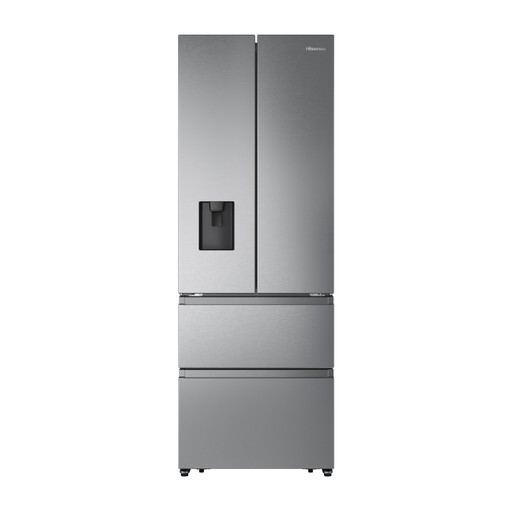
Hisense RF632N4WIE French-door fridge-freezer
The separately listed fridge and freezer capacities make it easier to compare the space available for desserts with your storage needs for future meals.
336 l fridge capacity and 149 l freezer capacity; external dimensions: 70 × 69.4 × 200 cm. Listed energy consumption is 295 kWh/year, with a noise level of 38 dB.
View at Joybuy
 No image available
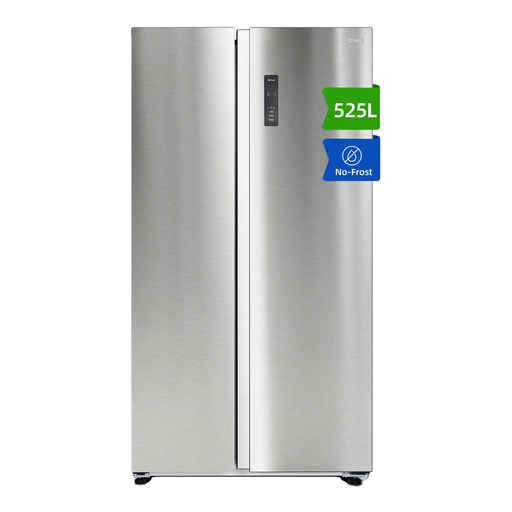
CHiQ JR525WSE side-by-side fridge-freezer
The separate compartment capacities may suit desserts in the fridge and extra frozen food. Compare both with the containers and groceries you need to store.
Listed capacities are 333 l for the fridge and 192 l for the freezer. The model is listed as No Frost.
View at Joybuy
 No image available
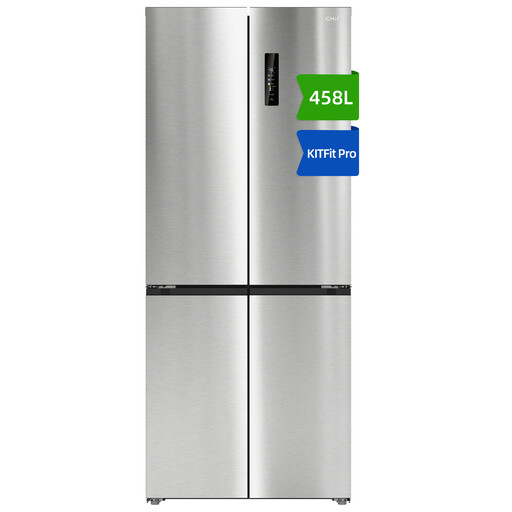
CHiQ JR460WSE cross-door fridge-freezer
The stated fridge capacity gives you a starting point for working out how much space you’ll need for chilled desserts. Also check that your dishes will fit inside.
Listed capacities are 300 l for the fridge and 158 l for the freezer. For the advertised KITFit-Pro-Flush design, the product description specifies a 4 mm side clearance and downward heat dissipation as installation requirements.
View at Joybuy
Frequently asked questions
What temperature should perishable desserts be stored at?
The BfR recommends storing perishable foods in the fridge at between 2 °C and no more than 7 °C. Follow the storage guidance for each food and check the actual temperature. A freshness compartment isn’t automatically suitable for every dessert.
How should I store hot food when people are cooking at different times?
The BfR recommends quickly cooling hot food that needs to be kept for longer to below 7 °C, and storing foods covered and separately. A larger fridge-freezer doesn’t replace these steps.
How can I compare the running costs of fridge-freezers?
To compare appliances, multiply the annual consumption in kWh shown on the EU energy label by your electricity tariff. Actual consumption may vary depending on how and where you use the appliance. The Verbraucherzentrale distinguishes between your statutory rights against the seller if a product is faulty and a voluntary manufacturer’s warranty, which has its own terms and conditions.
What does the EU energy label show, and what happens to my old appliance?
For the household refrigeration appliances it covers, the EU energy label shows a scale from A to G, as well as details including annual consumption, compartment capacity and noise emissions. The German Environment Agency notes that when you buy a similar new appliance, you can return a large old one free of charge, including when you buy online and have it delivered.
Can I cancel an online purchase of a fridge-freezer?
According to the Verbraucherzentrale, online purchases generally come with a 14-day right to cancel, starting from the day you receive the goods. You must notify the other party to the contract that you wish to cancel. This is separate from claims relating to a fault and from a voluntary warranty.


