Regular cheese batch freezers
You regularly freeze several portions at once and need enough room for new batches as well as the food already in your freezer.


If you want to freeze fresh portions of cheese in your fridge freezer, choose one with a suitable four-star freezer compartment. The Federal Centre for Nutrition also recommends checking that the freezing capacity and usable freezer space are right for the amount you usually freeze. Then compare the appliance’s dimensions with its annual energy consumption: the Consumer Advice Centre points out that larger appliances tend to use more electricity. For cooking or baking with the cheese later, Landgemachtes particularly recommends freezing leftover semi-hard and hard cheeses with a higher fat content.
You regularly freeze several portions at once and need enough room for new batches as well as the food already in your freezer.
You want to freeze small portions of cheese now and then, without having to make room for an unnecessarily large appliance.
You want to weigh up the freezer space you need against the annual energy consumption of an appliance that runs all year round.
| What matters | What to check when buying | Who is this particularly important to? |
|---|---|---|
| Usable freezer space | Check the separate freezer capacity and drawer layout, and compare them with the batch you plan to freeze and your other stored food. | If I want to store several portions alongside food that’s already in the freezer, the usable freezer space really matters. Around 36% of consumers put freezer space first. |
| Freezing fresh batches | Check that the freezer compartment is suitable for four-star freezing and look at its freezing capacity for fresh food. If needed, consult the instructions for the fast-freeze function. | If you prepare several fresh portions at once, you need a compartment suitable for freezing food and enough freezing capacity. Around 29% of consumers prioritise freezing whole batches. |
| Energy consumption | Compare annual kWh consumption and usable capacity across suitably sized appliances; don’t look at the energy efficiency class in isolation. | If I’m going to run the appliance all year round, I want enough freezer space while also keeping annual energy consumption in mind. Around 21% of consumers put running costs first. |
| Space and noise | Check the height, width and depth, including any installation guidance, as well as the stated noise level. | If your kitchen is small or close to your living space, the appliance needs to fit its allocated spot and suit your everyday routine. Around 14% of consumers prioritise the space it will occupy. |
Fridge and freezer capacities are listed separately. So the total capacity doesn’t tell you whether there’ll be room for the portions of cheese you plan to freeze alongside your other food.
Compare the stated freezer capacity and usable layout with the size of your usual batch.
An oversized appliance may use more electricity than you need for your actual requirements.
According to the Federal Centre for Nutrition, three-star compartments are suitable for storing food that’s already frozen for longer periods, but not for freezing fresh food.
If you want to freeze fresh portions in the appliance, check that it has a four-star compartment and look at its freezing capacity.
Landgemachtes particularly recommends freezing leftover semi-hard and hard cheeses with a higher fat content for use in cooking or baking later.
Before freezing, think about how you plan to use each type of cheese.
LG Germany lists the GBBS726AEV fridge freezer as having a total capacity of 375 l and an annual energy consumption of 112 kWh.
Bosch Home Appliances describes the freestanding Series 4 KGN39OCAF as having a freezer at the bottom and 103 l of freezer capacity.
Samsung Germany lists the RB38C607AB1/EF fridge freezer with a total capacity of 387 l and No Frost+.
This selection includes fridge freezers for the occasional small batch of cheese, as well as for households that want to store several portions alongside other frozen food. For each appliance, check that the freezer compartment is suitable for fresh food and that its capacity and freezing performance are right for your batch.
 No image available
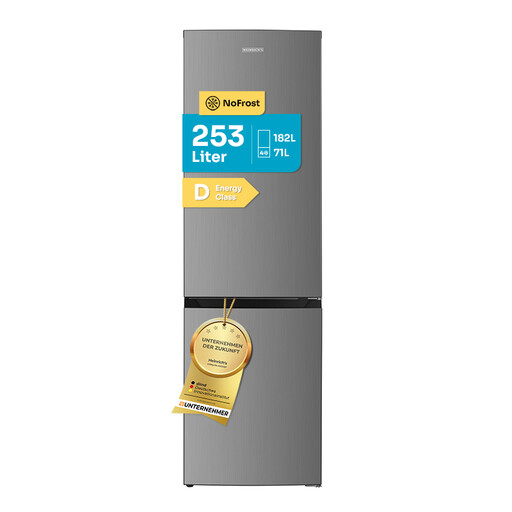
Could suit households looking to make room for a new batch as well as food already in the freezer. The product name lists a total capacity of 253 l, with 182 l of fridge space and 71 l of freezer space, No Frost, large freezer drawers and a noise level of 39 dB.
Before freezing fresh portions, check that the freezer compartment is suitable and that its freezing capacity is right for the amount you plan to freeze.
 No image available
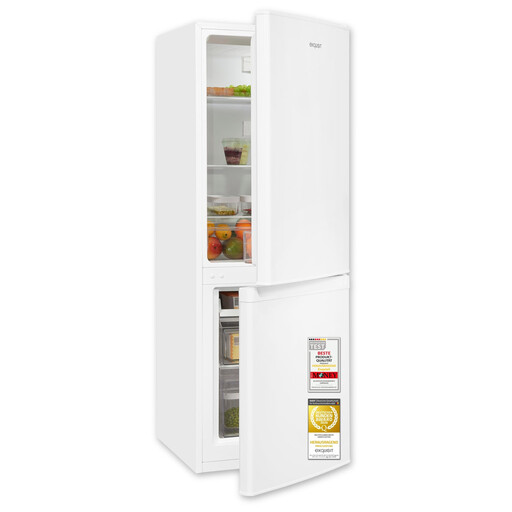
This compact fridge freezer may be worth considering if you occasionally freeze small portions of cheese and have limited space. The product name lists a usable capacity of 173 l and a freezer compartment.
Compare the available freezer space with the size of your usual batch and check that the compartment is suitable for freezing fresh food.
 No image available
Could be a good option if you specifically want to take a four-star freezer compartment and a fast-freeze function into account; both features are listed in the product name.
Check that the freezing capacity is right for your batch size and follow the manufacturer’s guidance on using the fast-freeze function.
 No image available
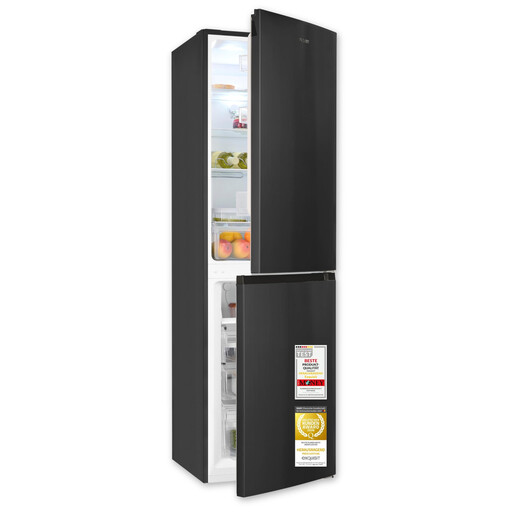
If you’re freezing a batch alongside other food, the four-star freezer compartment listed in the product name may be a useful feature. The product name also lists a total capacity of 247 l and a fast-freeze function.
Compare the size of the batch you plan to freeze with the appliance’s freezing capacity and the details in the instruction manual.
 No image available
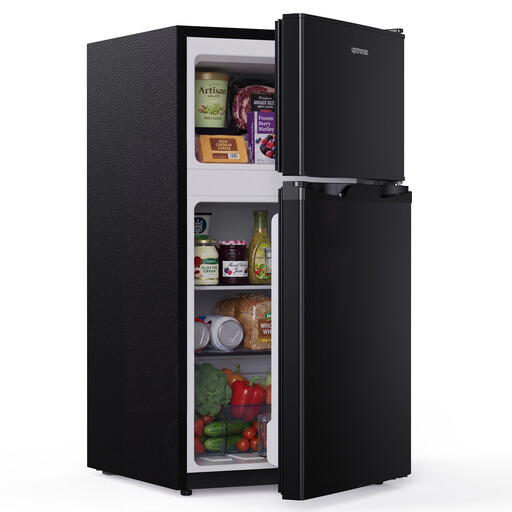
Its compact size may appeal if you only need to freeze small amounts occasionally and have limited space. The product name lists a total capacity of 84 l, split between 59 l of fridge space and 25 l of freezer space, as well as a noise level of 39 dB.
Check that the freezer compartment is suitable for fresh food and has enough room for your portions of cheese.
No. A three-star compartment isn’t designed for freezing fresh portions. The Federal Centre for Nutrition says three-star compartments are for storing food that’s already frozen for longer periods; a four-star compartment is intended for freezing food. Also check that its freezing capacity is right for your batch.
That depends on the size of your batch and the food already in the freezer. Compare the stated freezer capacity and usable layout with the portions you actually want to store. The Consumer Advice Centre recommends choosing a suitably large capacity if you regularly freeze larger quantities.
Landgemachtes particularly recommends freezing leftover semi-hard and hard cheeses with a higher fat content for use in cooking or baking later. Before freezing, think about how you plan to use each type of cheese.
Compare the annual energy consumption in kWh shown on the EU energy label for appliances that are a suitable size and offer enough freezer space for your needs. The Consumer Advice Centre points out that larger fridge freezers tend to use more electricity, so the energy efficiency class alone is no substitute for comparing the actual consumption figures.
Use packaging suitable for freezing and label it with the contents and date, as recommended by the Federal Centre for Nutrition. The North Rhine-Westphalia Consumer Advice Centre recommends defrosting frozen food slowly in the fridge.