First, choose a fridge with enough space for your covered serving bowl alongside the other food, then check the dimensions and annual energy consumption. Keep prepared fruit salad covered and chilled until it’s ready to serve. You don’t need a large freezer compartment for this, though it can be useful if you regularly store frozen food.
Who should take particular care when choosing?
Hosts preparing food in advance
If you’re making fruit salad for a group, you’ll need room for a covered bowl and a way to keep it chilled until it’s time to eat. The German Federal Institute for Risk Assessment recommends keeping cut fruit in the fridge until it’s ready to serve.
Households with limited kitchen space
The appliance’s footprint, door clearance and available shelf height all need to suit your kitchen and your bowl. The Verbraucherzentrale recommends checking what size appliance you need before buying.
Households keeping an eye on energy costs
If you want to compare running costs, check the stated annual energy consumption of appliances that are the right size for you. The EU energy label shows, among other things, the energy efficiency class and consumption.
What should you look for when buying?
Fridge-freezer with plenty of fridge space
A good fit if: you want to chill a covered bowl alongside other food and regularly store frozen food too.
Consider: total capacity alone won’t tell you whether the bowl will fit on a shelf. Check the usable height and freezer capacity separately.
More compact fridge-freezer
A good fit if: you have a smaller kitchen and fewer supplies, and need an appliance that fits your available space.
Consider: with less fridge space, it may be harder to fit a tall bowl alongside other food.
Fridge with a small freezer compartment
A good fit if: you store very little frozen food and mainly want to chill fruit salad and other groceries.
Consider: without a suitable freezer compartment, you won’t have space for frozen food.
The German Federal Institute for Risk Assessment recommends a fridge temperature of 2 °C to no higher than 7 °C for perishable foods. When choosing an appliance, consider both whether the shelf space is suitable and whether you can check the temperature inside the fridge.
| Buying criterion |
What to check |
Who should pay particular attention? |
| Chilled fruit salad |
Check there’s room for a covered container and that you can monitor the fridge temperature. |
If I’m preparing salad for guests, the covered bowl needs to stay chilled until it’s time to eat. Around 36% of consumers put this short-term storage need first. |
| Bowl and available space |
Measure the bowl with its lid, the space for the appliance and the door clearance; consider fridge and freezer capacity separately. |
If my kitchen is short on space, the appliance and its door need to fit in the available space, and the bowl needs to fit on a shelf. Around 29% of consumers prioritise this space consideration. |
| Annual energy consumption |
Compare the kWh/year figure for appliances of a similar suitable size, and check it against your electricity tariff. |
If I’m going to use an appliance for years, I want to put its stated energy consumption into context using my electricity tariff. Around 21% of consumers put ongoing energy costs first. |
| Freezer space and defrosting |
Compare the freezer capacity and the defrosting system specified for the model with your storage needs. |
If I regularly store frozen food, I need dedicated freezer space and want to factor in the effort involved in defrosting. Around 14% of consumers prioritise this need. |
Common buying misconceptions
-
Assuming total capacity means there’s room for your salad bowl
Total capacity doesn’t tell you whether a covered bowl will fit on a particular shelf.
Measure the bowl and lid, then compare their height with the actual clear space on the shelf. Check fridge and freezer capacities separately.
-
Assuming a freshness drawer is a substitute for safe storage
Manufacturers’ guidance on storing fruit doesn’t automatically confirm how long prepared fruit salad will keep or whether it can be stored safely.
Keep the salad covered and chilled until you’re ready to serve it. The German Federal Institute for Risk Assessment advises keeping cut fruit in the fridge until it’s ready to eat.
-
Comparing only the efficiency class or purchase price
The efficiency class alone doesn’t show the model’s specific annual energy consumption, and a larger appliance may use more electricity.
First compare appliances of a suitable size using their stated consumption in kWh/year, then factor in your electricity tariff.
-
Assuming LowFrost and NoFrost are the same technology
Siemens describes LowFrost as reducing ice build-up and the need to defrost; Bosch lists NoFrost for the KGN36VICT.
Check the specification against the full model name, and weigh up defrosting convenience based on how often you use the freezer compartment.
Brands worth considering
Bosch
The freestanding Series 4 KGN36VICT comes with specific information about its fridge and freezer space, as well as its defrosting system.
- Bosch Hausgeräte Deutschland lists a 218 l fridge compartment, a 103 l freezer compartment, 35 dB(A) and NoFrost for the KGN36VICT.
- These figures don’t tell you whether your covered bowl will fit. VitaFresh’s freshness benefits are a manufacturer claim.
Siemens
The freestanding iQ500 KG39E8IBA is worth considering if you want to compare stated fridge capacity and energy efficiency class.
- Siemens lists a 249 l fridge compartment, a 94 l freezer compartment and energy efficiency class B for this model.
- According to Siemens, this model has LowFrost rather than NoFrost; this doesn’t mean manual defrosting is no longer needed.
LG
The GBBS322CEV comes with stated figures for total capacity and energy consumption, as well as information about positioning it close to a wall.
- LG Deutschland lists a total capacity of 375 l, energy efficiency class C and 175 kWh/year for this model.
- Check the required clearance for your kitchen. Claims about keeping food fresh for longer don’t prove how long prepared fruit salad will keep.
Samsung
The RB34C605CB1/EF is an example of a fridge-freezer with No Frost+ and additional freshness drawers.
- Samsung lists a total capacity of 344 l, energy efficiency class C and Humidity Fresh+ for this model.
- A drawer isn’t a substitute for suitable shelf space for your covered serving bowl. Freshness claims are made by the manufacturer.
Liebherr
The CNsfc 573i Plus comes with figures for total capacity and noise level, as well as NoFrost.
- Liebherr lists a total capacity of 359 l, 31 dB and NoFrost for this model.
- The advertised freshness benefits of EasyFresh are a manufacturer claim about storing fruit and vegetables, not evidence that it keeps prepared fruit salad fresh.
Fridge-freezers at Joybuy
The models below include compact and larger fridge-freezers, with separate fridge and freezer compartments.
 No image available
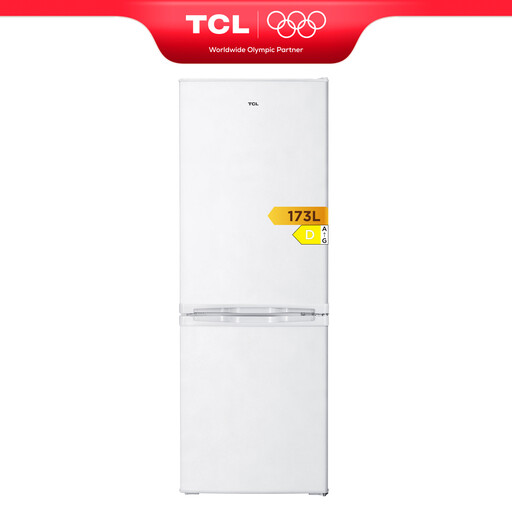
TCL RF225BWD0AM
This compact model has separate fridge and freezer compartments. Adjustable shelves can help when arranging containers of different heights.
173 l total capacity; 121 l fridge compartment and 52 l freezer compartment; adjustable shelves; LED lighting; energy efficiency class D.
View at Joybuy
 No image available
LG GBBSJ1CCPY
This fridge-freezer is worth considering if you need a separate freezer compartment as well as space to chill food.
333 l total capacity; Total No Frost; energy efficiency class C.
View at Joybuy
 No image available
exquisit KGC5232-60-E-040C Inoxlook-az
This compact fridge-freezer may be worth considering when comparing smaller appliances. Check that the shelf height suits your bowl.
173 l total capacity; freestanding; LED lighting; 4-star freezer compartment.
View at Joybuy
 No image available
LG GBBS727AEV Fit&Max
This is another fridge-freezer option for households that want separate fridge and freezer compartments. Before choosing, compare the appliance dimensions and check there’s room for your bowl.
View at Joybuy
 No image available
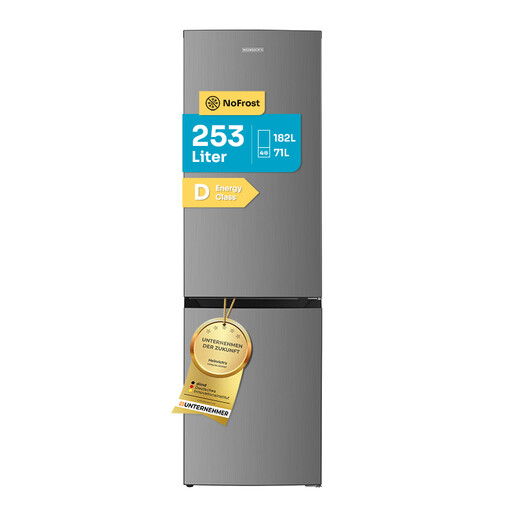
Heinrichs fridge-freezer, Black Inox
The separate capacity figures help you see how much space is available for chilled food and frozen supplies.
253 l total capacity; 182 l fridge compartment and 71 l freezer compartment; No Frost; reversible door; 39 dB.
View at Joybuy
Frequently asked questions
Where should I keep fruit salad prepared in advance until dinner?
Keep it in the fridge in a sealed or fully covered container until it’s ready to eat. The German Federal Institute for Risk Assessment recommends a fridge temperature of 2 °C to no higher than 7 °C for perishable foods; this doesn’t mean there’s a fixed shelf life for every fruit salad.
Is the capacity on the energy label enough to help me choose?
No. The EU energy label lists fridge and freezer capacity separately. Also measure your bowl with its lid, then check the clear shelf height, the space for the appliance and the door clearance for the specific model.
How can I work out what the energy consumption means for me?
Multiply the stated consumption in kWh/year by your electricity unit rate in Euro/kWh. Compare appliances with fridge capacities and external dimensions that suit your needs. This gives you an estimate, not a guaranteed electricity bill.
What should I do with my old fridge-freezer?
In Germany, don’t put an old fridge-freezer in your household rubbish. The German Environment Agency says you can drop it off free of charge at a recycling centre, or return a large old appliance free of charge when buying a suitable replacement, including when it’s bought online and delivered. Check the arrangements with the seller in good time.


