
Lieferung heute & morgen

Qualitätsgarantie

Willkommens-Angebote freischalten: KOSTENLOSE Lieferung | Bis zu 80 % RABATT | Kostenlose 30-Tage-JoyPlus-Testphase
App herunterladen
By the Joybuy Product Recommendation Officer, July 28, 2026
Choosing a new fridge-freezer can be complex. The market is filled with technical jargon and marketing promises that make an informed decision difficult. Many buyers rely on outdated assumptions or overlook critical details, leading to dissatisfaction and unnecessary costs. There are two common pitfalls in particular that you should be aware of before making a decision.
The Energy Efficiency Illusion: Since March 2021, a new EU energy label with classes from A to G has been in effect. Many consumers still look for Class A appliances, unaware that the criteria have become drastically stricter. An appliance previously rated A+++ might now fall into Class D or E. A Class C energy rating on the new label already indicates a very economical appliance. Anyone who relies solely on the letter grade without checking the annual electricity consumption (in kWh/a) may end up paying for supposed efficiency that doesn't exist in practice.
Ignoring Operating Noise: In modern open-plan living spaces, the noise level of a refrigerator is often underestimated. A hum that seems "normal" can quickly become a permanent source of disturbance. The decibel (dB) rating is the crucial value here. Since the dB scale is logarithmic, a reduction of just 3 dB means halving the perceived noise level. A quiet refrigerator with a rating below 38 dB is a sensible requirement for open-plan kitchens to maintain quality of life.
To avoid a bad purchase, you should focus on objective, measurable criteria. These three factors are crucial for most households.
The right size is fundamental. A common rule of thumb is to plan for about 100 litres of usable capacity for one person and an additional 50 litres for each extra person in the household.
Measure the intended niche precisely before buying. A freestanding refrigerator needs sufficient space on the sides and at the back for ventilation (usually 5–10 cm) to operate efficiently.
The energy efficiency class provides an initial orientation, but the decisive value is the annual electricity consumption, given in kilowatt-hours per year (kWh/a). Multiply this value by your current electricity price to determine the annual running costs. An appliance with a slightly higher purchase price but significantly lower consumption can pay for itself over its 10 to 15-year lifespan.
Also, pay attention to the climate class (SN, N, ST, T). It indicates the ambient temperatures at which the appliance functions optimally. For most households, the SN-T class (suitable for 10°C to 43°C) is the most flexible choice, especially if the appliance will be placed in a cool cellar or a warm attic apartment.
No Frost technology is standard in many models today and prevents ice build-up in the freezer section through constant air circulation. This not only saves you from manual defrosting but also ensures a more even temperature and more efficient operation. More budget-friendly models often only offer "Low Frost" or manual defrosting. While this means less convenience, it can be an acceptable alternative for budget-conscious buyers.
Instead of making blanket recommendations, we have identified models that meet specific needs and skilfully avoid the pitfalls mentioned.
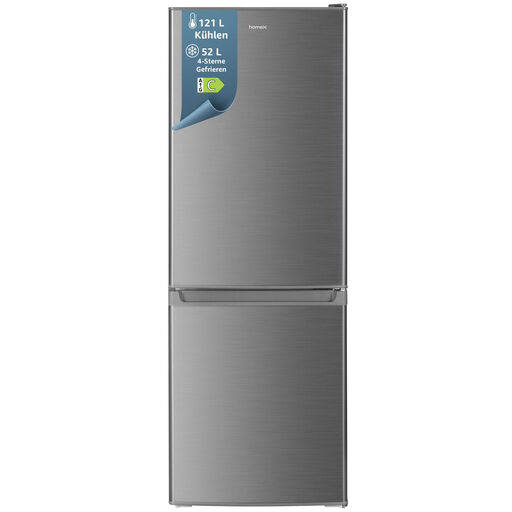
Why it's a good fit: With 173 litres of usable capacity and compact dimensions, this appliance is ideal for singles, couples, or small apartments. It focuses on the core functions of cooling and freezing without costly extras.
The Energy Class C rating is very good under the new standard, ensuring low running costs. At 40 dB, the appliance is quiet enough for most environments and avoids misleading "Low Frost" claims—it's an honest model with manual defrosting.
Solid value for money combined with good energy efficiency for this price range. The reversible door hinge offers additional flexibility during installation.

Why it's a good fit: This XXL refrigerator offers an enormous 621 litres of space. The flexibility to convert the freezer compartment into a cooling zone when needed is ideal for large shopping trips or parties.
At just 35 dB, the appliance is exceptionally quiet for its size and won't be a disturbance even in open-plan kitchens. The Energy Class B rating is top-tier, disproving the assumption that large appliances are necessarily energy hogs.
Maximum capacity and flexibility thanks to the Flex Cool & Freeze system, combined with first-class energy efficiency and very quiet operation. No Frost technology is a given here.
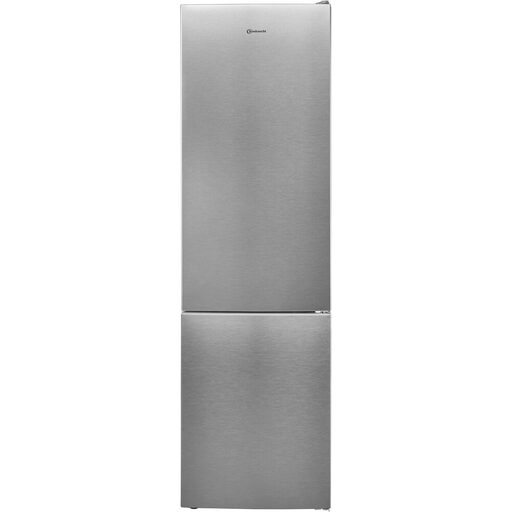
Why it's a good fit: For anyone who values the lowest possible running costs and advanced technology. The Multi Zone allows a compartment to be flexibly used as either a fridge or freezer section.
This model masterfully avoids both pitfalls: Its Energy Class A rating is the highest currently achievable, guaranteeing maximum economy. At just 32 dB, it is extremely quiet and virtually inaudible, even in the quietest environments.
Outstanding energy efficiency for minimal long-term costs and extremely quiet operation. Furthermore, its stainless steel finish fits into any modern kitchen.
We have compiled a complete, up-to-date list of products that fully meet these strict selection criteria and all relevant safety regulations.
1. How long does a fridge-freezer last on average? The average lifespan of such an appliance is about 10 to 15 years. The actual duration depends heavily on the quality of the compressor, usage, and regular maintenance. Good ventilation and adherence to the recommended ambient temperatures can extend its lifespan.
2. What does the No Frost feature really mean? The No Frost feature uses a circulation system to distribute cold, dry air in the freezer compartment. This prevents the formation of ice and frost on the interior walls and on the frozen goods. This saves you from manual defrosting, ensures consistent cooling performance, and keeps energy consumption low, as icy surfaces impair efficiency.